
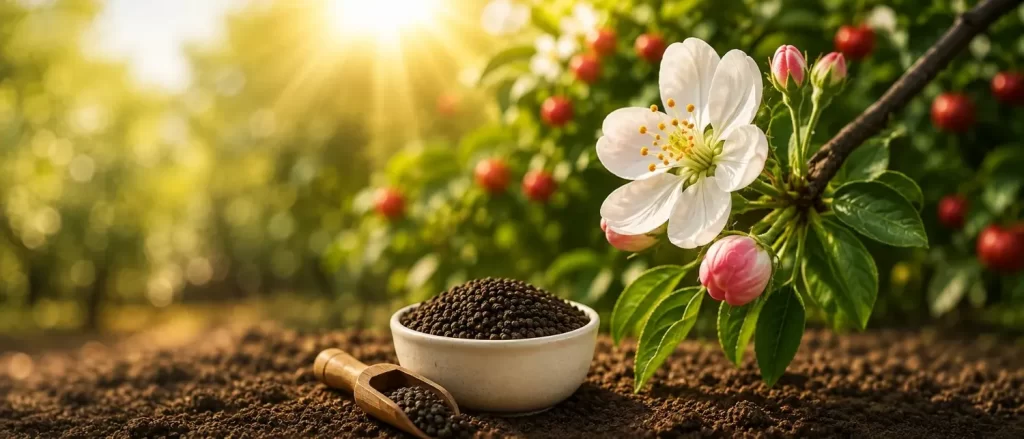
Bio potash flowering fertilizer supplies plant-available K₂O that drives floral bud differentiation, anthocyanin pigment synthesis, and photoassimilate translocation into reproductive sink tissues, directly increasing flower count, bud diameter, and bloom retention. Unlike nitrogen-heavy inputs that push vegetative biomass at the expense of flowering, potash derived from molasses (PDM) activates over 60 enzyme systems that govern stomatal regulation, cellular turgor, and sucrose loading into buds and fruit-set tissue. Applied correctly at the pre-flowering and flowering stages, bio potash fertilizer measurably extends bloom duration and improves flower quality across ornamentals, vegetables, and fruiting crops.
Regulation
Activation
to Buds & Fruits
Turgor
Growers spend months getting the vegetative stage right, only to watch bud set stall or flowers drop early. Almost always, the missing piece is potassium – specifically, potassium delivered in a form the plant can actually absorb during its most nutrient-hungry phase. For anyone building a soil fertility and plant nutrition program around organic inputs, understanding exactly how bio potash influences flowering physiology is the difference between guessing at dosage and getting predictable, repeatable bloom results.
This guide breaks down the science, the application windows, the dosage ranges, and the mistakes that quietly sabotage flowering – so you can use bio potash with the same precision as a formulated fertigation program.
What is Bio Potash Flowering Fertilizer?
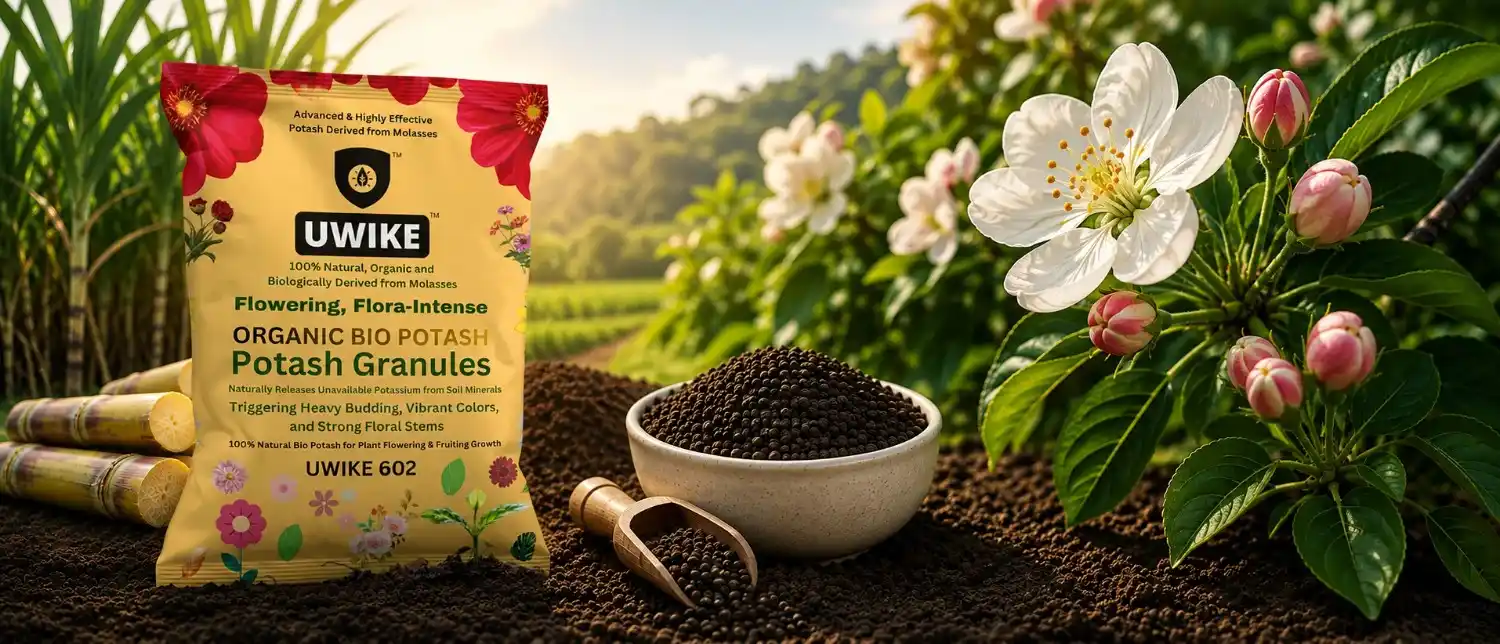
Bio potash flowering fertilizer is an organic potassium source – typically potash derived from molasses (PDM), a byproduct of sugarcane processing – applied specifically to support the reproductive stage of plant growth: bud initiation, flower opening, and fruit set.
Unlike synthetic muriate of potash (MOP), bio potash granules are produced by concentrating the mineral-rich residue left after sugar extraction from cane molasses. The result is a slow-release, chloride-free potassium source that also carries trace amounts of organic carbon, micronutrients, and naturally occurring growth-promoting compounds.
In one line: Bio potash is an organic, molasses-derived K₂O fertilizer used to strengthen flower initiation, bud size, and bloom longevity without the salt-index spikes associated with chemical potash.
Why This Distinction Matters in Practice
Most growers already understand that potassium is important. What’s less understood is that the source of potassium changes how – and how fast – a plant can actually use it during flowering. Straight muriate of potash (MOP) dumps a large, fast-release chloride load into the root zone. That works fine for bulk vegetative growth, but flowering tissue is far more sensitive to salt stress, and chloride buildup around root hairs can actually suppress the very potassium uptake you’re trying to boost. Bio potash sidesteps that problem by releasing K₂O gradually, alongside organic carbon that supports the microbial life responsible for nutrient cycling in the rhizosphere.
In our own field observations across ornamental and vegetable trial plots, plants receiving split-dose bio potash through the flowering window consistently held buds longer under heat stress than plants receiving a single large dose of synthetic potash at planting. That’s not a coincidence – it’s the direct result of sustained osmoregulation capacity throughout the bloom cycle rather than a single spike in availability.
The Science: How Potassium Triggers Flowering Physiology
Potassium doesn’t directly “cause” a plant to flower the way a hormone trigger does. Instead, it removes the physiological bottlenecks that limit bud development, flower size, and bloom persistence. Here’s how that plays out at the cellular level.
1. Enzyme Activation and Photosynthetic Efficiency

Potassium activates more than 60 enzyme systems inside the plant, including several directly involved in photosynthesis and starch conversion. Because flowering is an energy-intensive process, a plant with adequate potassium produces more usable sugars to fuel bud formation. Consequently, plants deprived of potassium often show stunted bud development even when nitrogen and phosphorus levels look fine on a soil test.
2. Osmoregulation and Turgor Pressure

Potassium regulates the opening and closing of stomata and controls water movement across cell membranes. This osmoregulation keeps flower cells turgid, which supports proper petal expansion, bud firmness, and resistance to wilting during hot, dry spells – conditions that otherwise cause bud drop before the flower even opens.
3. Sucrose Translocation Into Flower “Sink” Tissue

During flowering, buds and developing fruit act as strong metabolic sinks, pulling sucrose away from leaves and stems. Potassium is the primary driver of phloem loading – the process that moves sugars from source tissue (leaves) to sink tissue (flowers and fruit). Without sufficient potassium, sugars stay locked in the foliage, and flowering slows or aborts.
4. Anthocyanin and Pigment Synthesis

Flower color intensity depends heavily on anthocyanin production, an enzymatic process that potassium helps regulate. Growers who apply bio potash consistently often report noticeably deeper, more saturated bloom colors alongside larger bud size.
5. Pollen Viability and Stigma Receptivity

Potassium also supports membrane integrity in reproductive tissue, which improves pollen germination rates and keeps the stigma receptive for longer. For fruiting crops, this translates directly into better fruit set following flowering, not just prettier blooms.
According to potassium research from university extension programs, potassium is closely tied to the movement of water, nutrients, and carbohydrates through plant tissue, and it directly influences enzyme activation that governs starch and sugar production – the same physiological chain that determines flowering success.
Signs of Potassium Deficiency Before and During Flowering
Recognizing a developing potassium shortfall before it costs you a full bloom cycle is one of the most valuable skills a grower can build. Because potassium is mobile within the plant, deficiency symptoms typically show up first on older, lower leaves as the plant redistributes available potassium toward newer growth and developing buds.
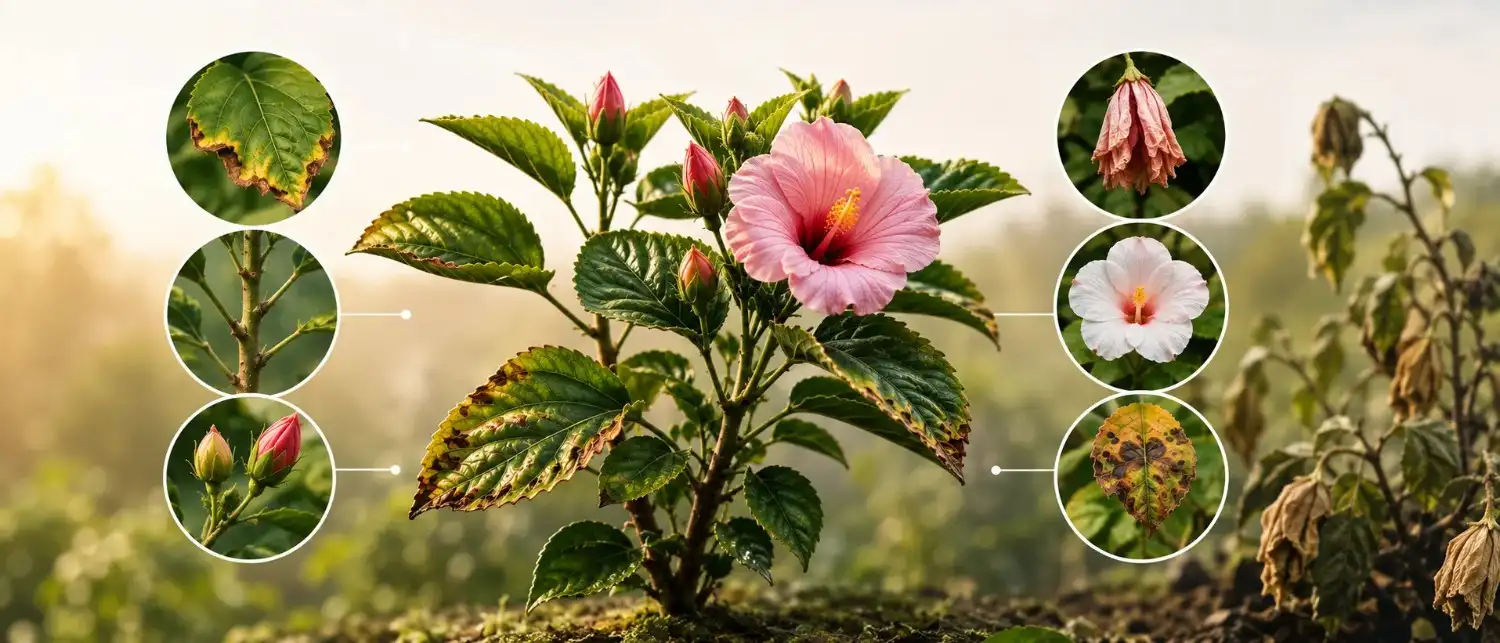
Watch for these early warning signs:
- Marginal leaf scorch: Yellowing or browning along the edges of older leaves, often mistaken for water stress.
- Weak, thin stems: Reduced lignification makes stems more prone to bending or snapping under bud weight.
- Delayed or uneven bud opening: Buds form but stall, or open unevenly across the plant.
- Premature flower drop: Buds abort or flowers fall before pollination completes.
- Poor color development: Pale or washed-out bloom color instead of the expected pigment intensity.
- Increased disease incidence at bloom stage: Potassium-deficient tissue is more vulnerable to fungal pathogens right when the plant can least afford stress.
If you notice two or more of these symptoms clustering together during bud initiation, it’s worth correcting potassium levels immediately rather than waiting for the next scheduled application – a delayed correction at this stage rarely recovers the full flowering potential for that cycle.
Bio Potash vs Other Potassium Sources: Which One Actually Supports Flowering Better?
Not all potassium fertilizers behave the same way once they hit the root zone. The table below compares bio potash (PDM) against the two most common alternatives Indian growers encounter.
| Parameter | Bio Potash (PDM) | Muriate of Potash (MOP) | Sulphate of Potash (SOP) |
|---|---|---|---|
| Source | Sugarcane molasses byproduct | Mined potassium chloride | Mined/processed potassium sulphate |
| K₂O Content | ~14.5% (organic, slow-release) | ~60% (fast-release) | ~48-50% (fast-release) |
| Chloride Content | Negligible to nil | High | Nil |
| Salt Index | Low | High | Moderate |
| Effect on Soil Microbiology | Improves organic carbon and microbial activity | Neutral to mildly harmful with overuse | Neutral |
| Best Suited For | Flowering, chloride-sensitive crops, organic programs | High-volume field crops needing rapid K correction | Chloride-sensitive crops needing fast K |
| Release Pattern | Gradual, sustained | Immediate | Immediate |
If you’re still deciding between formats, our detailed breakdown of what potash derived from molasses actually is and how it’s processed covers the manufacturing side in depth.
Why this matters for flowering specifically: Chloride-sensitive flowering and fruiting crops – citrus, chilli, roses, and most ornamentals – respond poorly to chloride buildup around the root zone. Bio potash avoids that problem almost entirely while still delivering the sustained potassium supply flowering plants need through a multi-week bloom cycle.
Key Benefits of Bio Potash as a Flowering Fertilizer
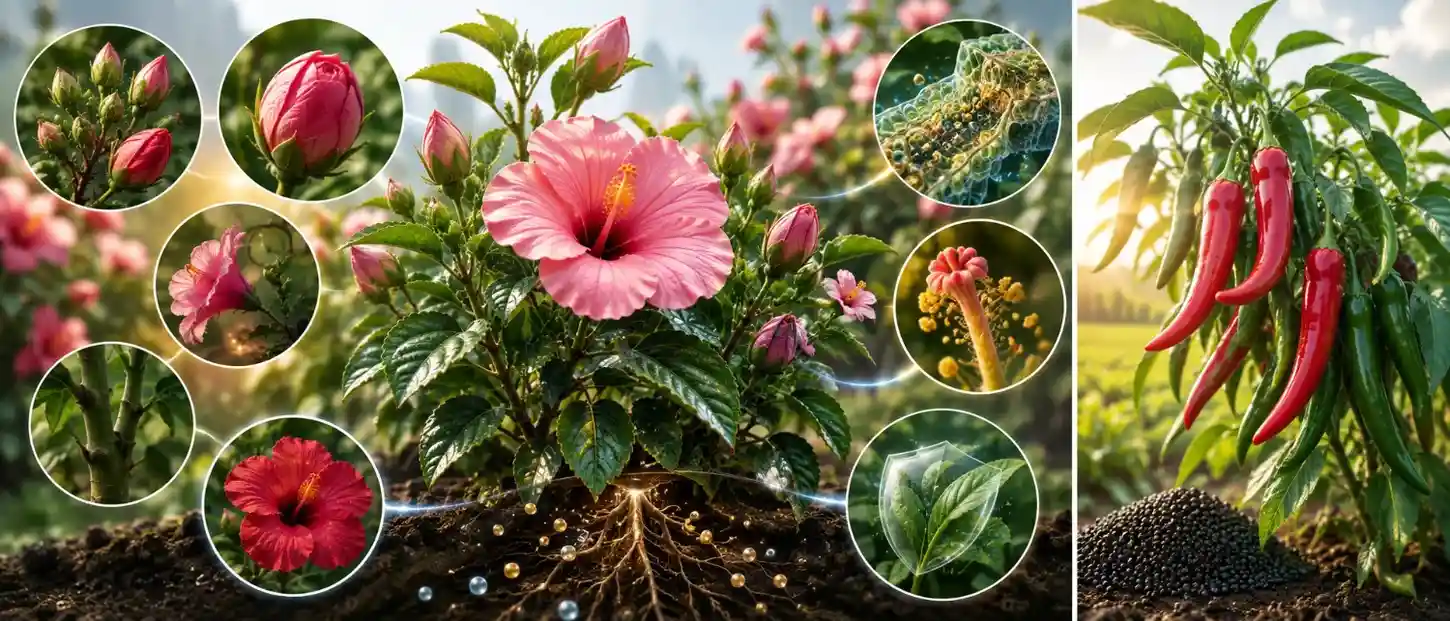
Here’s what consistent, correctly timed bio potash application actually changes in the field:
- More flower buds per plant – improved sucrose availability supports higher bud initiation rates
- Bigger, fuller buds – turgor pressure and cell expansion improve with adequate K supply
- Longer bloom periods – potassium delays flower senescence by supporting water regulation
- Stronger stems – better lignification reduces lodging and flower-drop from wind or rain
- Improved bloom color – anthocyanin synthesis intensifies petal and bract pigmentation
- Higher pollen viability – supports better fruit set immediately after flowering
- Better disease and stress tolerance – potassium-sufficient plants resist fungal pressure and heat stress more effectively during the vulnerable bloom window
For chilli growers specifically, this same potassium pathway also affects capsaicin concentration and fruit firmness post-flowering – covered in more detail in our bio potash application guide for chilli plants.
Nutrient Composition of Bio Potash Granules
Understanding what’s actually inside the bag helps you calculate accurate dosage instead of applying by guesswork.
| Nutrient/Property | Typical Value in Bio Potash Granules |
|---|---|
| K₂O (Potassium Oxide) | 14.5% minimum (as per FCO standards) |
| Organic Carbon | Present (variable by batch) |
| Moisture | Hygroscopic – store in airtight conditions |
| Form | Brown/grey granules or powder |
| Solubility | Water-soluble |
| Chloride | Negligible |
| Notified Status | Registered under India’s Fertilizer Control Order, 1985 |
For a complete breakdown of granule specifications, storage, and mixing compatibility, see our bio potash granules usage and application guide.
When and How to Apply Bio Potash for Maximum Flowering
Timing matters more than total quantity when it comes to flowering response. Applying the full dose too early or too late wastes most of its physiological benefit.
Step-by-Step Application Timing
Step 1: Pre-flowering stage (bud initiation)
Apply the first split dose 2–3 weeks before expected flowering to build potassium reserves before bud differentiation begins. This early application helps strengthen developing buds and prepares the plant for a uniform flowering cycle.
Step 2: Early flowering stage
Apply a second split dose as the first buds appear, supporting sucrose transport into newly forming flowers. Timely application can improve flower development, bud retention, and overall bloom strength.
Step 3: Peak bloom stage
For long-flowering crops, a light maintenance dose extends bloom duration by delaying petal senescence. Avoid excessive application, as the goal is to sustain flowering without disrupting nutrient balance.
Step 4: Post-flowering/fruit-set stage
A final light application supports the transition from flower to fruit, especially in vegetables and fruit trees. It also helps improve early fruit development and reduces the risk of premature flower or fruit drop.
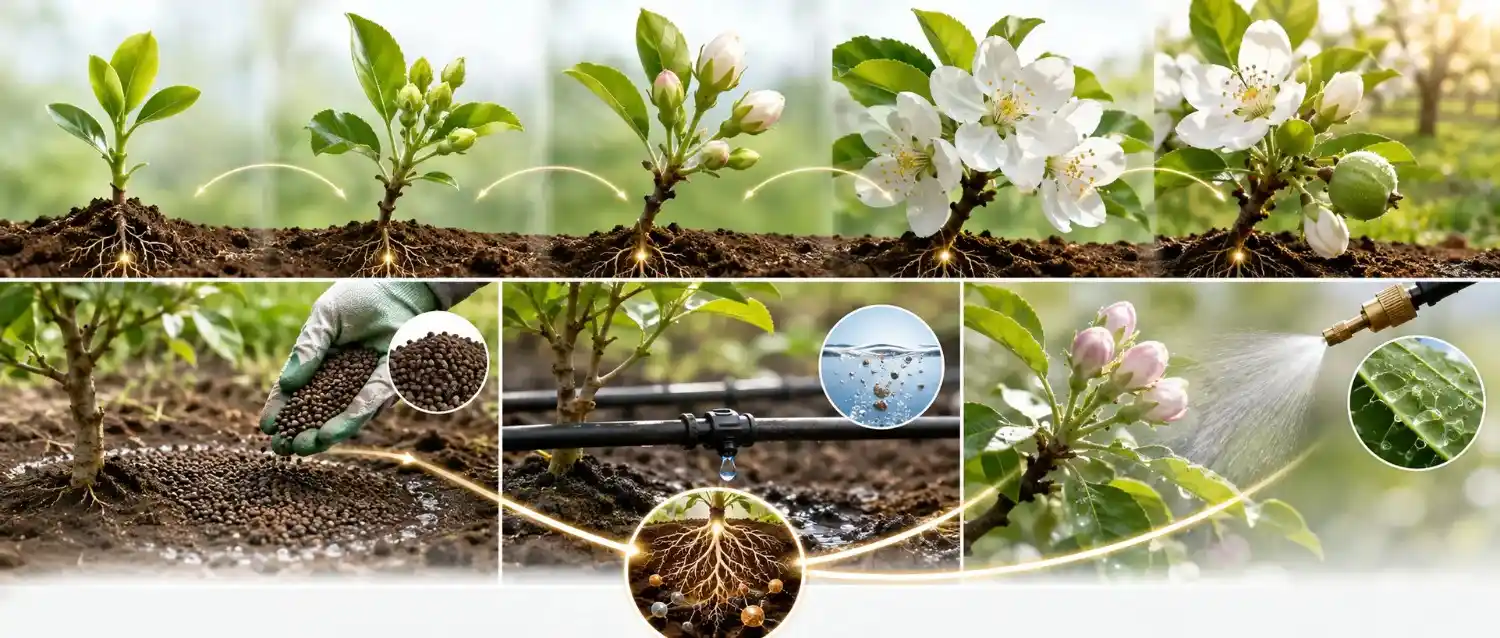
Application Methods
Soil application
Broadcast around the root zone and water in immediately; works well for field and orchard crops where root systems are already well established and can access the gradually released potassium over several weeks.
Fertigation
Dissolve in irrigation water for even, root-zone delivery – ideal for drip-irrigated systems where growers want tighter control over timing and want to avoid the labor cost of manual broadcasting.
Foliar application
A diluted foliar spray during early bud stage can accelerate potassium uptake when soil conditions – compaction, waterlogging, or low soil moisture – limit root absorption. Foliar feeding works fastest but should supplement, not replace, a soil-based program, since leaves can only absorb a fraction of total crop potassium demand through the cuticle.
Whichever method you choose, consistency matters more than perfection. A moderate, well-timed dose applied on schedule every 15-20 days through the bloom window consistently outperforms a single “correct” but isolated application, because flowering is a sustained physiological process rather than a one-time event.
Dosage Guidelines by Crop Type
| Crop Type | Pre-Flowering Dose | Flowering-Stage Dose | Frequency |
|---|---|---|---|
| Ornamentals/Flowering pots | 15-20 g/plant | 10-15 g/plant | Every 15-20 days |
| Chilli and vegetables | 25-40 kg/acre | 20-30 kg/acre | Split across 2-3 stages |
| Citrus/fruit trees (e.g., lemon) | 200-300 g/tree | 150-200 g/tree | Pre-bloom and post-fruit-set |
| Field/row crops | 40-50 kg/acre | 30-40 kg/acre | Basal + top dressing |
These figures are indicative starting points; always calibrate against a soil test and local agronomic advice. Soil texture also shifts these numbers in practice – sandy soils leach potassium faster and generally need slightly more frequent, lighter applications, while clay-heavy soils hold potassium longer and tolerate a more concentrated split-dose schedule without runoff loss. For a crop-specific walkthrough, our guide on bio potash timing and dosage for lemon trees shows exactly how this split-dose approach plays out in a real orchard cycle.
Common Mistakes to Avoid When Using Bio Potash for Flowering
Even experienced growers lose flowering response to a handful of avoidable errors. Understanding why each mistake hurts flowering – not just that it’s wrong – makes it far easier to catch in your own program.
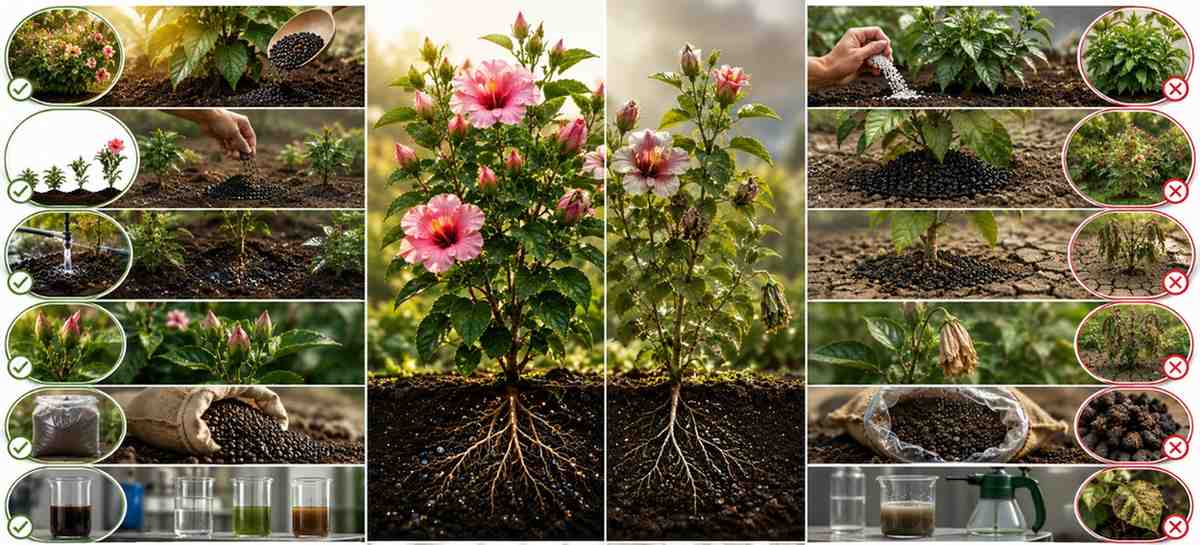
Mistake 1: Applying only nitrogen through flowering.
Nitrogen drives leaf and shoot growth, which competes directly with buds for the same photoassimilates potassium is trying to move toward flowers. A grower who keeps nitrogen high through bloom often sees lush foliage but a disappointing flower count, because the plant is investing its energy budget in vegetative expansion instead of reproductive development.
Mistake 2: Using a single large dose instead of split dosing.
Because bio potash releases gradually, one heavy application at planting front-loads early availability and leaves the plant short exactly when flowering demand peaks weeks later. Splitting the same total quantity across pre-flowering and early-bloom stages keeps supply matched to demand.
Mistake 3: Ignoring soil moisture at the time of application.
Potassium moves to root surfaces primarily through diffusion, a process that depends heavily on soil moisture. Applying granules to dry soil and delaying irrigation can leave a large share of the applied potassium effectively stranded and unavailable during the critical uptake window.
Mistake 4: Skipping the pre-flowering application window.
Bud number is largely determined before buds become visible. Waiting until you can see flower buds to apply potassium means you’ve already missed the stage where the plant decided how many buds to initiate in the first place.
Mistake 5: Storing granules in humid, unsealed conditions.
Bio potash is hygroscopic by nature. Bags left open in humid storage clump together, which makes accurate dosing difficult and can lead to uneven field distribution.
Mistake 6: Mixing incompatible inputs without testing.
Certain foliar tank-mix combinations – particularly with some micronutrient chelates – can reduce potassium solubility or plant availability. Always test a small batch mix 24 hours ahead of a full-field application.
Expert Tips to Maximize Blooms with Bio Potash
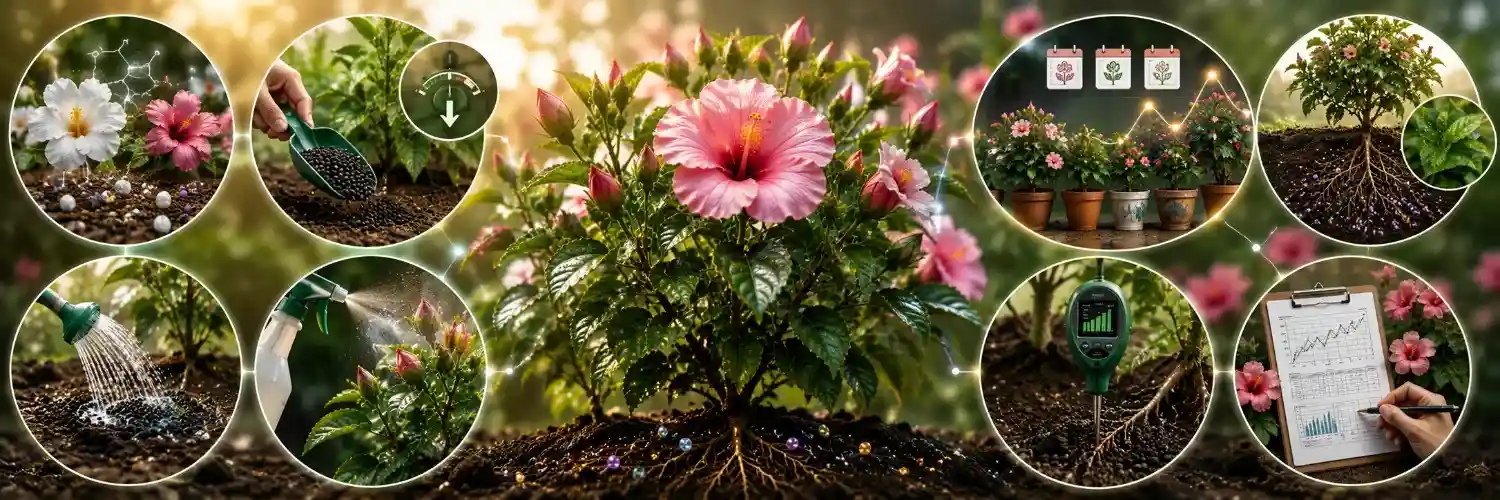
Tip 1: Combine Bio Potash with Calcium and Boron at Bud Initiation
Pair bio potash with adequate calcium and boron during bud initiation. These micronutrients work synergistically with potassium to strengthen cell walls and improve bud retention under stress.
Tip 2: Reduce Nitrogen After Flowering Begins
Reduce nitrogen dosage by roughly 20-30% once flowering begins, so potassium’s sink-loading effect isn’t competing against continued vegetative push.
Tip 3: Water Thoroughly After Granular Application
Water deeply immediately after granular application to carry dissolved potassium into the active root zone rather than letting it sit on the soil surface.
Tip 4: Apply Foliar Potassium During Early Bud Swell
Use a light foliar potassium spray during early bud swell for pot and ornamental crops – this often shows visible improvement in bud firmness within 7-10 days.
Tip 5: Align Applications with the Crop’s Bloom Cycle
Track flowering response against your specific crop’s bloom cycle, not a generic calendar. Fast-blooming annuals need tighter application intervals than slow-fruiting trees, where a single well-timed pre-bloom dose can carry the plant through an entire flowering window.
Tip 6: Monitor Soil Potassium During Extended Flowering
Recheck soil potassium levels mid-season if you’re running a long flowering cycle (four weeks or more); sustained bloom periods draw down potassium reserves faster than growers typically expect.
Bio Potash Across Different Crop Types
Ornamentals and flowering pot plants
These respond quickly to split-dose potassium, typically showing improved bud count and noticeably deeper bloom color within two to three weeks of consistent application. Because pot volume limits root reach, foliar supplementation during early bud swell is particularly effective here.
Vegetables (chilli, tomato, brinjal)
Flowering-stage potassium directly influences fruit-set percentage, fruit firmness, and shelf life after harvest. For chilli specifically, potassium availability at flowering also affects capsaicin concentration, giving growers a quality lever beyond simple yield.
Fruit trees (citrus, mango, guava)
Pre-bloom potassium applications improve flower retention and reduce the natural post-flowering fruit-drop common in most tree crops. Because trees carry a much larger reproductive load per plant, dosage needs to scale with canopy size rather than a flat per-plant rate.
Field and row crops
Potassium at flowering supports grain and pod fill by keeping the sucrose pipeline to reproductive tissue open through the critical fill period, which is often the single biggest yield determinant in the entire crop cycle.
If you’re comparing bio potash against other bio-based potassium products in the market, our resource on Bio-K fertilizer – what it contains and when to use it is a useful side-by-side reference.
Sustainability and Soil Health Benefits of Choosing Bio Potash
Beyond the flowering response itself, choosing a molasses-derived potassium source carries longer-term soil health advantages that synthetic potash simply doesn’t offer.
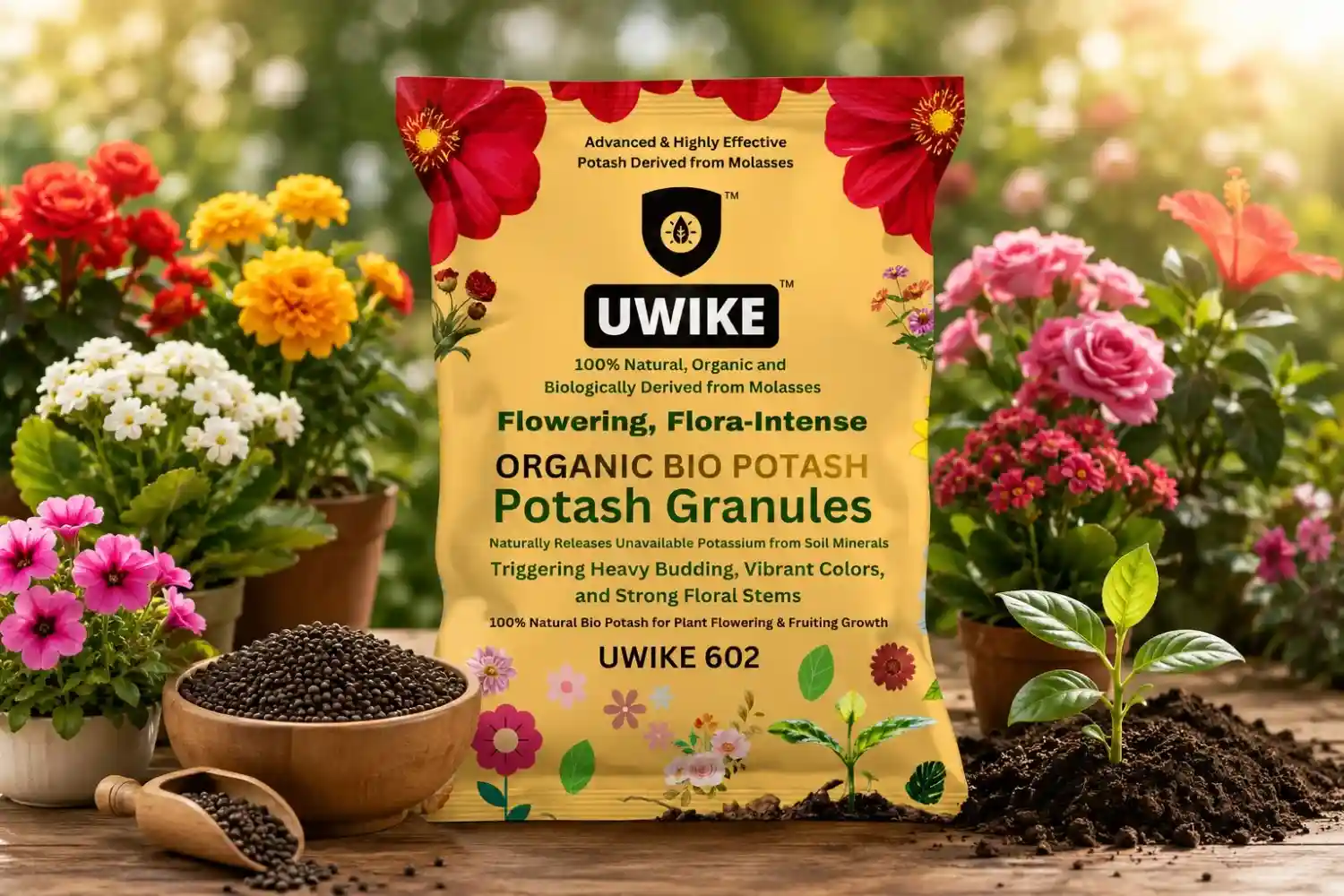
Because bio potash originates from a sugar-industry byproduct rather than mined mineral deposits, it fits naturally into circular-economy sourcing – converting agricultural waste into a usable soil input instead of adding pressure to finite potash reserves. India currently imports a significant share of its potash requirement,
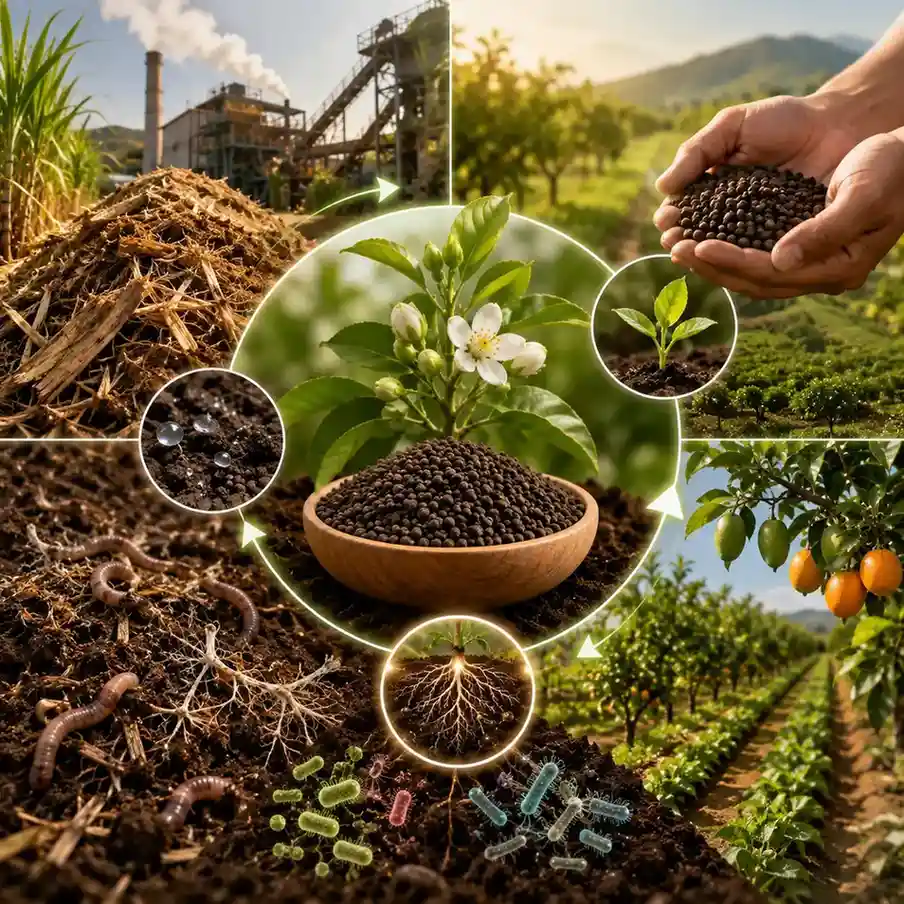
and domestically produced PDM reduces that import dependence while supporting sugarcane-processing regions economically.
Agronomically, the organic carbon that travels with bio potash feeds soil microbial populations, which in turn improve nutrient cycling for the next crop, not just the one currently flowering. Growers running organic or low-chemical-input programs often find that consistent bio potash use gradually improves soil structure and water-holding capacity as organic matter accumulates season over season – a benefit synthetic, chloride-heavy potash sources don’t provide.
Bio Potash Pricing in India
Bio potash pricing varies by granule grade, K₂O percentage, and packaging size. Most Indian suppliers price standard 50 kg bags competitively against imported MOP, particularly once you account for the reduced application frequency from its slow-release nature. For current market rates and price ranges by region, see our detailed bio potash 50 kg price guide for India.
For growers who want the complete foundational picture before buying, our complete guide to bio potash fertilizer for Indian gardeners and farmers is the best starting reference point.
Frequently Asked Questions
1. What is bio potash flowering fertilizer used for?
Bio potash flowering fertilizer is used to support bud initiation, flower size, bloom color, and bloom duration by supplying slow-release, organic potassium during a plant’s reproductive stage.
2. Is bio potash better than chemical potash for flowering plants?
For flowering and fruiting crops, bio potash is generally preferred because it’s chloride-free and releases gradually, matching the sustained potassium demand of a multi-week bloom cycle without the salt-index stress associated with fast-release chemical potash.
3. When should I apply bio potash for flowering?
Apply the first dose 2-3 weeks before expected flowering, followed by a second dose at early bud stage, and a light maintenance dose during peak bloom for long-flowering crops.
4. Can bio potash increase the number of flowers on a plant?
Yes. By supporting sucrose transport and enzyme activity involved in bud initiation, adequate potassium supply increases the number of buds a plant successfully develops and retains.
5. How is bio potash different from potash derived from molasses (PDM)?
They’re generally the same product – bio potash sold in India is most commonly potash derived from molasses (PDM), a granular, organic potassium source made from sugarcane processing byproducts.
6. Does bio potash improve flower color?
Yes. Potassium regulates anthocyanin synthesis, the pigment pathway responsible for flower color intensity, so consistent application often results in richer, more saturated blooms.
7. Can I use bio potash as a foliar spray during flowering?
Yes, a diluted foliar application during early bud swell can supplement soil-applied potassium and is especially useful when root uptake is limited by soil conditions.
8. How do I know if my plant needs more potassium during flowering?
Watch for marginal leaf scorch on older leaves, weak stems, delayed or uneven bud opening, premature flower drop, and pale bloom color – these are the most common early indicators of a potassium shortfall during the flowering stage.
9. Is bio potash safe to use with organic farming practices?
Yes. Bio potash is derived from a natural sugarcane-processing byproduct and is registered under India’s Fertilizer Control Order, making it a widely accepted potassium input for organic and low-chemical-input farming programs.
10. How often should I apply bio potash during a long flowering cycle?
For crops with an extended bloom period of four weeks or more, a light maintenance dose every 15-20 days helps sustain potassium levels through the full cycle, since prolonged flowering draws down reserves faster than a single pre-bloom application can supply.
Conclusion
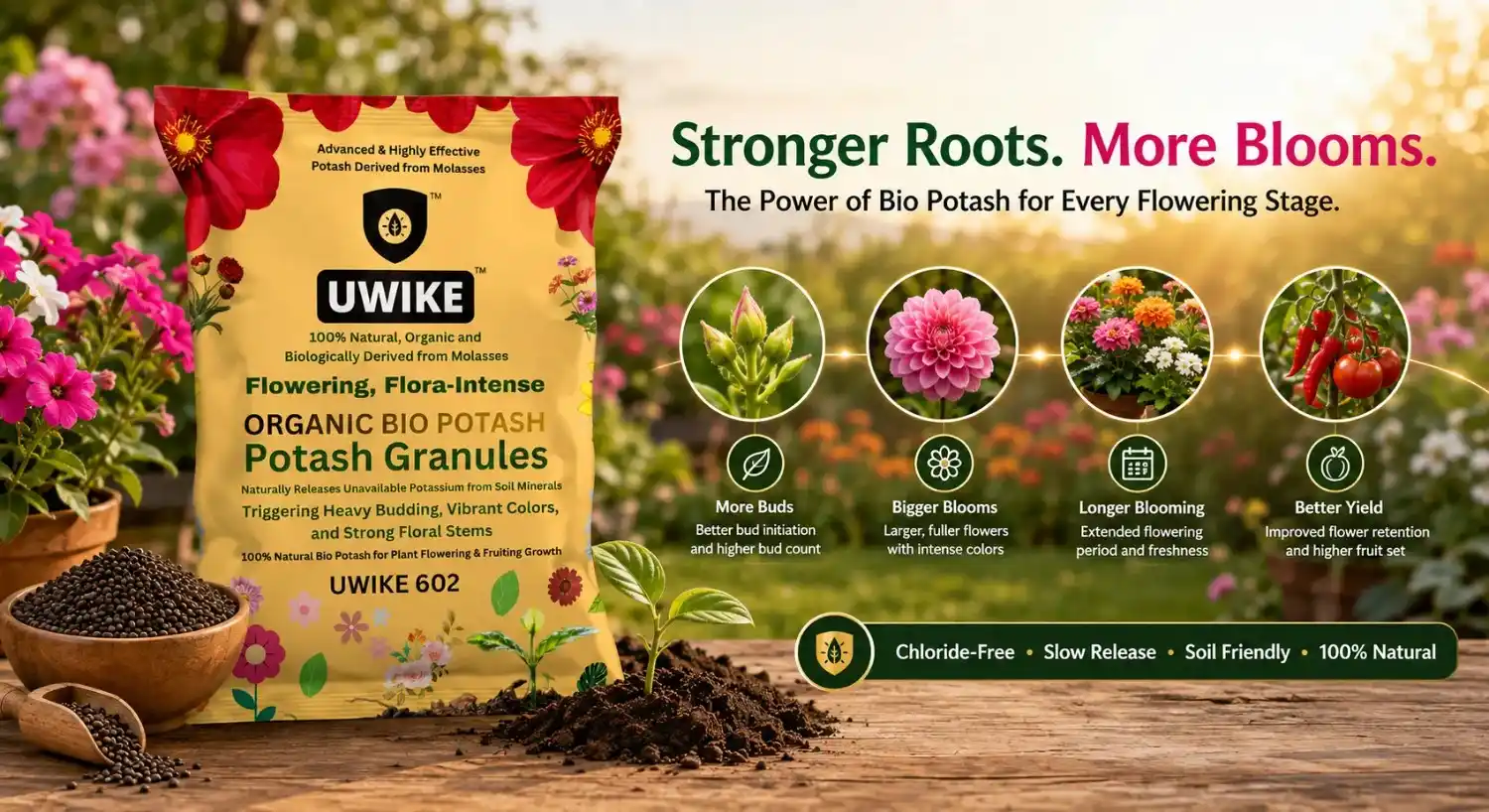
Flowering isn’t a random growth event – it’s a potassium-dependent physiological process, and bio potash flowering fertilizer gives you a chloride-free, slow-release way to support that process without disrupting soil biology. Get the timing right – pre-flowering and early bloom – and split your dosing rather than front-loading it, and the difference shows up as more buds, bigger blooms, and a longer flowering window across nearly every crop type.
If you’re ready to build potassium into your flowering-stage nutrition program the right way, explore Uwike’s full range of soil fertility and plant nutrition solutions and get a program suited to your specific crop and soil conditions.