
Bio K fertilizer – also widely referred to as Bio Potash or PDM (Potash Derived from Molasses) – is a granular, potassium-rich soil amendment containing approximately 14.5% elemental potassium (K2O), produced from the incinerated spent-wash ash of molasses-based distilleries, a sugarcane industry by-product. Unlike synthetic muriate of potash (MOP), Bio K functions as both a direct nutrient source and a soil-conditioning agent, improving rhizosphere bioactivity, cation exchange capacity, and long-term potassium availability through a slow-release mineralisation mechanism. Understanding Bio K fertilizer as a sustainable, domestically produced alternative to 100%-imported chemical potash is now critical for Indian farmers seeking cost-efficient, government-subsidised crop nutrition strategies.
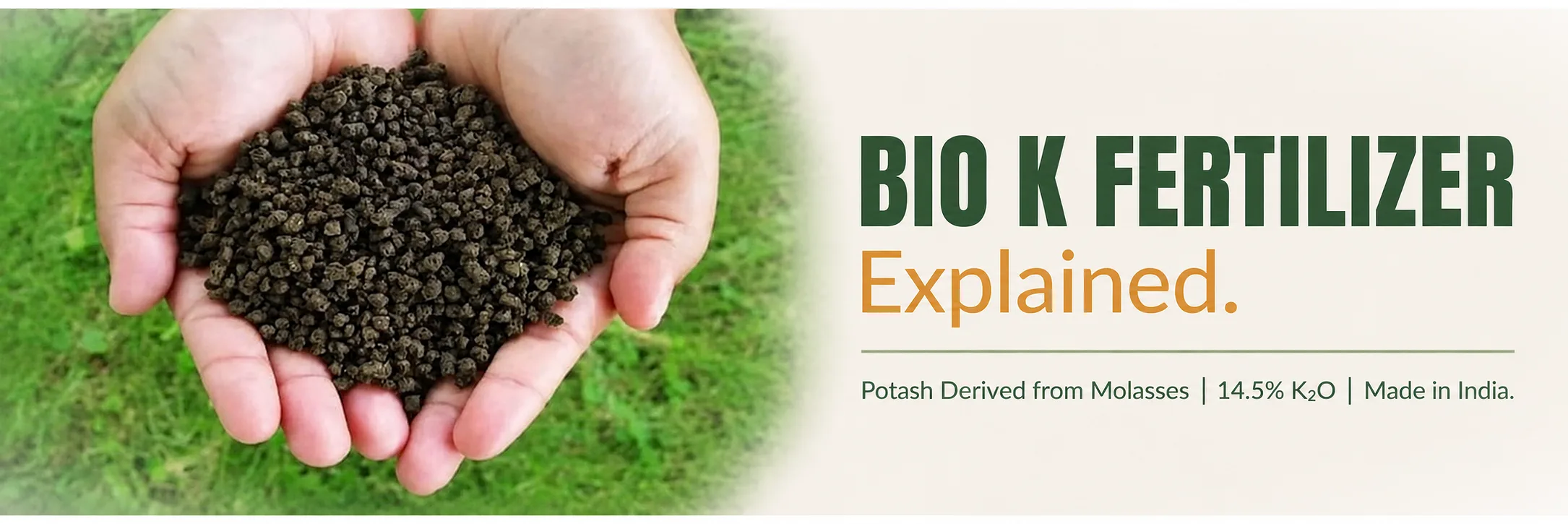
With India depending entirely on potash imports for decades, PDM represents a quiet revolution in homegrown agri-inputs. This article covers everything you need to know: its composition, how it works, which crops benefit most, when and how to apply it, and common mistakes to avoid. Whether you manage a large farm or a kitchen garden, this guide will help you use Bio K fertilizer with confidence.
What is Bio K Fertilizer? A Clear Definition
Bio K fertilizer is a broad term used for potassium-delivering fertilizers produced from biological or bio-industrial processes rather than mined mineral deposits. When Indian farmers and agri-retailers use the term “Bio K,” they are most commonly referring to PDM – Potash Derived from Molasses in granule form.
PDM is produced from the ash generated during the incineration of spent wash, a liquid residue from sugarcane molasses-based distilleries. This ash is rich in potassium salts. After collection and processing, it is granulated into an easily spreadable form and sold as Bio K or Bio Potash fertilizer.
- Common name: Bio K Fertilizer, Bio Potash
- Technical name: PDM (Potash Derived from Molasses)
- Form: Granules
- Primary nutrient: Potassium (K)
- Source: Sugarcane molasses industry by-product
For a broader understanding of how potassium fits into overall crop nutrition, exploring the principles of soil fertility and plant nutrition on Uwike is an excellent starting point.
Quick Definition for Featured Snippet: Bio K fertilizer (PDM) is a granular potassium fertilizer derived from the spent-wash ash of sugarcane molasses-based distilleries. It contains approximately 14.5% K2O and serves as a sustainable, soil-building alternative to imported chemical potash.
How Bio K (PDM) Is Produced from Molasses
Understanding production helps you appreciate the quality and characteristics of this fertilizer.
Step-by-step production process:
- Raw material collection: Sugarcane juice is processed into sugar, leaving behind molasses – a dark, syrupy by-product.
- Ethanol fermentation: Molasses is fermented and distilled to produce ethanol (alcohol), generating a thick liquid waste called “spent wash.”
- Spent wash combustion: The spent wash is concentrated and burned in specially designed furnaces at molasses-based distilleries across India.
- Ash collection: The incineration process produces a potassium-rich ash residue from the furnace and boiler systems.
- Potassium extraction and processing: The raw ash undergoes processing to concentrate and purify its potassium content.
- Granulation: The processed material is compacted and granulated to produce uniform, easy-to-apply Bio K granules.
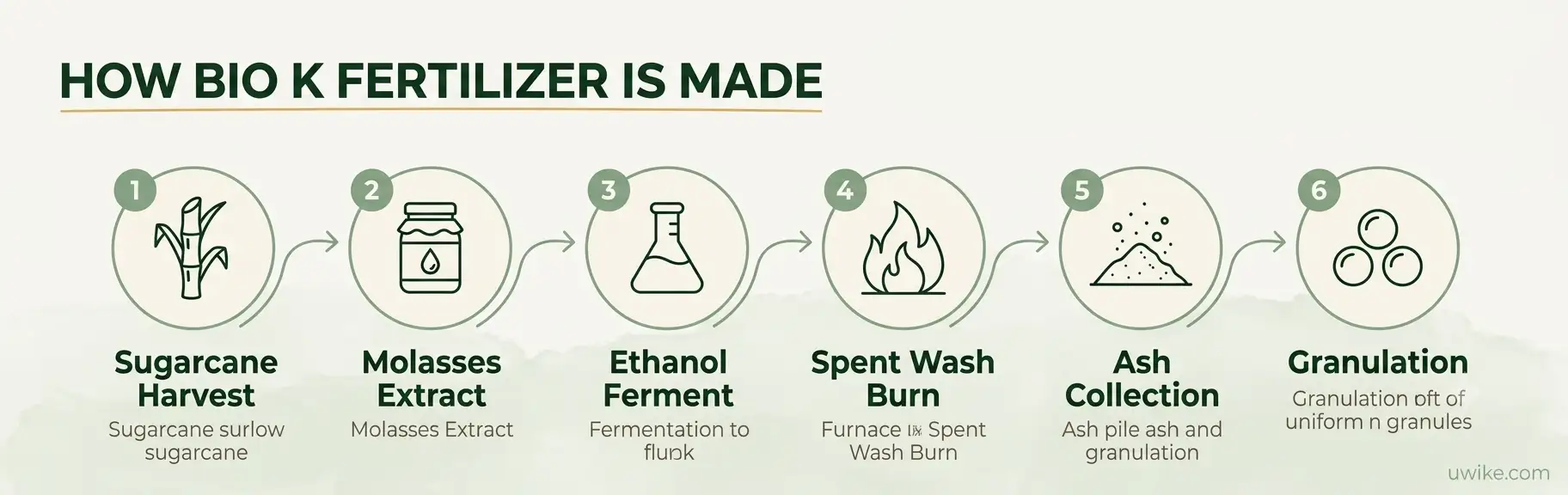
This closed-loop industrial process transforms a hazardous industrial effluent into a valuable agricultural input. According to a report by the Indian Express, molasses-based distilleries in India generate tens of billions of litres of spent wash annually – much of which was previously an environmental concern. PDM production converts this waste stream into an agronomic asset.
What Does Bio K Fertilizer Contain?
This is one of the most searched questions about this product, so let us be direct and specific.
Primary Nutrient Content
| Industry Sector | Primary Illustration Need | Key Output Formats |
|---|---|---|
| Medical Education | Anatomy, physiology, pathology, surgery | Textbooks, e-learning modules, training videos |
| Pharmaceuticals | MOA visuals, clinical trial materials, PILs | Detail aids, regulatory docs, brand assets |
| Medical Devices / MedTech | Device schematics, IFU graphics, surgical steps | IFU documents, FDA submissions, sales brochures |
| Hospitals / Clinical Practice | Surgical planning, patient consent, post-op care | Consent forms, ward leaflets, digital patient portals |
| Academic Publishing | Research figures, graphical abstracts, case reports | Journal articles, conference posters, textbooks |
| Legal / Forensic | Injury exhibits, pathology documentation, causation | Courtroom boards, legal briefs, insurance reports |
| Public Health / NGOs | Disease prevention, health literacy, vaccination | Posters, campaigns, multilingual leaflets |
| Digital Health / Healthtech | App UI elements, chatbot visuals, telehealth content | App assets, website graphics, digital patient tools |
The 14.5% K2O content is officially recognized by India’s Department of Fertilizers for the purpose of the Nutrient-Based Subsidy (NBS) scheme – confirming it as a genuine, quantified potassium source.
Secondary Components and Their Value
Beyond potassium, PDM granules carry several secondary benefits:
- Sulphur: Supports protein synthesis and improves brassica and pulse quality.
- Calcium and Magnesium: Contribute to cell wall strength and enzyme activation.
- Organic matter residues: Support microbial life in the rhizosphere, improving soil structure over time.
- Micronutrients: Iron, zinc, and manganese, even in trace amounts, contribute to balanced plant nutrition in micronutrient-deficient soils.
How Bio K Fertilizer Works in the Soil
Understanding the mode of action helps you time applications correctly and combine Bio K with other inputs effectively.
Potassium Release Mechanism
Unlike synthetic muriate of potash (MOP), which releases potassium rapidly and can cause salt stress, Bio K releases potassium through a more gradual mineralisation process. Soil microbes interact with the organic fractions of PDM granules, slowly making potassium available to plant roots over an extended period.
Rhizosphere Enhancement
The organic residues in PDM stimulate beneficial soil microbial populations. Research published in Frontiers in Plant Science confirms that potassium-solubilizing microorganisms (KSMs) produce organic acids and exopolysaccharides that further unlock fixed soil potassium – creating a synergistic effect when Bio K granules are applied alongside microbial inoculants.
Ion Exchange and Cation Exchange Capacity (CEC)
Potassium released from PDM occupies cation exchange sites in the soil. This improves the soil’s ability to retain other nutrients, reducing leaching losses of calcium, magnesium, and ammonium nitrogen.
Key Benefits of Bio K Fertilizer for Farms and Gardens
Here is why Bio K fertilizer explained through its agronomic benefits paints a compelling picture for sustainable crop production:
1. Direct Potassium Nutrition
Potassium is the third major macronutrient (after nitrogen and phosphorus). It drives:
- Photosynthesis efficiency
- Sugar translocation from leaves to fruits and grains
- Stomatal regulation and water use efficiency
- Root development and structural strength
2. Domestic, Sustainable Origin
India currently imports 100% of its chemical potash (primarily as muriate of potash) from countries such as Canada, Russia, and Belarus – at significant foreign exchange cost. PDM is produced domestically from sugarcane waste, reducing import dependency and carbon footprint.
3. Slow-Release, Soil-Safe Nutrition
The gradual potassium release lowers the risk of osmotic stress compared to high-salt synthetic options. This makes it particularly suitable for light, sandy, or loamy soils where quick-release fertilizers leach rapidly.
4. Environmental Waste Recycling
Using PDM diverts industrial waste from waterways. Untreated spent wash is a significant source of water pollution in sugarcane-growing belts. Bio K production is therefore both agronomically and environmentally beneficial.
5. Government-Subsidised in India
The Indian government has included PDM under the Nutrient-Based Subsidy (NBS) scheme. Farmers purchasing PDM-based Bio K fertilizer are eligible for subsidy benefits, effectively reducing the out-of-pocket cost. As reported by CNBC TV18, PDM with 14.5% K2O now qualifies for NBS support – a strong policy signal for adoption.
6. Improved Fruit and Grain Quality
Potassium is often called the “quality nutrient” because it increases:
- Brix levels (sugar content) in fruits
- Grain weight and uniformity
- Post-harvest shelf life
- Disease resistance through stronger cell walls
Which Crops Benefit Most from Bio K Fertilizer?
Bio K fertilizer is suitable for a wide range of crops. The following categories show the highest response to potassium application:
High-Response Crops
| Crop Category | Specific Crops |
|---|---|
| Cereals and Grains | Wheat, Rice, Maize, Jowar, Bajra |
| Pulses and Legumes | Soybean, Chickpea, Moong, Urad |
| Cash Crops | Sugarcane, Cotton, Tobacco |
| Vegetables | Potato, Tomato, Onion, Capsicum, Brinjal |
| Fruits | Banana, Mango, Grapes, Pomegranate, Citrus |
| Oilseeds | Groundnut, Sunflower, Mustard, Sesame |
| Plantation Crops | Tea, Coffee, Coconut, Arecanut |
For Home and Kitchen Gardens
Bio K is equally effective for terrace gardens, pot plants, and raised beds. A small broadcast application during soil preparation, followed by a light watering-in, provides sustained potassium nutrition for seasonal vegetables, flowering plants, and fruiting herbs.
Signs Your Soil or Crop Needs More Potassium
Recognising potassium deficiency early prevents yield losses. Watch for these indicators:
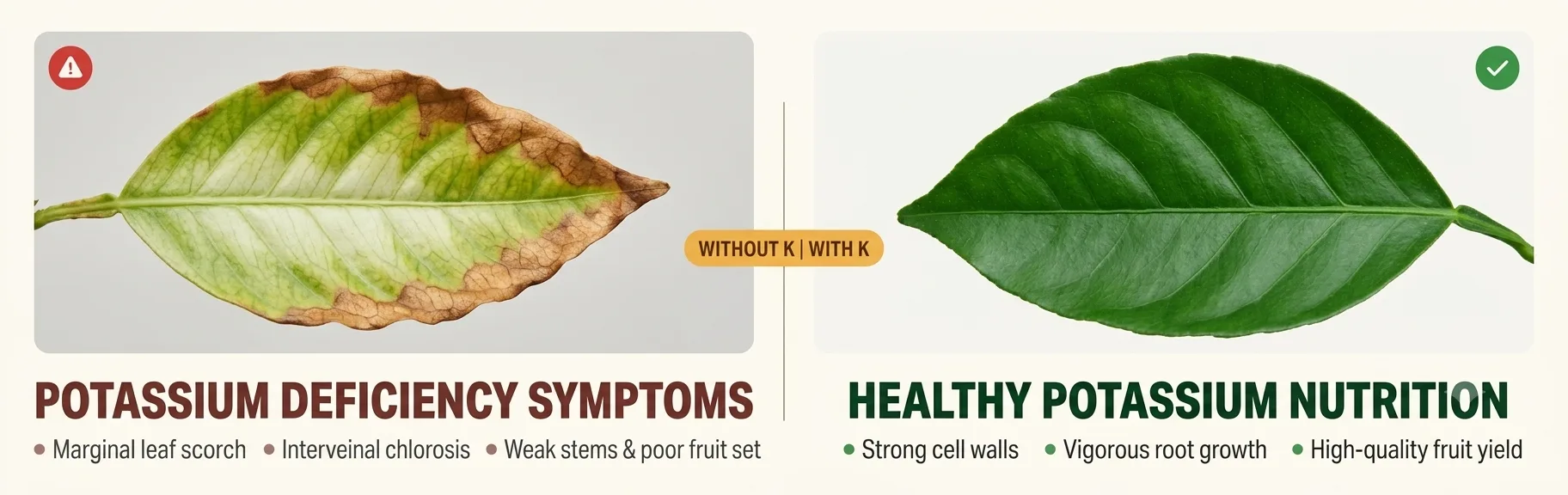
Visible Plant Symptoms
- Marginal leaf scorch: Brown, crispy edges on older leaves, beginning at the leaf tips and progressing inward
- Chlorosis (yellowing): Yellowing between leaf veins on mature leaves while veins remain green
- Weak stems: Plants that bend, lodge (fall over), or show thin, hollow stems
- Poor fruit set: Small, misshapen, or unevenly coloured fruits with low sugar content
- Reduced root growth: Thin, poorly branched root systems that show up during transplanting
Soil Indicators
- Sandy or coarse-textured soils that have received no potassium input for 2 or more seasons
- Soils with a history of high nitrogen-only fertilization (which depletes potassium balance)
- Soils tested below 120 kg/ha available potassium by soil analysis
If you observe these signs, Bio K fertilizer application should be prioritised before the next growth stage.
When to Use Bio K Fertilizer: Timing and Growth Stages
Timing is critical for maximising the return from any fertilizer investment.
Best Times to Apply Bio K Fertilizer
1. Basal Application (At Sowing or Transplanting) This is the most effective method for granular Bio K. Incorporating the granules into the soil 5-10 cm deep at sowing ensures potassium is available in the root zone from germination.
2. Top-Dressing at Active Vegetative Growth Apply Bio K granules around the base of plants (avoiding direct stem contact) during rapid vegetative growth. Water in after application to initiate dissolution.
3. Pre-Flowering and Fruit Development Stage Potassium demand peaks as plants move from vegetative to reproductive growth. A supplemental application 2-3 weeks before flowering improves fruit set and yield quality significantly.
4. Soil Preparation for Seasonal Gardens For kitchen and terrace gardens, mix Bio K granules into potting mix or raised bed soil before planting each season.
When NOT to Apply Bio K Fertilizer
- During drought stress without any irrigation available (potassium requires moisture to dissolve and become available)
- On waterlogged, oxygen-depleted soils (reduces microbial activity needed for mineralisation)
- As a foliar spray (granular PDM is designed exclusively for soil application)
How to Apply Bio K Fertilizer: Step-by-Step Guide
Follow these steps for best results on field crops and home gardens:
For Field Crops:
- Test your soil first. A basic soil test for available potassium helps establish baseline levels and calculate the precise dose needed.
- Calculate the dose. A typical recommendation for most field crops is 25-50 kg PDM per acre, depending on soil test results and crop type. Always follow the product label.
- Broadcast or band apply. For basal application, broadcast granules evenly over the field and incorporate by ploughing or tilling 5-8 cm deep. For top-dressing, apply in bands 5-8 cm away from the plant row.
- Irrigate promptly. Water the field within 24-48 hours of application to initiate potassium release from the granules.
- Combine with nitrogen and phosphorus. Bio K works best as part of an integrated NPK nutrition program. Do not apply in isolation.
For Home and Kitchen Gardens:
- Prepare your soil or potting mix.
- Spread a small quantity of Bio K granules (approximately 1-2 teaspoons per square foot for raised beds, or as directed on pack).
- Mix granules gently into the top 5 cm of soil.
- Water the area thoroughly.
- Repeat the top-dressing every 4-6 weeks during the growing season for container plants.
Bio K Fertilizer vs. Chemical Potash (MOP): Comparison Table
| Feature | Bio K Fertilizer (PDM) | Muriate of Potash (MOP) |
|---|---|---|
| Source | Sugarcane molasses waste ash | Mined mineral (sylvite, carnallite) |
| K₂O Content | ~14.5% | 60% |
| Release Type | Slow/gradual | Fast/immediate |
| Soil Salt Risk | Low | Moderate to high |
| Chloride Content | Minimal | High (47% Cl) |
| Organic Matter | Present | Absent |
| Environmental Impact | Low (waste recycling) | Higher (mining) |
| Import Dependency | None (domestic) | 100% imported in India |
| Government Subsidy (India) | Yes – NBS eligible | Yes – NBS eligible |
| Best Suited For | Soil building + sustained nutrition | Quick-fix deficiency correction |
| Suitable for Chloride-Sensitive Crops | Yes | No (use SOP instead) |
Key Insight: MOP delivers a higher K2O percentage per kilogram, making it useful for rapid deficiency correction. However, Bio K’s lower chloride content, organic matter contribution, and domestic origin make it the preferred choice for long-term soil health strategies – particularly on chloride-sensitive crops like fruits, vegetables, and tobacco.
For an in-depth look at the specific types of bio potash available to Indian growers – including how PDM compares to microbial biofertilizers – the complete guide to bio potash fertilizer on Uwike covers this in detail.
Common Mistakes When Using Bio K Fertilizer
Even a high-quality product like Bio K fails to deliver results when applied incorrectly. Avoid these frequent errors:
1. Applying Without a Soil Test Guessing the potassium status of your soil means either under-dosing (no visible benefit) or over-dosing (nutrient imbalance, wasted money). A soil test costs very little and removes all guesswork.
2. Applying During Dry Conditions Without Irrigation Granular PDM requires moisture to dissolve and release potassium. Applying to dry soil with no follow-up irrigation renders the fertilizer temporarily inactive.
3. Using Bio K as a Standalone Fertilizer Potassium cannot substitute for nitrogen or phosphorus. Bio K must be part of a balanced NPK program. Applying only potassium to a nitrogen-deficient crop will not rescue yields.
4. Ignoring Crop Growth Stage Applying Bio K after the fruit development stage has passed offers limited return. Timing application to coincide with maximum potassium demand – at vegetative growth and pre-flowering – is essential.
5. Storing Granules in Damp Conditions PDM granules are hygroscopic (they absorb moisture). Store bags in a cool, dry, well-ventilated space. Damp granules clump and become difficult to apply evenly.
6. Assuming All “Bio Potash” Products Are the Same There are two distinct types of bio potash products in the Indian market: PDM (a direct potassium source like the one discussed here) and microbial bio potash (containing potassium-solubilizing bacteria). They work differently and are not interchangeable. Confirm which type you are purchasing before application.
Expert Tips for Getting the Best Results
These practical recommendations come from agronomic best practices and field experience:
- Combine PDM with compost or FYM (farmyard manure) during basal application. The organic matter accelerates microbial activity and enhances potassium availability from the granules.
- Split your dose. Rather than applying the full season’s potassium at sowing, apply 50% at basal and 50% as a top-dressing at the vegetative or pre-flowering stage. This matches supply to demand and reduces leaching.
- Use Bio K on chloride-sensitive crops (grapes, berries, tobacco, potatoes) where MOP is not recommended. PDM’s low chloride content makes it safe for these crops.
- Pair Bio K with microbial biofertilizers containing potassium-solubilizing bacteria (KSB). Research from Frontiers in Microbiology shows that KSB strains significantly enhance both PDM-derived and fixed soil potassium uptake in maize and other crops.
- Monitor soil pH. The optimal soil pH range for potassium availability is 6.0-7.0. In highly acidic soils (pH below 5.5), apply lime to correct pH before investing in Bio K.
- Record application dates and doses. Maintaining a simple farm diary of fertilizer applications, crop responses, and soil test results helps you refine your program year by year.
Infographic Idea: “Potassium Demand Across the Crop Growth Cycle” – A bar chart showing K uptake from germination through vegetative, flowering, fruiting, and grain-fill stages across major crops.
Government Policy and Subsidies on PDM in India
India’s policy shift toward PDM is significant for farmers seeking affordable Bio K inputs.
The Policy Background
For decades, India imported 100% of its potash requirements – primarily as MOP. This created a structural vulnerability in the fertilizer supply chain and placed a heavy burden on the government’s fertilizer subsidy bill.
In February 2024, the Indian government announced that sugar mills can sell PDM to fertilizer companies and claim nutrient-based subsidies. This policy, as reported by Live Mint, is designed to:
- Reduce dependence on potash imports
- Generate additional revenue for sugar mills
- Ensure more timely payments to sugarcane farmers
- Encourage environmentally responsible disposal of distillery waste
What This Means for Farmers
- PDM-based Bio K fertilizers are now subsidy-eligible under the NBS (Nutrient-Based Subsidy) scheme.
- A government subsidy of Rs. 345 per tonne has been set for PDM for the fiscal year 2024-25.
- This makes Bio K granules more competitively priced against imported chemical potash options.
- Supply is expected to scale rapidly, with the government targeting domestic potash production of 10-12 lakh metric tonnes within 3 years.
Frequently Asked Questions (FAQ)
Q1: What exactly is bio K fertilizer explained in simple terms? Bio K fertilizer (also called Bio Potash or PDM) is a granular fertilizer made from the ash produced when sugarcane molasses distillery waste is burned. It contains about 14.5% potassium, which is an essential nutrient for plant growth, fruit quality, and disease resistance.
Q2: Is Bio K fertilizer the same as chemical potash (MOP)? No. While both supply potassium, they are very different in origin, composition, and behaviour. Bio K (PDM) is derived from sugarcane molasses waste, contains organic matter and secondary nutrients, releases potassium slowly, and has low chloride content. MOP is a mined mineral with 60% K2O but also carries high chloride levels that can harm sensitive crops.
Q3: How much Bio K fertilizer should I apply per acre? A general recommendation for most field crops is 25-50 kg PDM granules per acre, split between basal application at sowing and top-dressing at active growth. Always follow the product label and, ideally, apply based on a soil potassium test result.
Q4: Can I use Bio K fertilizer in my home garden or pots? Yes. Bio K granules work well in raised beds, kitchen gardens, and container growing. A small application mixed into the top few centimetres of soil, followed by watering, provides sustained potassium nutrition for seasonal crops, flowering plants, and fruit-bearing containers.
Q5: When is the best time to apply bio K fertilizer explained by crop stage? The two most effective application windows are: (1) at sowing or transplanting as a basal dose incorporated into the root zone, and (2) 2-3 weeks before the flowering or fruit development stage as a top-dress. These timings align with peak potassium demand in most crops.
Q6: Does Bio K fertilizer have government subsidy in India? Yes. PDM (Potash Derived from Molasses) has been included under India’s Nutrient-Based Subsidy (NBS) scheme since February 2024. A subsidy of Rs. 345 per tonne was applicable for the 2024-25 fiscal year, making it more affordable for farmers.
Q7: Is Bio K fertilizer safe for all soil types? Bio K granules are safe for most soil types, including clay, loam, and sandy soils. They are particularly beneficial for sandy or coarse-textured soils that struggle to retain potassium. However, on waterlogged soils, ensure drainage is adequate before application, as anaerobic conditions reduce the fertilizer’s effectiveness.
Q8: Can I mix Bio K fertilizer with other fertilizers? Granular Bio K can generally be mixed with other granular fertilizers for broadcast application. However, avoid direct mixing with urea for extended periods before application, as moisture interaction can cause nitrogen losses. Always apply the blend promptly after mixing.
Bio K Fertilizer Explained – The Sustainable Potassium Choice
Bio K fertilizer – specifically PDM in granule form derived from sugarcane molasses – represents one of the most practical and timely opportunities in Indian sustainable agriculture. It solves two problems simultaneously: it converts industrial waste into agronomic value, and it provides a cost-effective, government-supported potassium source for farmers who have long depended on expensive imports.
To summarise the key takeaways:
- Bio K (PDM) contains approximately 14.5% K2O and delivers slow-release potassium to crops
- It works best applied as a basal dose at sowing, with a follow-up top-dress at the vegetative or pre-flowering stage
- It suits a wide range of field crops, vegetables, fruits, and home garden plants
- It carries a lower salt and chloride risk compared to MOP, making it ideal for sensitive crops
- It is now subsidised by the Government of India under the NBS scheme
Whether you are managing a large wheat and paddy operation or growing tomatoes in a terrace container, incorporating Bio K fertilizer into your nutrition program is a decision that benefits your soil, your crops, and your bottom line

For expert guidance on complete soil fertility management and plant nutrition solutions tailored to Indian farming conditions, explore the full resource library at Uwike – your trusted source for actionable agri-input knowledge.