
Bio potash for chilli plants is a molasses-derived potassium fertilizer (PDM) that directly raises capsaicin synthesis, strengthens fruit cell walls for better firmness, and builds systemic resistance against fungal and bacterial diseases. Applied at the flowering and fruit-development stages, it delivers measurably hotter, firmer, and longer-shelf-life chillies. This guide breaks down the science, dosage, and application schedule behind these results.
If you have ever harvested a chilli crop that looked healthy in the field but turned bland, soft, or disease-prone by the time it reached the market, the root cause is almost always a potassium deficiency. Potassium is the nutrient responsible for capsaicin concentration, cell wall thickness, and the plant’s own immune signalling – and yet it’s the one nutrient most Indian chilli growers under-apply. This is where bio potash, a biologically enhanced, molasses-derived potassium source, steps in to close that gap without the drawbacks of chemical muriate of potash (MOP).
In this article, we’ll walk through exactly how bio potash for chilli plants influences pungency, firmness, and disease resistance, along with dosage charts, application timing, common mistakes, and expert application tips drawn from real field use across chilli-growing belts in Andhra Pradesh, Telangana, Karnataka, and Madhya Pradesh.
What is Bio Potash and Why Chilli Plants Need It
Bio potash, also known as Potash Derived from Molasses (PDM), is produced from sugarcane molasses – a byproduct of the sugar industry – through a controlled fermentation and granulation process. Unlike synthetic potash sources, bio potash carries organic carbon compounds and beneficial microbial residues alongside its potassium content, which improves nutrient uptake efficiency in the root zone.
Chilli (Capsicum annuum) is a heavy potassium feeder throughout its reproductive cycle. During flowering, fruit-set, and fruit maturation, potassium demand can exceed nitrogen demand by nearly 1.5 times.
When this demand isn’t met:
- Fruits stay thin-walled and prone to wilting
- Capsaicin levels drop, producing milder, less marketable chillies
- Plants become more susceptible to anthracnose, bacterial wilt, and powdery mildew
- Post-harvest shelf life shortens due to weak cell membranes
For a deeper look at how this fertilizer type behaves across crops, our guide on what bio potash fertilizer is and how it works covers the underlying chemistry in more detail.
How Bio Potash Increases Pungency in Chilli
The Capsaicin Connection

Capsaicin, the compound responsible for chilli’s heat, is synthesized in the placental tissue of the fruit through an enzymatic pathway that is highly potassium-dependent. Potassium activates several of the enzymes involved in capsaicinoid biosynthesis, including capsaicin synthase. Consequently, plants with adequate potassium reserves consistently produce fruits with a higher Scoville Heat Unit (SHU) rating compared to potassium-deficient plants of the same variety.
Because bio potash releases potassium gradually and pairs it with organic carbon that supports beneficial soil microbes, uptake is steadier throughout the fruiting window – rather than a single nutrient spike that chemical potash often causes.
Quick answer: Bio potash increases chilli pungency by supplying sustained, plant-available potassium that fuels the capsaicin synthesis pathway during fruit development.
Field-Observed Pungency Improvements

Growers using bio potash granules alongside standard NPK schedules commonly report:
- Noticeably sharper, more consistent heat across the harvest lot
- Improved uniformity in pungency batch-to-batch, which matters for spice processors and exporters
- Better colour development in the pericarp, often linked to overall fruit maturity and nutrient balance
How Bio Potash Improves Fruit Firmness
Potassium plays a structural role in plants – it regulates the movement of water in and out of cells (turgor pressure) and supports pectin formation in cell walls. In chilli, this translates directly into:
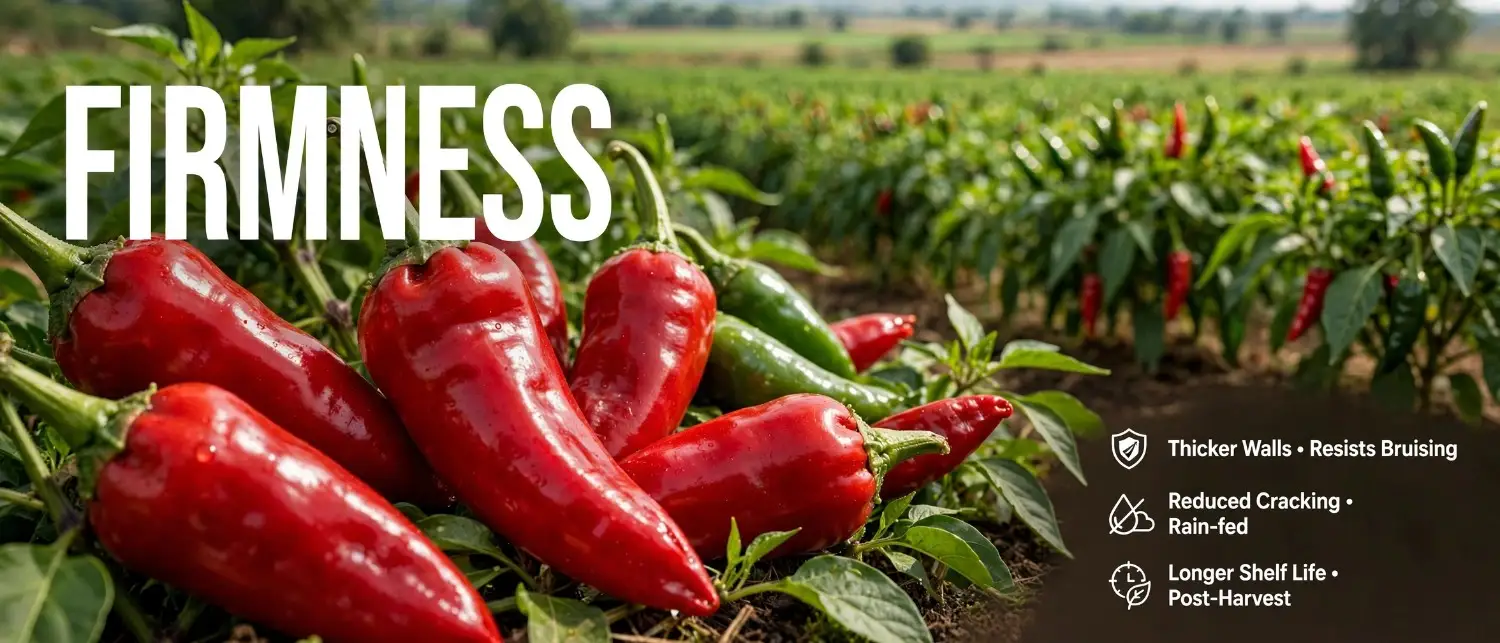
- Thicker fruit walls that resist bruising during transport
- Reduced fruit cracking, a common issue in rain-fed chilli belts
- Longer shelf life post-harvest, since firmer cell walls slow down microbial breakdown and moisture loss
Bio potash’s slow-release, biologically buffered nutrient profile means potassium remains available in the root zone for longer, supporting continuous cell wall reinforcement rather than a short nutrient burst that chemical potash sources typically provide.
If you’re also managing a fruiting or perennial crop alongside chilli, our article on bio potash application for lemon trees shows how the same firmness-building mechanism applies across fruit crops.
How Bio Potash Builds Disease Resistance in Chilli
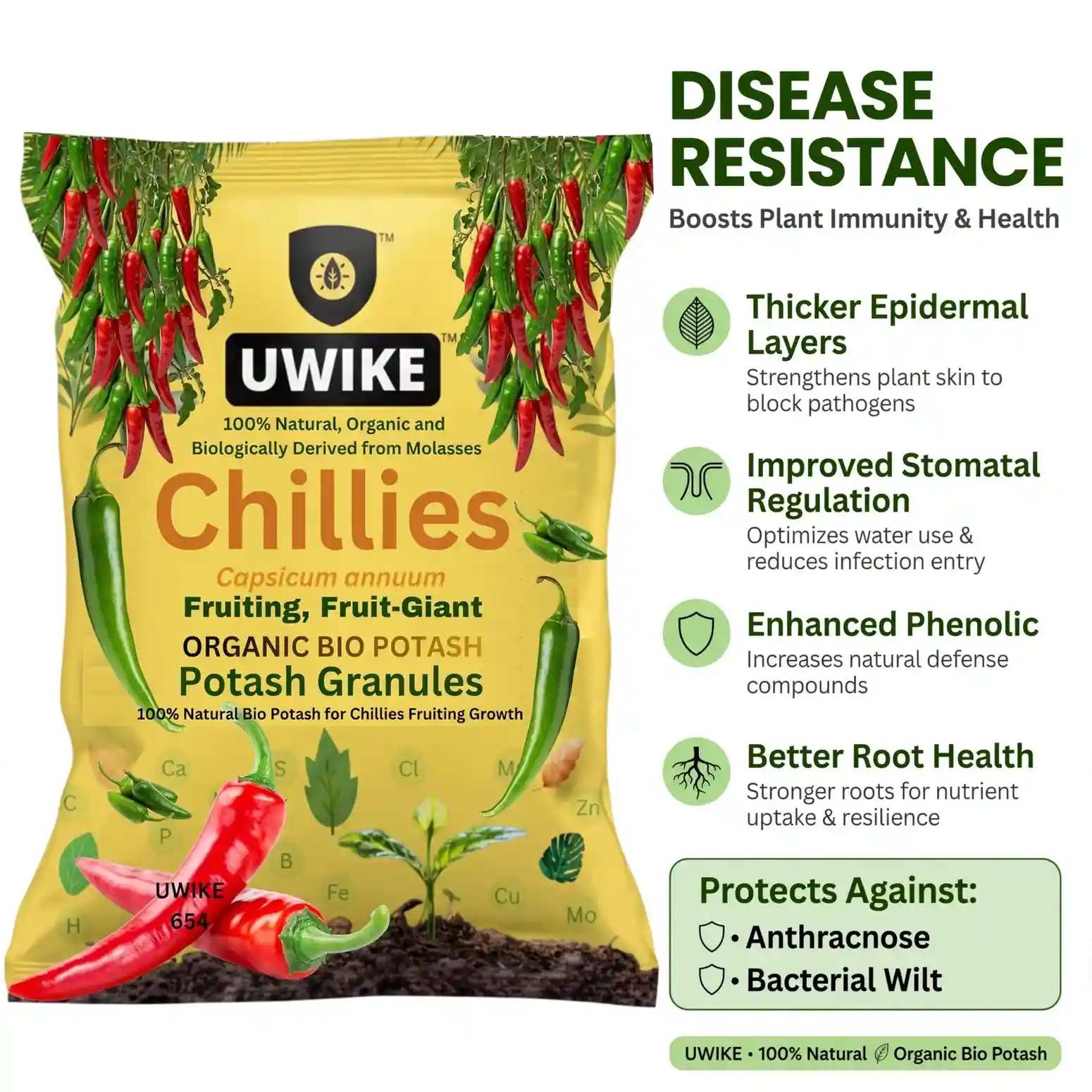
Potassium-sufficient plants activate stronger systemic defence responses. Specifically, bio potash contributes to disease resistance in chilli through:
- Thicker epidermal layers, which act as a physical barrier against fungal spore penetration
- Improved stomatal regulation, reducing the humid micro-environment that pathogens like Colletotrichum (anthracnose) exploit
- Enhanced phenolic compound production, which has antimicrobial properties within plant tissue
- Better root health, since bio potash’s organic carbon content supports beneficial rhizosphere microbes that outcompete soil-borne pathogens like Ralstonia solanacearum (bacterial wilt)
According to the Indian Council of Agricultural Research (ICAR), balanced potassium nutrition is one of the most consistent agronomic factors linked to reduced disease incidence across vegetable crops, reinforcing why potassium management deserves as much attention as fungicide schedules.
Explore Uwike’s complete bio potash and plant nutrition product range to start building a stronger, spicier chilli harvest this season.
Bio Potash vs Chemical Potash (MOP): A Comparison

| Parameter | Bio Potash (PDM) | Chemical Potash (MOP) |
|---|---|---|
| Source | Sugarcane molasses (organic) | Mined potassium chloride |
| Release pattern | Slow, sustained | Fast, short-duration |
| Soil microbial impact | Positive – supports beneficial microbes | Neutral to negative over time |
| Chloride content | Minimal to none | High (can stress chilli roots) |
| Effect on capsaicin | Gradual, consistent improvement | Variable, spike-dependent |
| Soil health, long-term | Improves organic carbon | No organic contribution |
| Best suited for | Organic and integrated nutrient farms | Conventional high-input farms |
Chilli is particularly chloride-sensitive during flowering, which makes bio potash’s low-chloride profile an agronomic advantage over standard MOP in many field trials.
Recommended Dosage and Application Schedule

| Growth Stage | Bio Potash Dosage (per acre) | Application Method |
|---|---|---|
| Pre-transplant (basal) | 15-20 kg | Mixed into soil before transplanting |
| Vegetative stage (25-30 DAT) | 10 kg | Broadcast near root zone, light irrigation after |
| Flower initiation | 15 kg | Side-dressing along rows |
| Fruit development (peak) | 15-20 kg | Split into two doses, 15 days apart |
| Post-harvest (for ratoon/second flush) | 10 kg | Broadcast with light hoeing |
DAT = Days After Transplanting
For growers managing large-volume orders, the Bio Potash 50 kg price guide breaks down cost-per-acre calculations in detail.
Step-by-Step Guide: Applying Bio Potash to Chilli Plants
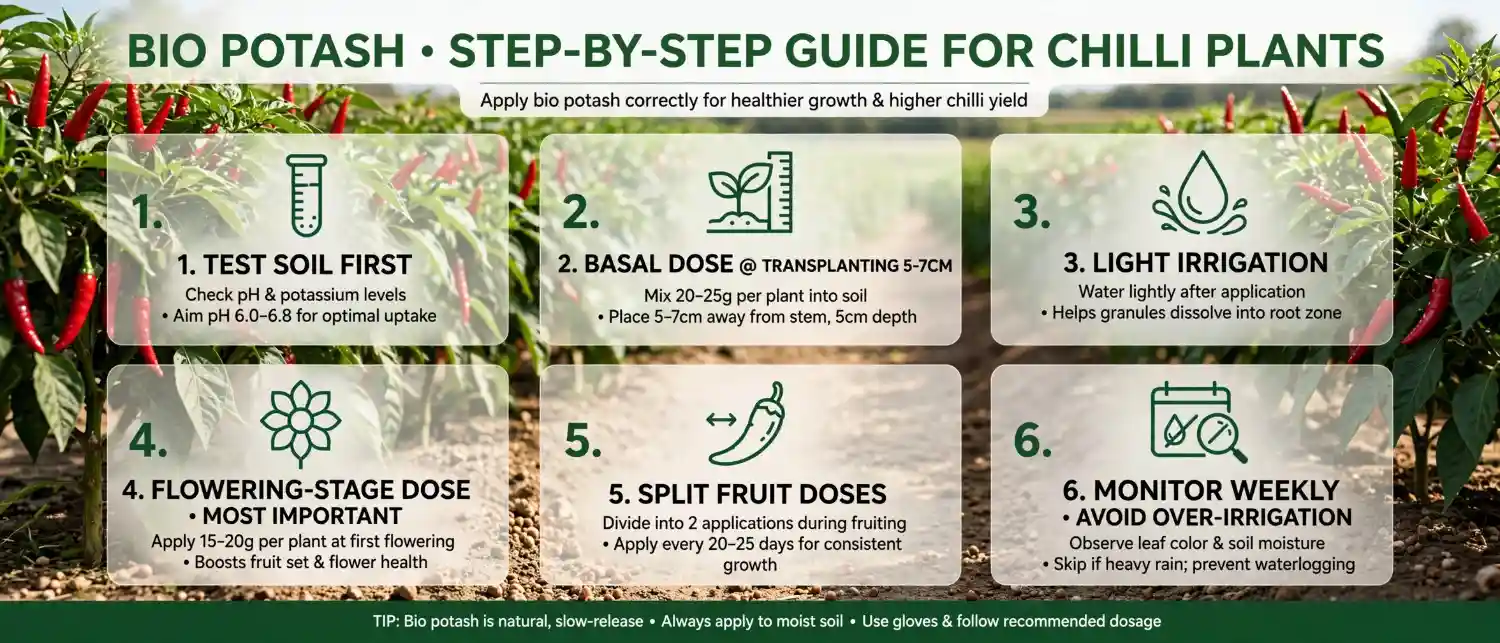
- Test your soil first. Confirm existing potassium levels before finalising dosage; heavy clay soils often need slightly higher rates.
- Apply the basal dose at transplanting, working the granules into the top 5-7 cm of soil.
- Irrigate lightly immediately after application to activate nutrient release.
- Time the flowering-stage dose precisely – this is the single most important application window for pungency development.
- Split fruit-development doses rather than applying all at once, to maintain steady potassium availability.
- Monitor leaf colour and fruit set weekly; deep green foliage with firm fruit-set is a good sign of adequate uptake.
- Avoid over-irrigation after application, as excess water can leach potassium away from the root zone before uptake.
Common Mistakes Growers Make With Potash Application
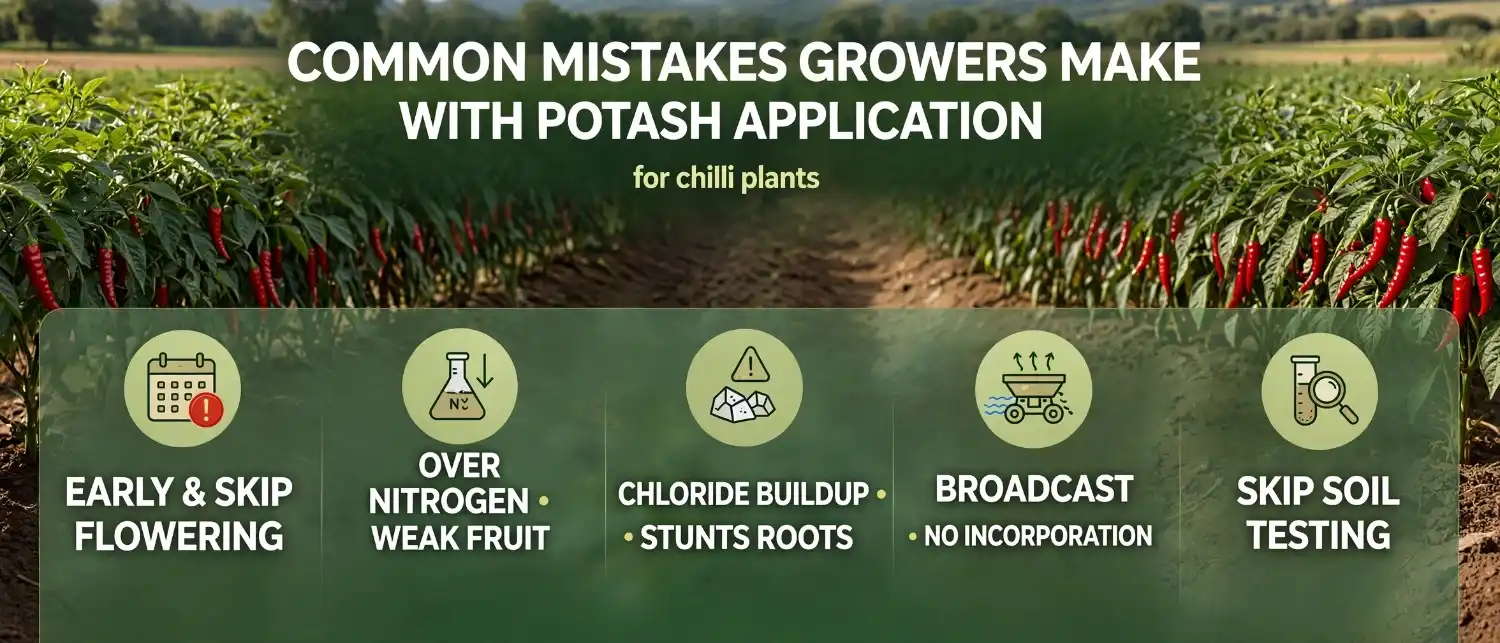
- Applying potash too early and skipping the flowering-stage dose – pungency development depends heavily on nutrient timing during flowering, not just total quantity applied.
- Over-relying on nitrogen while under-applying potassium, which produces lush foliage but weak, mild fruit.
- Ignoring soil chloride buildup from repeated MOP use, which can stunt chilli root development over successive seasons.
- Broadcasting without incorporation, causing nutrient loss through surface runoff, especially in rain-fed farms.
- Skipping soil testing, leading to either under-dosing (poor results) or over-dosing (wasted input cost).
Expert Tips for Maximum Results
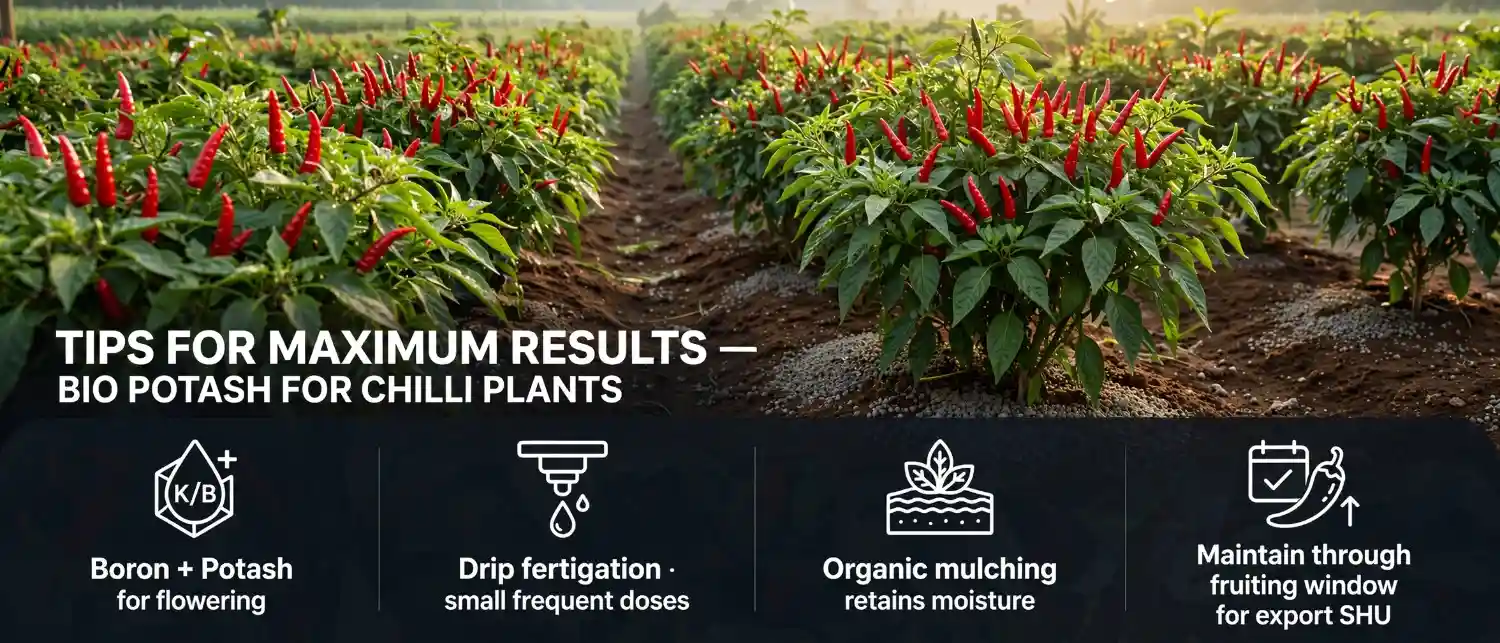
- Combine bio potash with a light dose of boron during flowering; boron improves pollen viability, which complements potassium’s role in fruit-set quality.
- In drip-irrigated farms, fertigate bio potash in smaller, more frequent doses rather than one large application for more efficient uptake.
- Rotate bio potash application with organic mulching to retain soil moisture, since potassium uptake is water-dependent.
- For export-grade chilli requiring higher SHU consistency, maintain potassium application through the entire fruiting window rather than stopping after the first flush.
Growers looking for ready-to-use granules can check the Bio Potash granules guide for packaging sizes and storage recommendations. Uwike’s bio potash range, including the molasses-derived formulation available on Amazon, is formulated specifically for fruiting and flowering crops like chilli, tomato, and citrus.
Frequently Asked Questions
1. What is bio potash for chilli plants?
Bio potash for chilli plants is a molasses-derived, biologically enhanced potassium fertilizer that improves capsaicin content, fruit firmness, and disease resistance through slow, sustained potassium release.
2. Does bio potash really increase chilli spiciness?
Yes. Potassium is a direct co-factor in the capsaicin biosynthesis pathway, so adequately supplying it through bio potash during flowering and fruiting typically results in noticeably hotter fruit.
3. When should I apply bio potash to chilli plants?
Apply a basal dose at transplanting, followed by additional doses at flower initiation and during peak fruit development, which are the two most nutrient-demanding stages.
4. Is bio potash better than muriate of potash (MOP) for chilli?
For chilli specifically, bio potash is often preferred because it carries minimal chloride, which chilli roots are sensitive to, while also supporting beneficial soil microbes that MOP does not.
5. Can bio potash help reduce chilli plant diseases?
Yes, indirectly – potassium-sufficient plants develop thicker cell walls and stronger systemic defences, which reduces susceptibility to anthracnose, powdery mildew, and bacterial wilt.
6. How much bio potash should I use per acre for chilli?
A typical schedule ranges between 55-65 kg per acre total, split across basal, flowering, and fruit-development stages, adjusted based on soil test results.
Conclusion
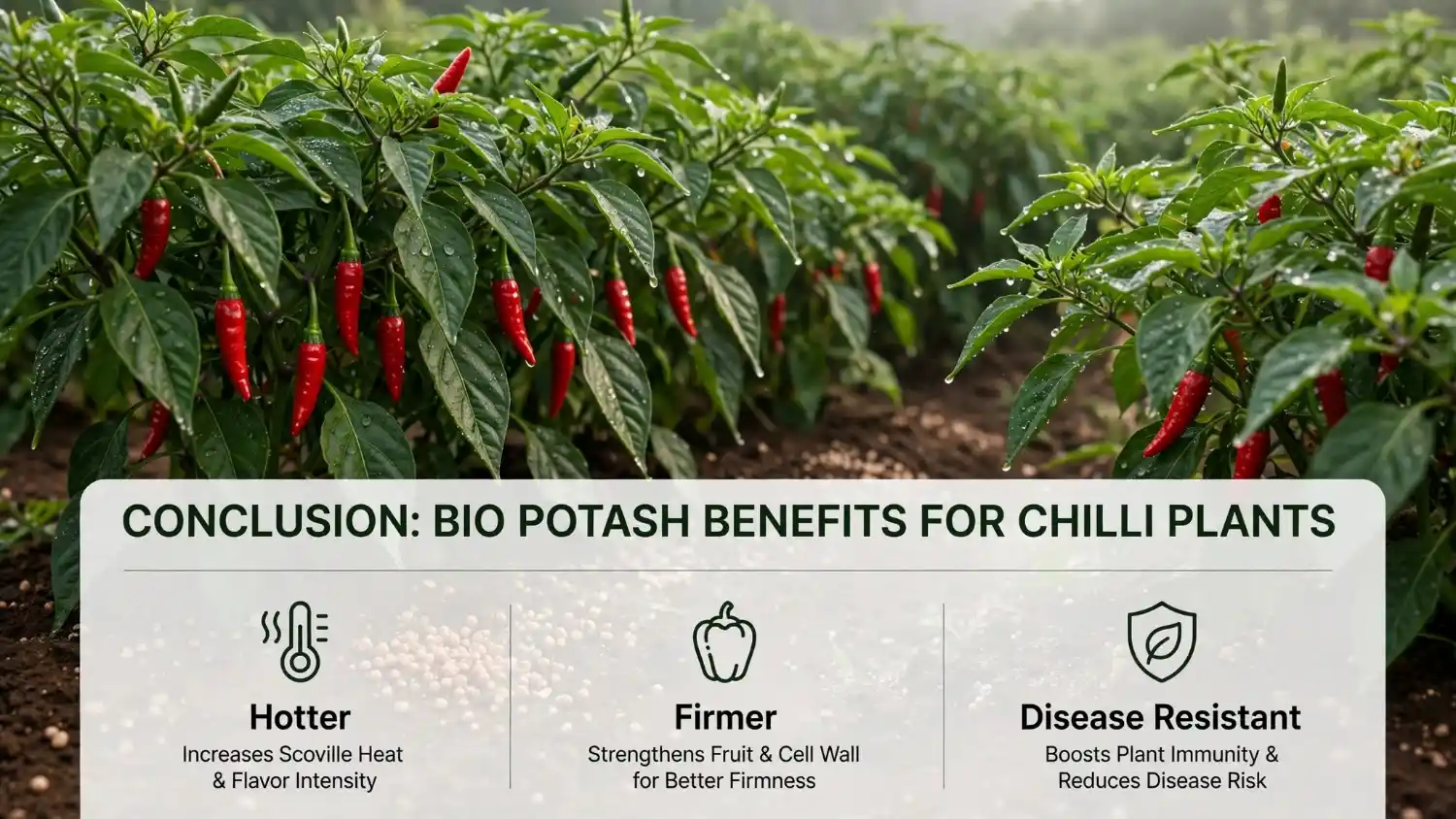
Bio potash for chilli plants isn’t just another input on the fertilizer schedule – it’s the nutrient most directly tied to the three qualities that determine a chilli crop’s market value: heat, firmness, and disease resistance. By timing applications around flowering and fruit development, and choosing a biologically enhanced, low-chloride source like PDM bio potash over conventional MOP, growers can produce a crop that holds up better in transit, resists field disease pressure, and commands a stronger price for its pungency.