
Knowing how to apply bio potash fertilizer correctly determines whether your crop gets usable potassium or wastes it. The three proven application methods are soil drench (root-zone delivery), foliar spray (leaf absorption for quick correction), and fertigation (dosing through drip or sprinkler systems). Each method suits a different crop stage, soil type, and irrigation setup, and mixing them up is the single biggest reason growers see disappointing results from an otherwise excellent input.
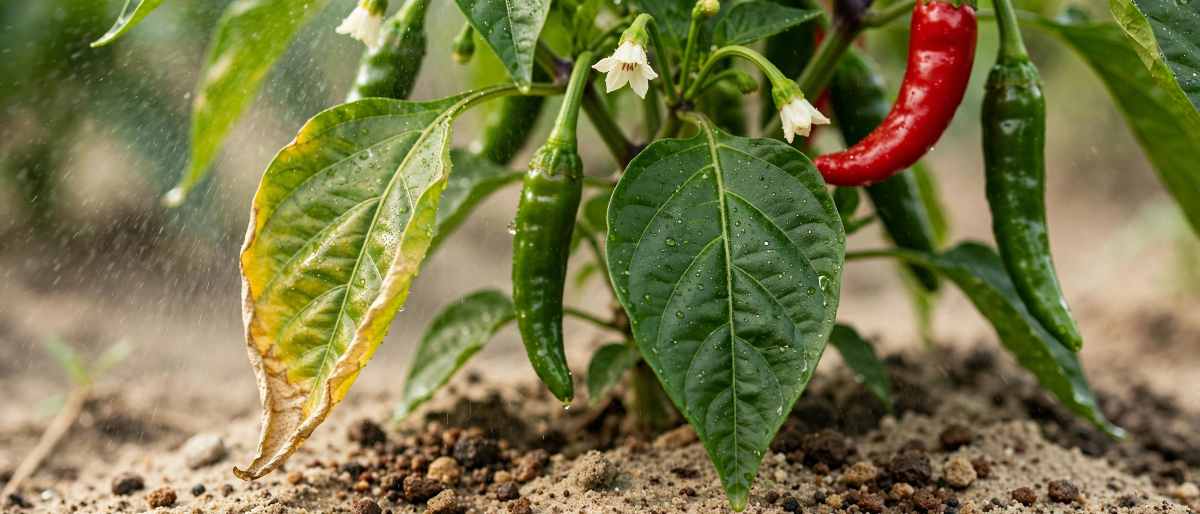
If you have ever wondered why two farmers using the same Bio Potash Granules pack ended up with completely different flowering and fruiting outcomes, the answer usually lies in application technique, not product quality. One grower may pour a rushed, over-concentrated solution straight onto dry soil, while the other pre-moistens the bed, measures the dose accurately, and follows up with light irrigation; the resulting difference in root-zone uptake can be substantial by the time flowering begins. Potassium derived from molasses (PDM) behaves differently in soil compared to synthetic potash, and getting the timing, dosage, and delivery method right is what separates a good harvest from an average one. This guide breaks down exactly how to apply bio potash fertilizer for soil fertility and plant nutrition outcomes that actually show up in your yield.
Before we get into the mechanics, it helps to understand why application method matters so much for this particular input.
What is Bio Potash Fertilizer and Why Does Application Method Matter
Bio Potash, also known as PDM (Potash Derived from Molasses), is an organic potassium source manufactured from sugarcane industry waste. Unlike synthetic muriate of potash, it carries organic carbon compounds, micronutrient traces, and a slower, more soil-friendly release pattern. You can read the complete breakdown in our guide on what potash derived from molasses actually contains, and for a broader overview of the input category itself, our complete guide to bio potash fertilizer is a useful starting point for first-time buyers.
Why Potassium Matters at Every Growth Stage
Potassium is often called the “quality nutrient” because, unlike nitrogen, which drives leafy growth, potassium governs how well a plant manages water, builds cell walls, and moves sugars from leaves to fruit. A crop short on potassium may look green and healthy early on, then suddenly show weak stems, poor flower retention, or shrivelled fruit once the reproductive stage begins. This is exactly why application timing for bio potash fertilizer is so tightly linked to crop stage rather than a fixed calendar date.
During the vegetative stage, potassium demand is comparatively low, and heavy dosing at this point is often wasted. Demand rises sharply once flowering begins and peaks during fruit development and ripening, when the plant is actively converting stored sugars into fruit mass. Consequently, most experienced growers concentrate their bio potash applications around these two windows: pre-flowering and fruit-development.
This staged demand pattern is also why a single, one-time application of bio potash fertilizer rarely matches the results of a properly spaced, stage-aligned schedule, even when the total seasonal quantity used is identical.
Recognising Potassium Deficiency Before It Costs You Yield
Learning to read early deficiency symptoms helps you decide which application method to reach for. Common signs include:
- Yellowing or browning along leaf margins, starting with older leaves first
- Weak, thin stems that bend easily under fruit weight
- Poor flower retention or excessive flower drop
- Fruit that ripens unevenly or stays smaller than expected
- Increased susceptibility to wilting during short dry spells
If you spot two or more of these symptoms together, a foliar spray is usually the fastest corrective step, followed by a soil drench to rebuild the root-zone reserve over the following weeks. Waiting too long to act on early symptoms often means the plant has already lost part of its flowering or fruiting potential for that cycle, so treat visible deficiency signs as a prompt to act within days, not weeks.
Because it is organic and granular by default, Bio Potash interacts with soil microbes and moisture differently than chemical potash does. That difference is exactly why:
- Soil drench works well for steady, season-long root uptake.
- Foliar spray corrects visible potassium deficiency symptoms fast.
- Fertigation suits large-scale, irrigation-linked farms that need uniform dosing.
Choosing the wrong method does not make the product ineffective; it just delays or dilutes the benefit. According to nutrient management guidance from the Food and Agriculture Organization, matching application timing and delivery method to crop growth stage is one of the most reliable ways to improve nutrient use efficiency. Let’s look at each method in detail.
Method 1: Soil Drench Application
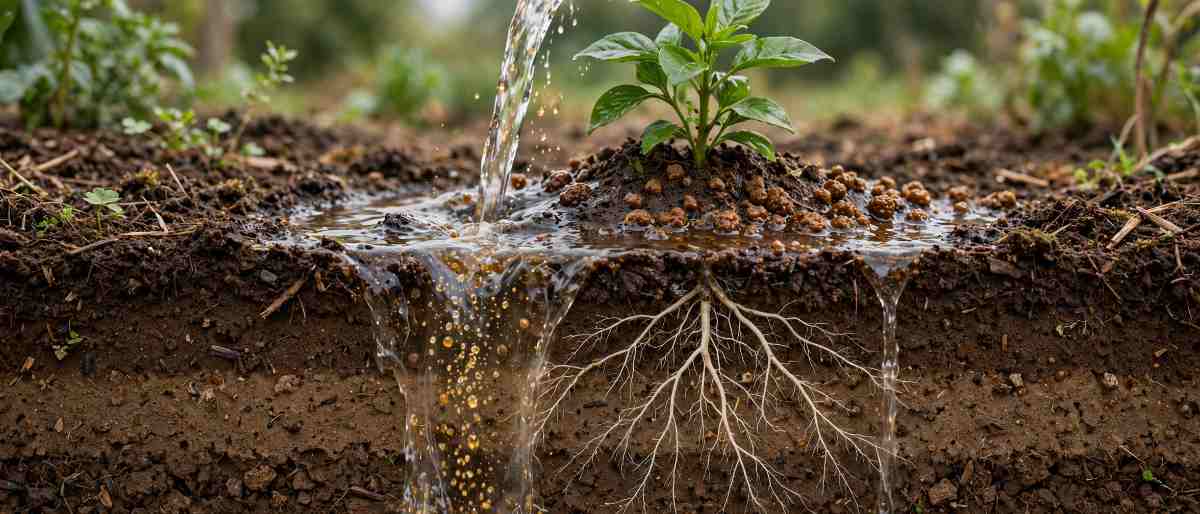
Soil drench is the most common and beginner-friendly way to apply bio potash fertilizer, especially for home gardeners, orchard growers, and kitchen-garden setups.
How Soil Drench Works
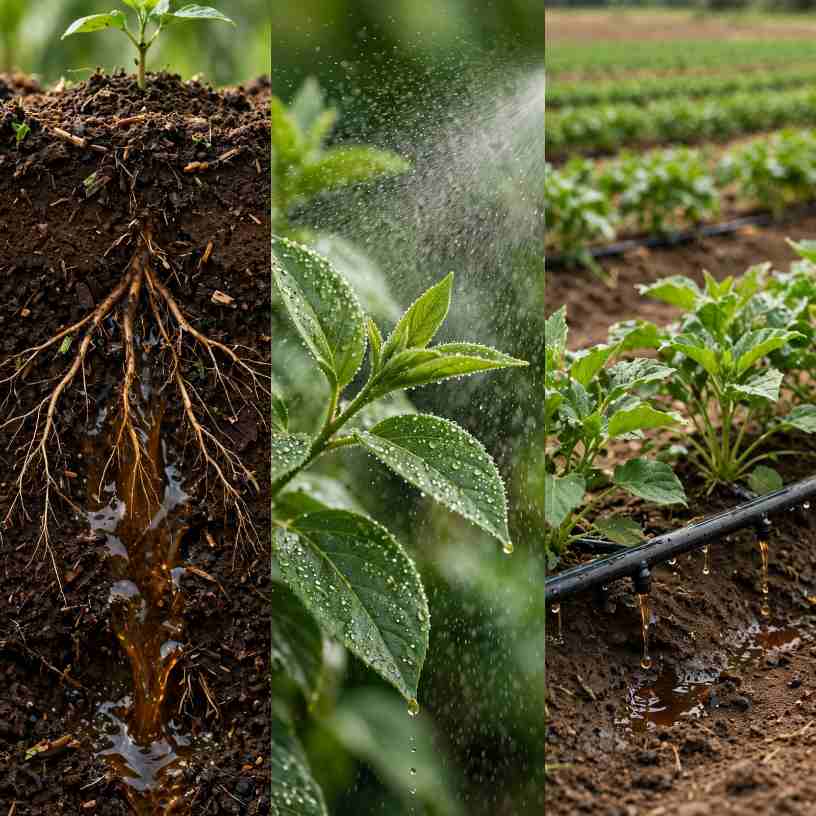
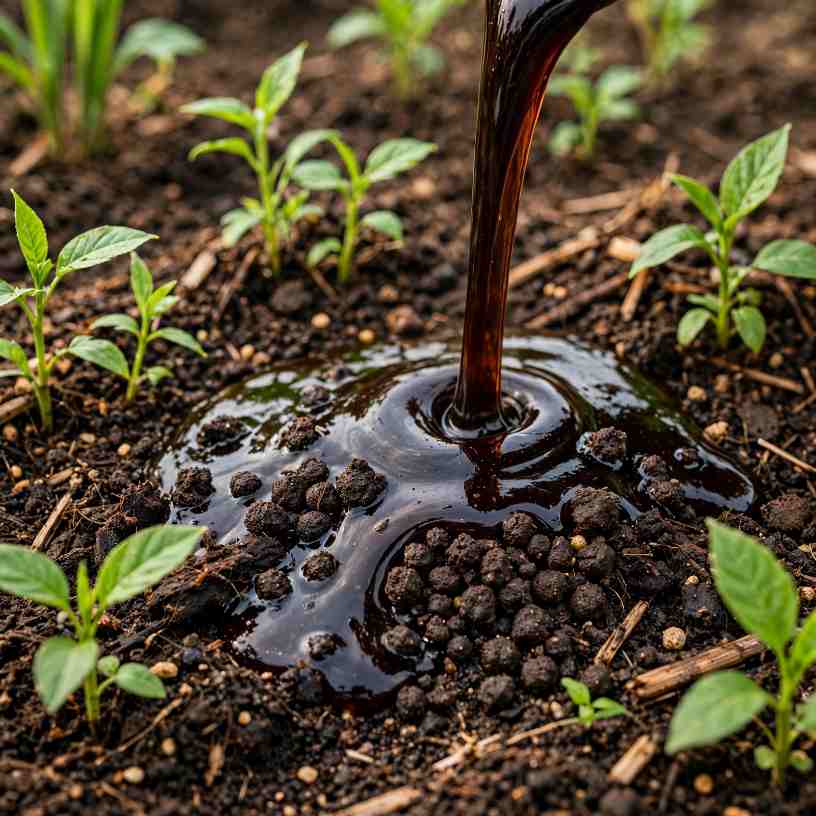
Granules are dissolved in water and poured directly around the root zone, allowing potassium to move into the soil profile where feeder roots can absorb it. This method mimics natural nutrient cycling and works particularly well because Bio Potash granules dissolve steadily rather than dumping nutrients all at once.
Step-by-Step Soil Drench Process
- Measure the dose. Standard field crops typically need 8-10 kg per acre per application, while container or garden plants need a proportionally smaller amount based on pot size.
- Dissolve in water. Mix the measured granules in a bucket of clean water and stir until mostly dissolved; a slight sediment is normal.
- Water the base first. Give the plant a light pre-irrigation so the soil is moist, not dry, before applying the solution.
- Pour around the root zone. Apply the mixture in a ring around the stem, avoiding direct contact with the stem base to prevent rot.
- Follow with light irrigation. A short follow-up watering helps carry the nutrients down to the active root zone.
- Repeat on schedule. Most crops respond well to soil drench every 15-20 days during the flowering and fruiting stages.
This is the exact method detailed in our lemon tree application guide, which covers timing and dosage for fruit trees specifically.
When Soil Drench Is the Right Choice
- Fruit trees and perennial crops with established root systems
- Home gardens and container plants
- Farms without drip irrigation infrastructure
- Situations where slow, sustained release is preferred over quick correction
Method 2: Foliar Spray Application
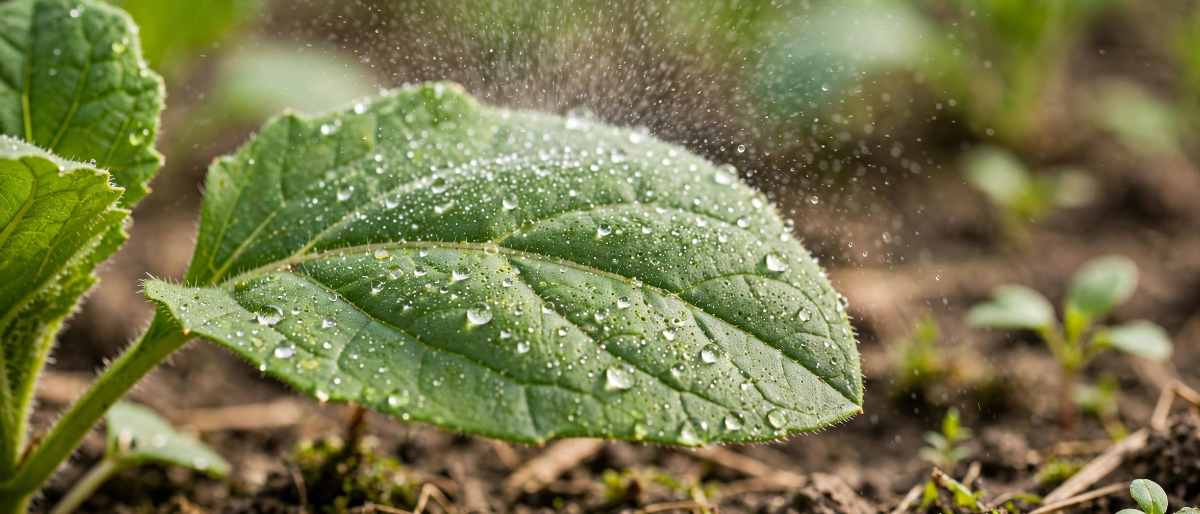
Foliar spray is the fastest way to apply bio potash fertilizer when a crop shows visible signs of potassium deficiency, such as yellowing leaf margins, weak stems, or poor flower retention.
How Foliar Spray Works
Instead of waiting for roots to absorb potassium from the soil, foliar spray delivers a diluted nutrient solution directly onto the leaf surface. Leaves absorb a portion of this nutrient through the stomata, giving the plant a faster, though shorter-lived, potassium boost compared to soil-based methods.
Step-by-Step Foliar Spray Process
- Prepare a dilute solution. Use roughly 3-5 grams of Bio Potash per litre of water for foliar application; this is far more dilute than a soil drench mix.
- Strain the solution. Pass the mixture through a fine cloth or strainer to avoid clogging sprayer nozzles.
- Choose the right time of day. Spray early morning or late evening, never during peak sun hours, to prevent leaf scorch and evaporation loss.
- Spray evenly. Cover both the upper and lower leaf surfaces, since nutrient uptake happens through stomata on both sides.
- Avoid spraying before rain. Rainfall within a few hours washes off the applied nutrients before absorption completes.
- Repeat every 10-12 days. Foliar feeding works best as a supplementary boost, not a replacement for soil-based feeding.
For flowering-specific timing, our article on how Bio Potash works as a flowering fertilizer explains exactly when foliar correction produces the most blooms.
When Foliar Spray Is the Right Choice
- Visible deficiency symptoms need urgent correction
- Flowering or fruit-set stages where a quick potassium push improves retention
- Crops like chilli, where fruit firmness and pungency respond well to targeted foliar feeding, as covered in our chilli plant application guide
- Sandy or fast-draining soils where root uptake is inconsistent
Method 3: Fertigation Application
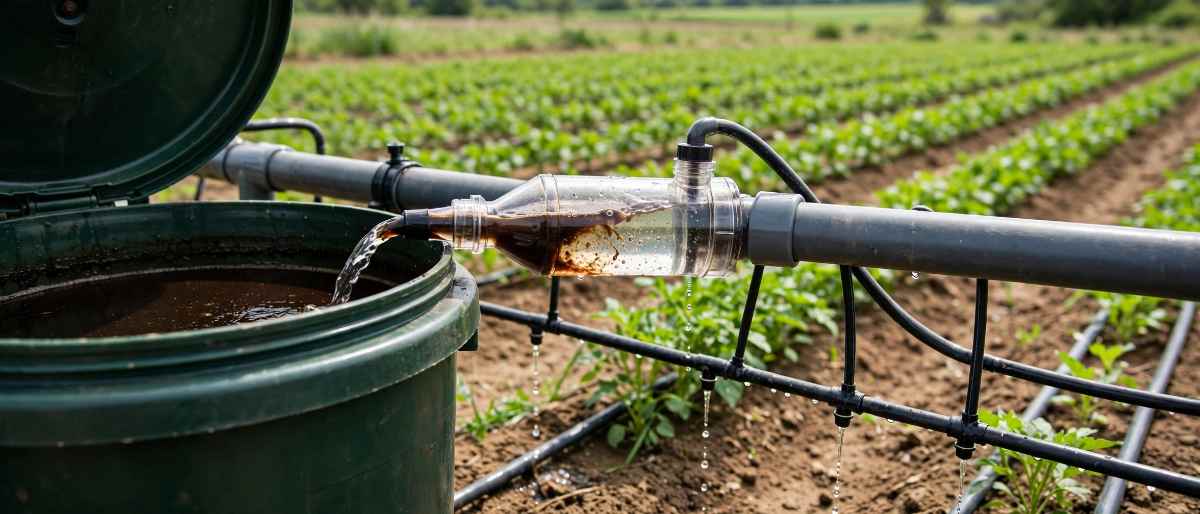
Fertigation is the preferred method for commercial farms and large orchards running drip or sprinkler irrigation systems, since it applies bio potash fertilizer with the most uniform accuracy across large areas.
How Fertigation Works
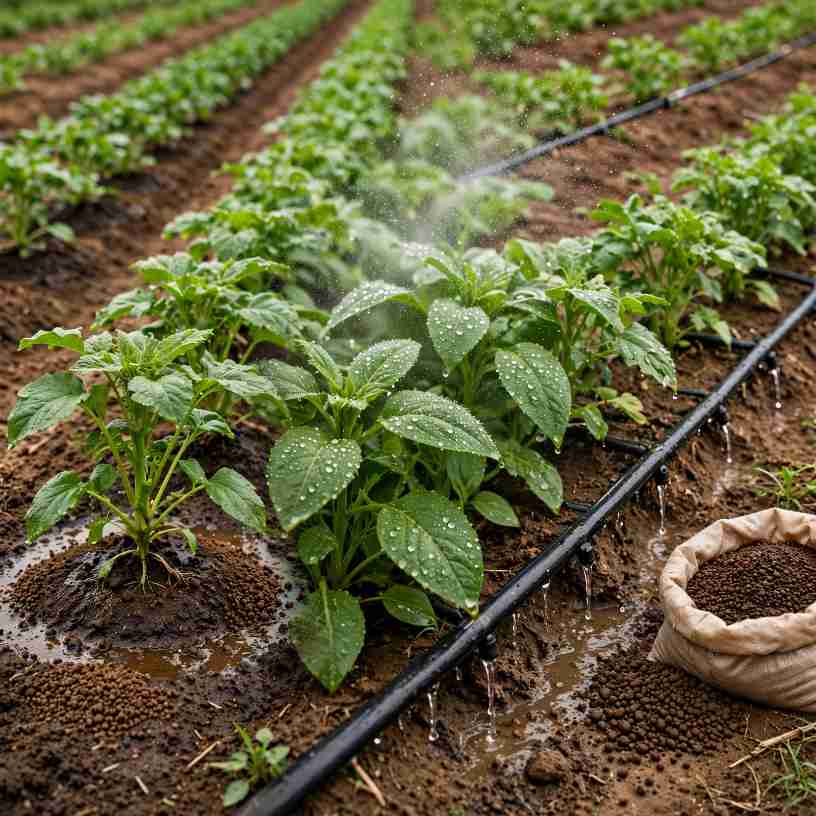
Bio Potash is dissolved into a stock solution and injected into the irrigation line using a venturi injector, fertigation pump, or simple bypass tank. Since the solution travels through the same network delivering water, every plant in the field receives a near-identical dose, which reduces the guesswork that comes with manual application.
Step-by-Step Fertigation Process
- Prepare the stock solution. Dissolve the calculated field dose in a stock tank, stirring thoroughly to minimise undissolved sediment.
- Filter before injection. Pass the solution through a mesh filter to protect drippers and emitters from clogging.
- Run plain water first. Start the irrigation cycle with 10-15 minutes of plain water to settle the lines and wet the soil.
- Inject the nutrient solution. Begin fertigation midway through the irrigation cycle so the nutrients reach the active root zone rather than surface soil.
- Flush with plain water. End the cycle with another 10-15 minutes of plain water to clear the lines and push nutrients deeper into the root zone.
- Schedule by growth stage. Fertigation frequency generally increases during flowering and fruit development phases compared to the vegetative stage.
When Fertigation Is the Right Choice
- Large-scale commercial farms with existing drip or sprinkler systems
- Crops needing consistent, low-dose feeding across multiple cycles
- Water-scarce regions where nutrient efficiency per litre matters
- Growers already using Bio Potash Granules at scale and looking to reduce manual labour
Bio Potash vs Chemical Potash: Does Application Method Change?
A frequent question growers ask is whether bio potash fertilizer needs a completely different application approach compared to synthetic potash sources like muriate of potash (MOP) or sulphate of potash (SOP). The short answer is: the delivery methods are the same, but the timing and dosage logic differ.
- Release pattern: Chemical potash releases nutrients almost immediately, which can lead to leaching losses in sandy soil or during heavy irrigation. Bio Potash, being organic, releases more gradually, so it tolerates slightly wider gaps between applications without a sharp drop in availability.
- Soil microbial impact: Because Bio Potash carries organic carbon from its molasses base, it tends to support soil microbial activity rather than disrupt it, which is one reason growers pair it with organic farming programmes.
- Dosage sensitivity: Chemical potash can cause salt stress if overdosed, especially in a foliar application. Bio Potash is comparatively more forgiving, though the general dosage guidelines above should still be followed for consistent results.
- Application frequency: Because of its slower release, Bio Potash generally works well with a slightly more frequent, lower-dose schedule rather than a single heavy application per stage.
This doesn’t mean dosage discipline matters less with Bio Potash; it simply means the margin for minor timing errors is a little wider, which is particularly useful for smaller growers who cannot monitor their fields daily.
Tools and Equipment Checklist by Application Method
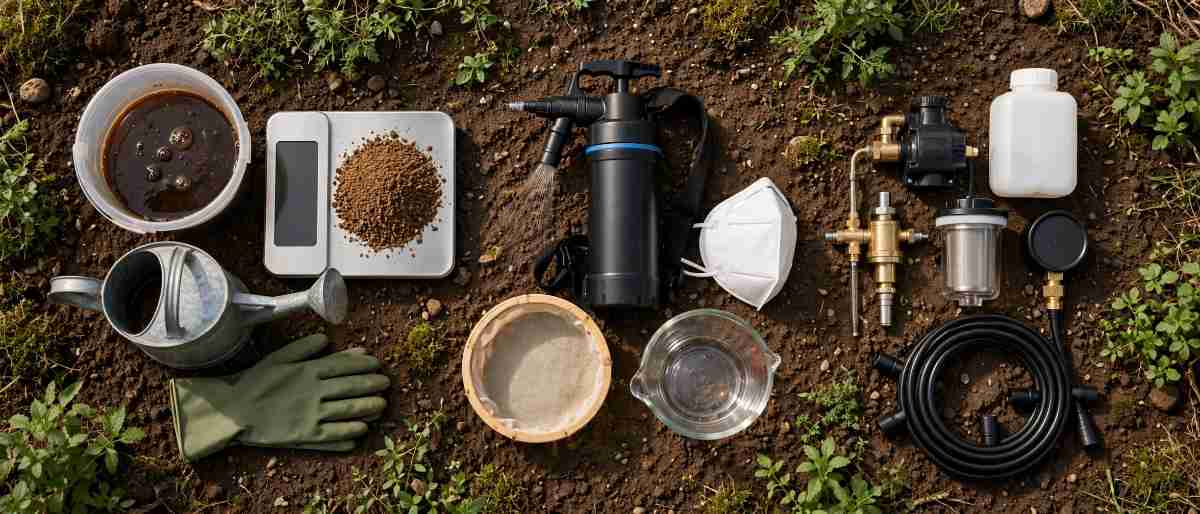
Having the right equipment ready before you begin makes the actual process of applying bio potash fertilizer far smoother. Here is a quick checklist for each method:
For soil drench:
- Clean bucket or mixing container
- Accurate weighing scale for granules
- Watering can or hose for follow-up irrigation
- Gloves (recommended for handling concentrated solutions)
For foliar spray:
- Backpack or hand-pump sprayer with a fine-mist nozzle
- Fine strainer cloth to filter the solution
- Measuring cup for accurate dilution
- Protective mask, especially for large-scale spraying sessions
For fertigation:
- Stock solution tank
- Venturi injector or fertigation pump
- Inline mesh filter
- Pressure gauge to monitor consistent flow through the drip network
Keeping this equipment clean between uses prevents residue buildup, which over time can affect dosage accuracy and clog delivery systems, particularly sprayer nozzles and drip emitters. A quick rinse after every session, along with periodic descaling of nozzles and injector parts, extends equipment life and keeps dosing consistent from one application to the next.
Comparison Table: Soil Drench vs Foliar Spray vs Fertigation
| Parameter | Soil Drench | Foliar Spray | Fertigation |
|---|---|---|---|
| Best for | Home gardens, orchards | Quick deficiency correction | Commercial, large-scale farms |
| Speed of response | Moderate (7-10 days) | Fast (2-4 days) | Moderate to fast |
| Equipment needed | Bucket, watering can | Sprayer with fine nozzle | Drip/sprinkler + injector |
| Typical dose | 8-10 kg/acre | 3-5 g/litre water | Field-calculated stock solution |
| Frequency | Every 15-20 days | Every 10-12 days | Aligned with irrigation cycle |
| Labour intensity | Moderate | Low to moderate | Low (once system is set) |
| Ideal crop stage | Flowering, fruiting | Deficiency symptoms, flowering | Vegetative through fruiting |
How to Apply Bio Potash Fertilizer: Dosage Quick Reference
| Crop Type | Soil Drench Dose | Foliar Spray Dose | Application Frequency |
|---|---|---|---|
| Vegetables (chilli, tomato) | 8-10 kg/acre | 3-4 g/litre | Every 15 days |
| Fruit trees (lemon, citrus) | 100-150 g/tree | 4-5 g/litre | Every 20-25 days |
| Field crops | 8-10 kg/acre | 3-5 g/litre | Aligned with growth stage |
| Container/garden plants | 5-10 g/plant | 2-3 g/litre | Every 15-20 days |
Note: Always adjust dosage based on soil test results and crop stage; these figures are general starting points.
How Soil Type Changes Your Application Approach
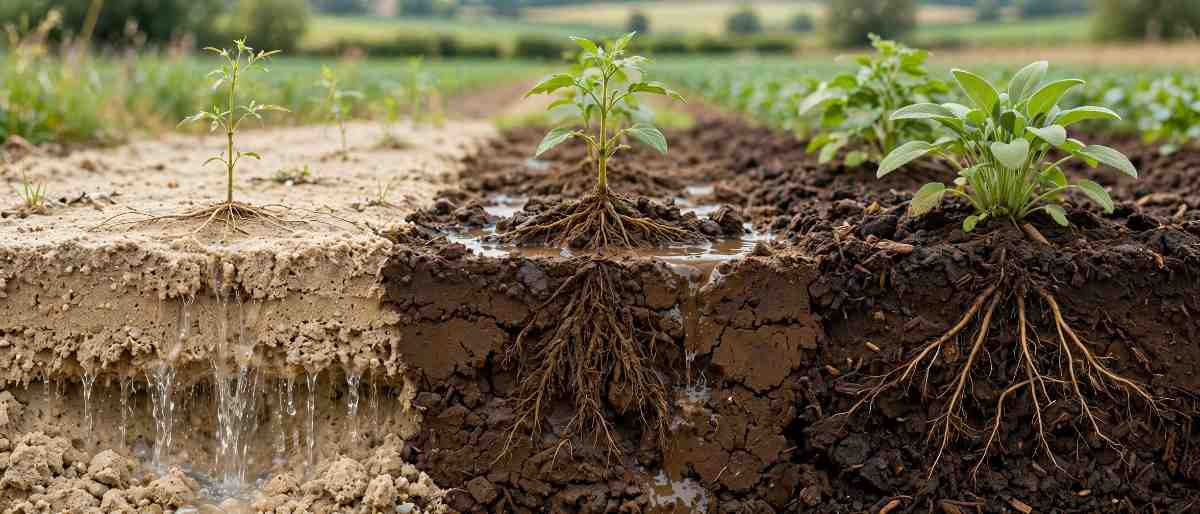
Soil texture has a direct effect on which method delivers the best return when you apply bio potash fertilizer, since water movement and nutrient retention vary significantly between soil types.
Sandy and Light Soils
Sandy soils drain quickly, which means a single heavy soil drench can leach past the root zone before the plant absorbs much of it. For sandy conditions:
- Split the total seasonal dose into smaller, more frequent applications.
- Lean more heavily on foliar spray during critical growth windows, since root-zone retention is unreliable.
- If using fertigation, shorten each irrigation cycle and increase frequency rather than applying one long cycle.
Clay and Heavy Soils
Clay soils hold water and nutrients longer but drain slowly, so overwatering during a soil drench can cause waterlogging around the root zone. For clay-heavy plots:
- Apply drench solutions in smaller volumes spread over a slightly wider area rather than one concentrated pour.
- Allow more time between applications, since nutrients stay available in the soil for longer.
- Ensure adequate drainage before scheduling fertigation cycles to avoid root suffocation.
Loamy Soils
Loamy soil is generally the most forgiving for all three application methods, since it balances drainage and retention well. Most of the standard dosage figures in the tables above are calibrated with loamy soil conditions in mind, so growers on sandy or clay-heavy land should treat those numbers as a starting reference rather than a fixed rule.
Seasonal Application Calendar for Bio Potash Fertilizer
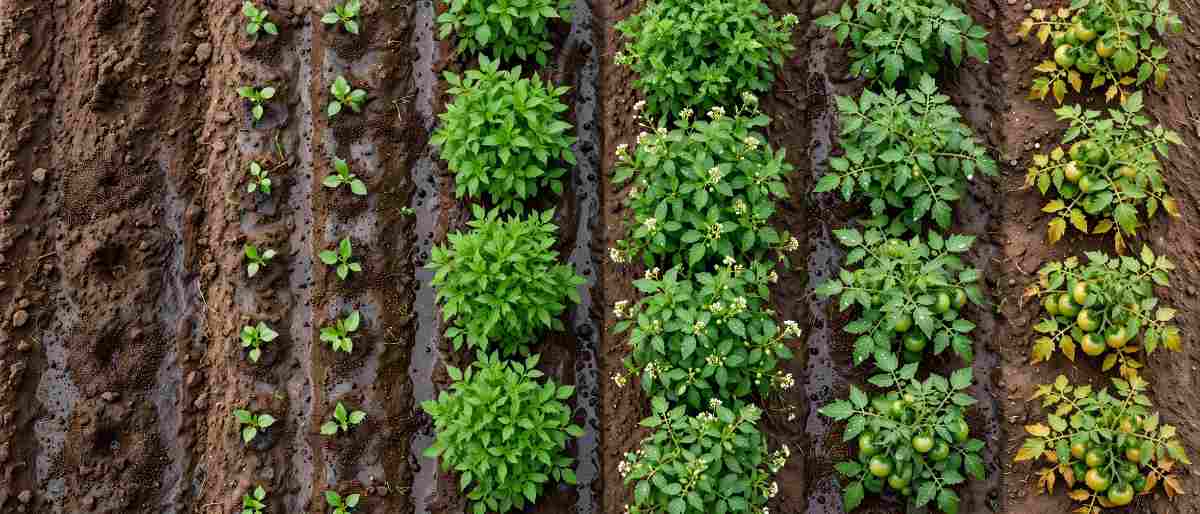
Timing application around the crop calendar, rather than the regular clock, consistently produces better results. A general seasonal framework looks like this:
- Pre-sowing or transplanting stage: A light base dose incorporated into the soil helps establish early root development, though this is typically a smaller quantity than the flowering-stage dose.
- Vegetative growth stage: Minimal potassium is needed here; focus resources on nitrogen and phosphorus instead, and hold the main bio potash application for the next stage.
- Pre-flowering stage: This is where the first significant soil drench or fertigation dose should begin, roughly two to three weeks before expected flowering.
- Flowering and fruit-set stage: Combine soil drench with a supplementary foliar spray to support flower retention and reduce drop.
- Fruit development stage: Continue regular soil drench or fertigation cycles to support fruit sizing and sugar accumulation.
- Pre-harvest stage: Taper off applications roughly two to three weeks before harvest, since late-stage potassium addition offers diminishing returns.
Common Mistakes When Applying Bio Potash Fertilizer
Even a high-quality organic input like Bio Potash underperforms when application basics are ignored. Watch out for these frequent errors:
- Applying on dry soil. Pouring a drench solution onto bone-dry soil causes uneven runoff instead of absorption; always pre-moisten first.
- Spraying during peak sunlight. Midday foliar application increases the risk of leaf burn and rapid evaporation before uptake occurs.
- Overdosing container plants. Garden pots hold far less soil volume than field plots, so field-rate dosing often shocks smaller root systems.
- Skipping the filter step in fertigation. Undissolved sediment clogs drippers and creates uneven distribution across the field.
- Ignoring crop stage. Applying heavy potassium doses during early vegetative growth wastes the input; potassium demand peaks at flowering and fruiting.
- Mixing incompatible inputs. Combining Bio Potash with strongly acidic or alkaline solutions in the same tank can reduce nutrient availability.
- Storing prepared solutions too long. Bio Potash solutions, once mixed, should ideally be used within a few hours since prolonged storage can reduce nutrient stability, particularly in warm weather.
- Applying immediately after transplanting. Newly transplanted seedlings have limited root activity; wait until the plant shows visible new growth before starting a full-strength drench schedule.
- Using the same dose across all growth stages. Flowering and fruiting stages need noticeably more potassium than the early vegetative stage, so a flat, unchanging dose across the season under-serves peak-demand periods and over-serves low-demand ones.
Expert Tips for Better Results

- Pair with soil testing. A basic soil potassium test every season helps fine-tune dosage instead of guessing; the Soil Health Card Scheme run by the Government of India offers free testing support for farmers who want a baseline reading.
- Rotate application methods. Many experienced growers use soil drench as the base feeding schedule and foliar spray as a mid-season booster during flowering, combining the strengths of both slow, sustained release and fast leaf-level correction.
- Keep a simple application log. Noting the date, method, and dose for each application, even in a basic notebook, makes it far easier to diagnose problems later and fine-tune next season’s schedule.
- Observe before you correct. Not every yellowing leaf is a potassium issue; cross-check symptoms against nitrogen or magnesium deficiency signs before assuming Bio Potash is the fix needed.
- Time applications with weather. Avoid application right before heavy rain or extreme heat; both reduce absorption efficiency.
- Maintain consistent scheduling. Bio Potash performs best with regular, smaller doses rather than infrequent large ones, since organic potassium sources release gradually. Research summarised by the Indian Council of Agricultural Research supports split-dose potassium application over single heavy doses for most horticultural crops.
- Check pricing before bulk buying. If you are scaling up to bulk quantities, comparing per-acre cost across pack sizes helps you plan the season’s input budget more accurately.
Frequently Asked Questions
How do I apply bio potash fertilizer for the first time?
Start with a soil drench at the standard rate for your crop, applied around the root zone after light pre-watering. This is the easiest method to begin with before moving to foliar or fertigation techniques.
Can I mix bio potash with other fertilizers during application?
Yes, in most cases, though it is best to avoid mixing with strongly acidic or alkaline solutions in the same tank, since this can reduce potassium availability.
What is the best time of day to apply bio potash fertilizer as a foliar spray?
Early morning or late evening works best, since midday heat increases evaporation and raises the risk of leaf scorch.
How often should I apply bio potash fertilizer during flowering?
Most crops benefit from soil drench every 15-20 days and foliar spray every 10-12 days through the flowering and fruit-set window.
Is fertigation better than soil drench for applying bio potash fertilizer?
Fertigation suits large farms with existing drip systems because it is faster and more uniform, while soil drench remains ideal for gardens, orchards, and smaller plots without irrigation infrastructure.
Can bio potash fertilizer be applied to container or potted plants?
Yes, but at a reduced dose compared to field crops. Since pots hold far less soil volume, use the small-scale dosage figures in the reference table and monitor drainage closely to avoid nutrient buildup.
Does soil type affect how I should apply bio potash fertilizer?
Yes, significantly. Sandy soils need smaller, more frequent doses since nutrients leach quickly, while clay soils retain nutrients longer and need wider, lighter application to avoid waterlogging around the root zone.
What happens if I apply too much bio potash fertilizer at once?
Overdosing, especially in container plants or sandy soil, can cause nutrient imbalance and stress the root system. It is safer to split a large dose into two smaller applications spaced a week apart than to apply it all at once.
Conclusion
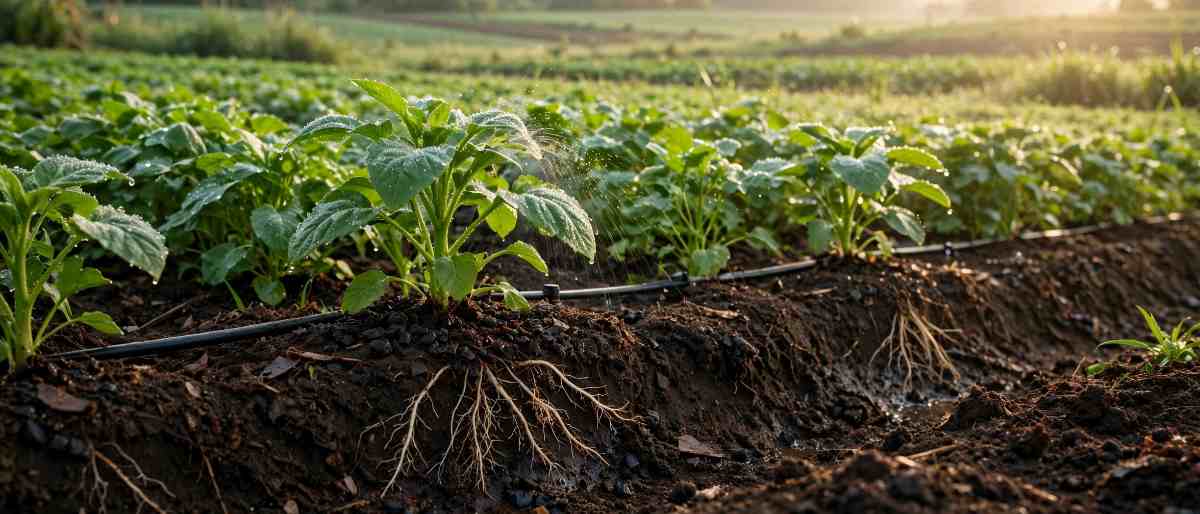
Application technique is not a minor detail tacked onto product quality; it is often the single biggest lever a grower controls once the right input has been chosen. Getting the technique right matters just as much as the product itself. Whether you choose soil drench for steady root-zone feeding, foliar spray for fast correction, or fertigation for large-scale precision, understanding how to apply bio potash fertilizer correctly is what turns a good input into a genuinely productive harvest. Start with the method that matches your setup, follow the dosage guidelines above, and adjust based on how your crop responds season over season. Explore Uwike’s full range of bio potash solutions to find the right product and application support for your soil fertility and plant nutrition goals.