
Bio Potash Granules are a molasses-derived, granulated potassium source that supplies plant-available K along with organic carbon and micronutrients, positioning them as a soil-friendly alternative to conventional mined potash. Also known as PDM (Potash Derived from Molasses), this granular fertilizer has become one of the fastest-growing inputs among Indian farmers looking to balance yield with long-term soil health. This guide breaks down exactly how Bio Potash Granules work, how much to apply, and where they fit into your fertility program.
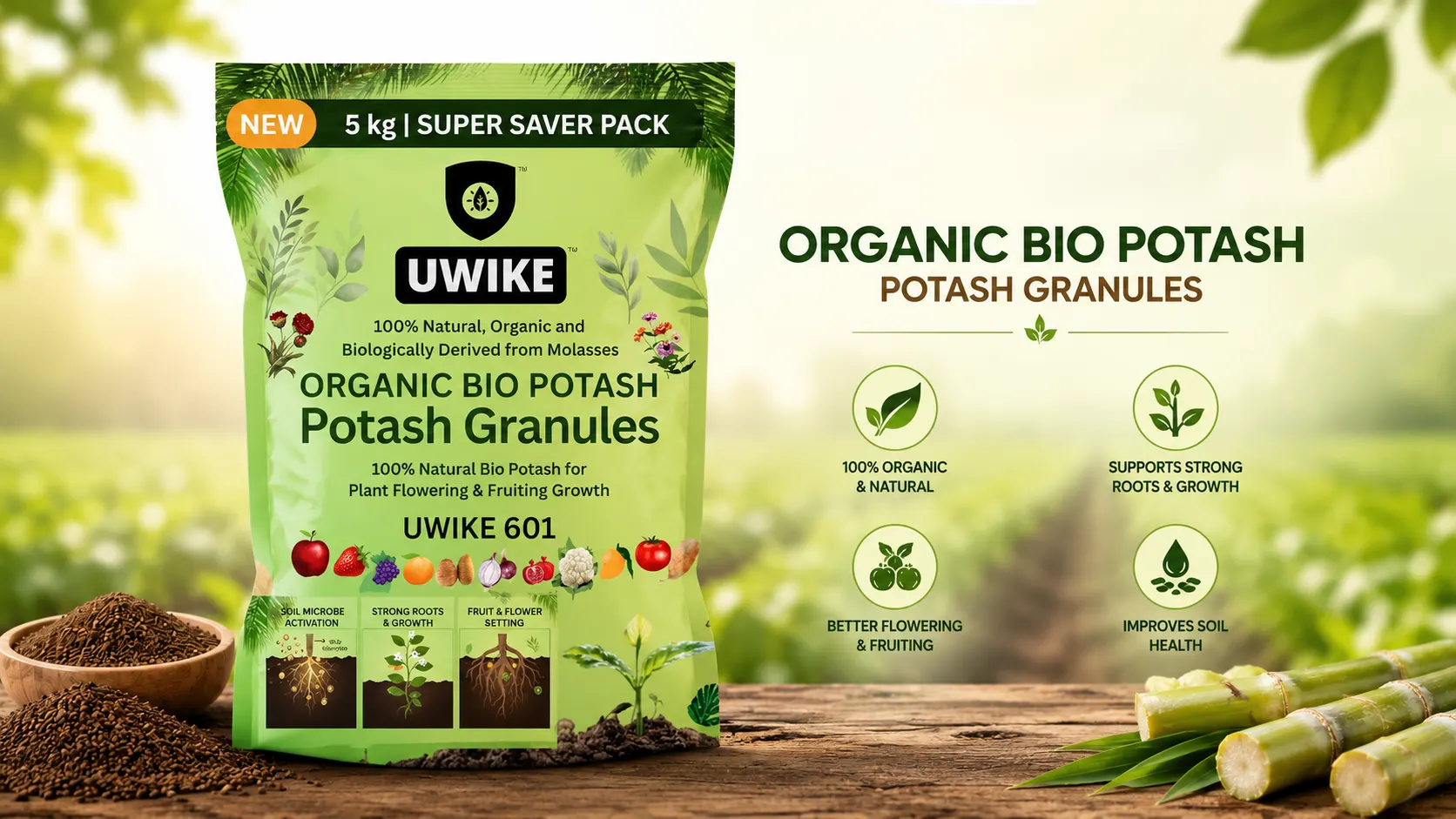
If you’re building a nutrient program around soil fertility and plant nutrition rather than short-term yield spikes alone, Bio Potash Granules deserve a serious look, since they combine the agronomic role of potassium with the microbial and organic-matter benefits typically associated with bio-fertilizers. Over the past decade, Indian agriculture has moved steadily toward integrated nutrient management, and this shift has pushed molasses-based potash sources from a niche curiosity into a mainstream input across cereal belts, vegetable clusters, and horticultural zones alike.
What Are Bio Potash Granules?
Bio Potash Granules are a granulated fertilizer manufactured by fermenting and processing molasses – a thick, nutrient-rich by-product left over from sugarcane refining. During processing, potassium naturally present in the molasses is concentrated, stabilized, and formed into uniform granules that are easy to store, transport, and apply. Because the granules are compact and free-flowing, they spread evenly through standard broadcasting equipment, which is one reason adoption has grown so quickly among small and mid-sized Indian farms.
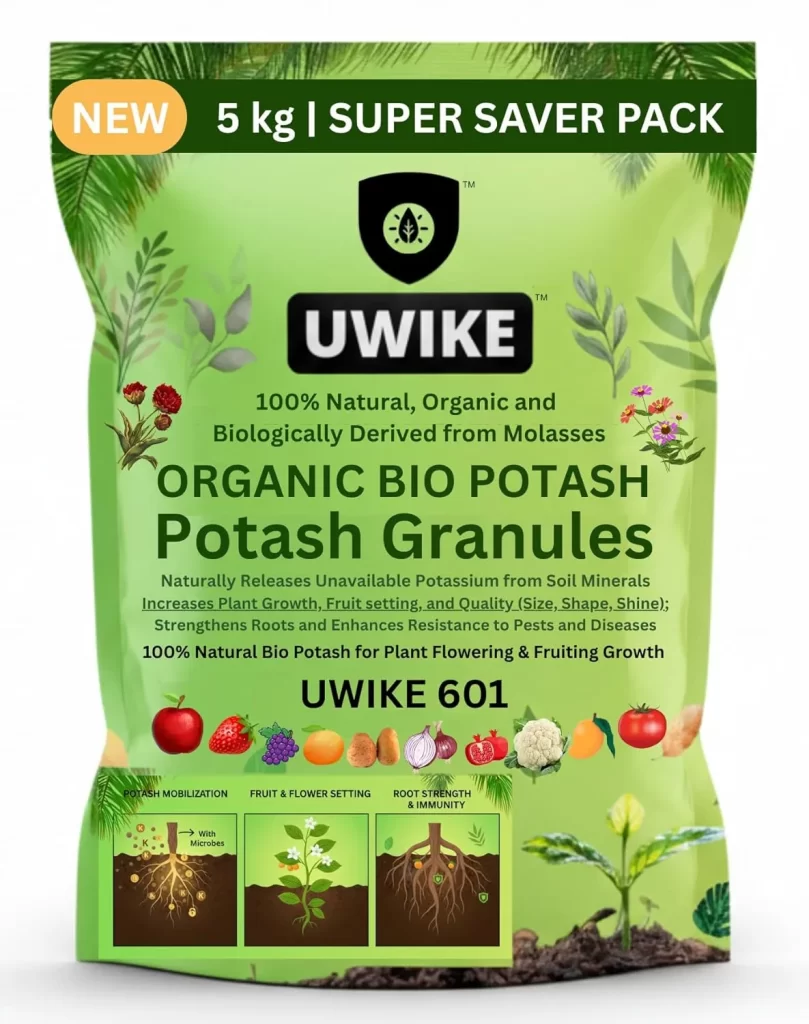
Unlike Muriate of Potash (MOP), which is mined and chemically refined, Bio Potash Granules retain organic carbon, beneficial microbial metabolites, and trace elements from the original molasses feedstock. This is precisely why the product is also called PDM, or Potash derived from Molasses, a term you’ll frequently encounter on Indian agri-input labels and government fertilizer notifications. Furthermore, because molasses is a renewable agro-industrial output rather than a finite mineral resource, the entire production model aligns naturally with circular-economy thinking that Indian policymakers have started prioritizing in recent fertilizer subsidy discussions.
Key Characteristics of Bio Potash Granules
- Source: Sugarcane molasses (agro-industrial by-product)
- Form: Free-flowing granules, suitable for broadcasting or drilling
- Nutrient profile: Potassium plus residual organic carbon and micronutrients
- Category: Bio-fertilizer / organic-compatible potash source
- Common crops: Cereals, pulses, oilseeds, fruits, vegetables, and plantation crops
- Physical form advantage: Low dust, minimal caking, and consistent particle size for uniform spreading
Why the Molasses Origin Matters
Sugarcane processing in India generates enormous volumes of molasses every crushing season, and a meaningful share of this agricultural by-product would otherwise go toward lower-value uses such as bulk animal feed or industrial ethanol production. Redirecting a portion of that stream into Bio Potash Granules production creates a value-added agricultural input while simultaneously reducing waste disposal pressure on sugar mills. As a result, the supply chain behind Bio Potash Granules tends to be shorter and more regionally distributed than that of imported or heavily mined potash sources.
How Bio Potash Granules Are Made from Molasses
The manufacturing process generally follows these steps:
- Collection: Molasses is sourced as surplus by-product from sugar mills, typically collected in bulk during and immediately after the crushing season.
- Fermentation: Controlled microbial fermentation breaks down sugars and concentrates potassium salts, while also generating beneficial organic acids and metabolites.
- Concentration: The fermented liquor is reduced through controlled evaporation to increase nutrient density and remove excess moisture.
- Granulation: The concentrated material is formed into uniform granules for consistent field application, using mechanical granulation equipment to control particle size.
- Drying and packaging: Granules are dried to a stable moisture level, screened for uniform size, and packed in moisture-resistant bags for distribution.
Because this process recycles an agricultural waste stream instead of extracting a mined resource, Bio Potash Granules are frequently discussed alongside circular-economy approaches to fertilizer manufacturing. Each stage in the process is also relatively energy-efficient compared with mineral potash refining, since it relies on biological fermentation rather than high-temperature chemical treatment. For a deeper technical breakdown of this process, see our detailed guide on how potash derived from molasses is produced.
Quality Checkpoints During Manufacturing
Reputable manufacturers typically test batches at multiple points to ensure consistency:
- Potassium content verification through standard laboratory assays
- Moisture content checks before packaging to prevent clumping
- Granule size distribution testing for uniform spreading
- Microbial load assessment where fermentation-derived organisms are part of the product claim
The Role of Potassium in Crop Growth
Before diving further into application specifics, it helps to understand why potassium occupies such a central place in plant physiology. Unlike nitrogen, which drives vegetative growth, or phosphorus, which supports root and flower development, potassium functions primarily as a regulator.
Core Physiological Functions of Potassium
- Osmotic regulation: Potassium controls the opening and closing of stomata, directly influencing water use efficiency.
- Enzyme activation: Over 60 enzyme systems in plants rely on adequate potassium levels to function properly.
- Photosynthate transport: Potassium assists in moving sugars produced during photosynthesis toward grains, fruits, and storage organs.
- Stress tolerance: Crops with sufficient potassium show improved resilience against drought, frost, and certain fungal pathogens.
- Structural strength: Adequate potassium levels correlate with stronger stalks and reduced lodging in cereals.
Common Potassium Deficiency Symptoms
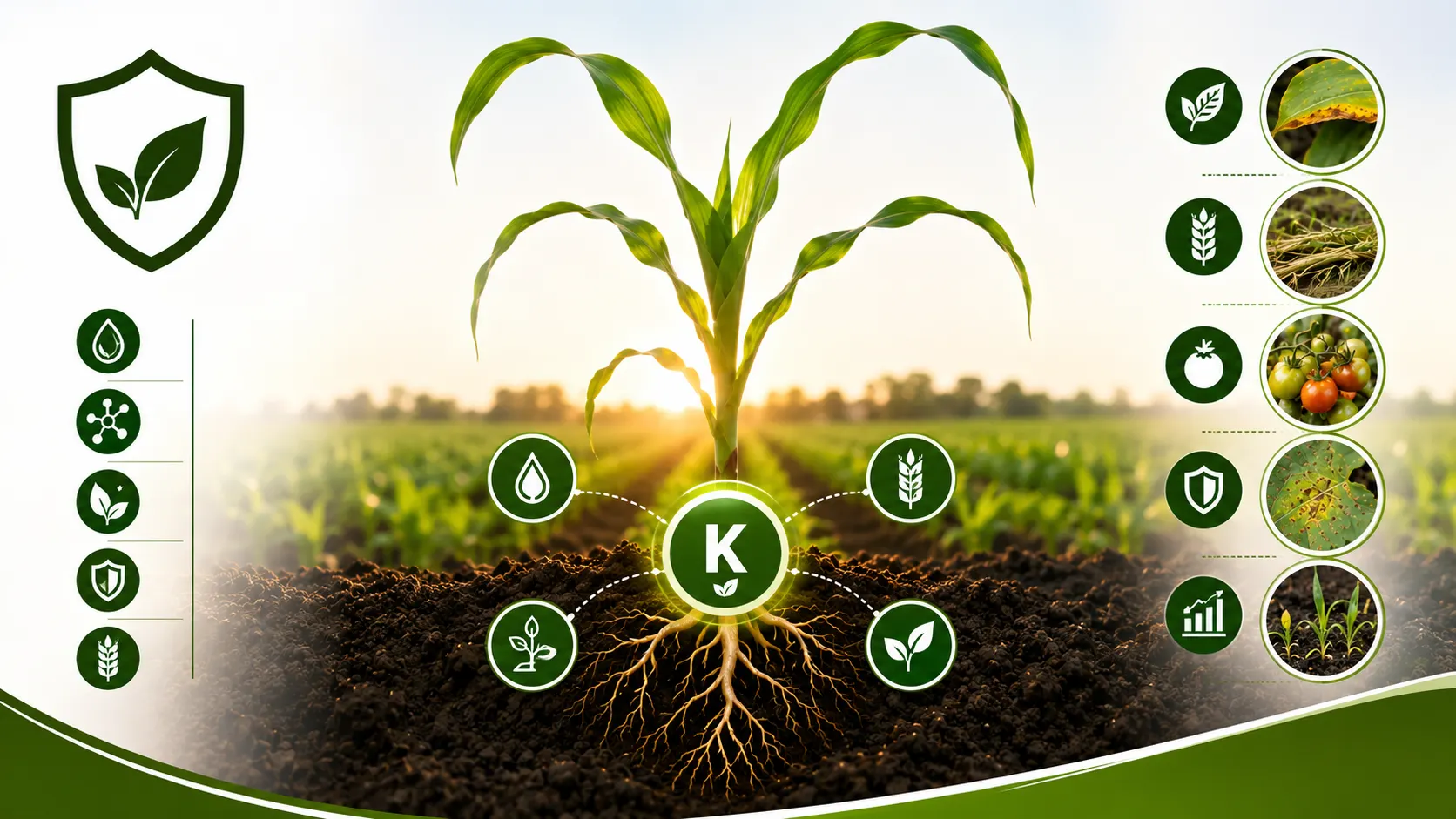
Recognizing deficiency early can prevent significant yield loss. Typical symptoms include:
- Yellowing or scorching along leaf margins, starting with older leaves
- Weak stems prone to lodging in cereal crops
- Reduced fruit size and poor grain filling
- Increased susceptibility to fungal and bacterial infections
- Slower overall growth rate despite adequate nitrogen supply
Given how central potassium is to yield stability, choosing a consistent and bioavailable source, such as Bio Potash Granules, becomes a practical priority rather than an optional upgrade for most cropping systems.
Benefits of Bio Potash Granules for Indian Soil
Indian soils, particularly in intensively cultivated regions, often show declining organic carbon and micronutrient reserves even where potassium levels appear adequate on paper. Bio Potash Granules address this gap in several ways:
1. Balanced Potassium Supply
Potassium regulates water movement, enzyme activation, and stress tolerance in plants. Consequently, a steady supply supports stronger stalks, better grain filling, and improved fruit quality. Because Bio Potash Granules release potassium gradually rather than in a single soluble surge, crops tend to experience more even nutrient uptake across the growing season.
2. Improved Soil Organic Carbon
Since the granules originate from an organic feedstock, repeated use contributes small but cumulative gains in soil organic carbon, a metric that’s increasingly emphasized in Indian soil health card recommendations. Over three to four seasons, farmers frequently report visibly darker topsoil and improved moisture retention, both classic indicators of rising organic matter.
3. Enhanced Microbial Activity
Residual metabolites from the fermentation process can support beneficial soil microflora, indirectly improving nutrient cycling and root zone health. Healthier microbial populations also assist in breaking down crop residues faster, which shortens the turnaround time between harvest and the next sowing window.
4. Reduced Chloride Load
Unlike MOP, which introduces chloride ions that can be problematic for chloride-sensitive crops such as tobacco, grapes, and certain fruits, Bio Potash Granules typically carry a lower chloride burden. This makes them a preferred choice in orchards and plantation crops where long-term chloride accumulation in soil is a genuine agronomic concern.
5. Better Fit for Organic and Integrated Farming
Because the source material is agricultural waste rather than a mined mineral, many organic certification bodies and integrated nutrient management (INM) programs accept Bio Potash Granules more readily than synthetic potash sources. This alignment with organic standards has made the product particularly popular among export-oriented fruit and vegetable growers who must meet strict residue and input traceability requirements.
6. Support for Soil Structure Over Time
Beyond the immediate nutrient benefit, the organic fraction in Bio Potash Granules gradually improves soil aggregation. Better-aggregated soil resists compaction, drains excess water more efficiently, and holds moisture longer during dry spells, three qualities that compound in value across successive cropping cycles.
Bio Potash Granules Application Rate: Crop-Wise Guide
Application rates vary by crop type, soil test values, and growth stage. The table below offers a general starting point; always calibrate against a current soil test where possible.
| Crop Category | Recommended Rate (per acre) | Application Timing |
|---|---|---|
| Cereals (wheat, rice, maize) | 75-100 kg | Basal, at sowing/transplanting |
| Pulses and oilseeds | 50-75 kg | Basal, at sowing |
| Vegetables (tomato, chilli, onion) | 40-60 kg | Split: basal + 30-40 days after transplanting |
| Fruit crops (established orchards) | 60-90 kg | Pre-monsoon and post-harvest split doses |
| Sugarcane | 100-120 kg | Basal, at planting |
| Plantation crops (tea, coffee, spices) | 50-80 kg | Split doses across growing season |
Adjusting Rates Based on Soil Test Results
Blanket recommendations work as a starting point, but soil test-based adjustments consistently deliver better returns. As a general rule:
- Low potassium soils (below 120 kg/ha available K): Apply at the upper end of the recommended range, or slightly above.
- Medium potassium soils (120-280 kg/ha available K): The standard recommended rate is usually sufficient.
- High potassium soils (above 280 kg/ha available K): Reduce the rate by 20-30 percent and monitor crop response over the season.
Step-by-Step Guide to Applying Bio Potash Granules
Following a consistent application sequence helps maximize nutrient uptake and minimize waste:
- Conduct a soil test: Confirm existing potassium status before finalizing your dose.
- Calculate the total requirement: Use the crop-wise table above as a baseline, then adjust for soil test results.
- Choose the right timing: Apply as a basal dose at sowing or transplanting for most field crops, splitting doses for long-duration or high-value crops.
- Broadcast or band-place evenly: Spread granules uniformly across the field, or place in bands near the root zone for row crops.
- Incorporate into soil: Lightly work granules into the top few centimeters of soil where possible, rather than leaving them exposed on the surface.
- Irrigate promptly: Apply irrigation soon after spreading to help granules dissolve and become plant-available.
- Monitor crop response: Track plant vigor over the following two to three weeks and adjust future doses if deficiency symptoms persist.
Bio Potash Granules vs Conventional Potash Fertilizers
Farmers frequently compare Bio Potash Granules against MOP and SOP before choosing an input. Here’s how the three stack up:
| Parameter | Bio Potash Granules (PDM) | MOP (Muriate of Potash) | SOP (Sulphate of Potash) |
|---|---|---|---|
| Source | Molasses (organic by-product) | Mined mineral salt | Mined/processed mineral |
| Chloride content | Low | High | Negligible |
| Organic matter contribution | Yes | None | None |
| Suitability for chloride-sensitive crops | Good | Poor | Good |
| Relative cost | Moderate | Low | High |
| Organic farming compatibility | High | Low | Low to moderate |
| Impact on soil microbial life | Positive | Neutral | Neutral |
For growers who are also evaluating other bio-based potassium products, our comparison guide on the bio K fertilizer category covers related formulations in more depth. In practice, many progressive farmers choose to rotate between Bio Potash Granules and conventional sources depending on crop stage, budget, and specific soil chemistry goals for that season.
Long-Term Soil Health Impact
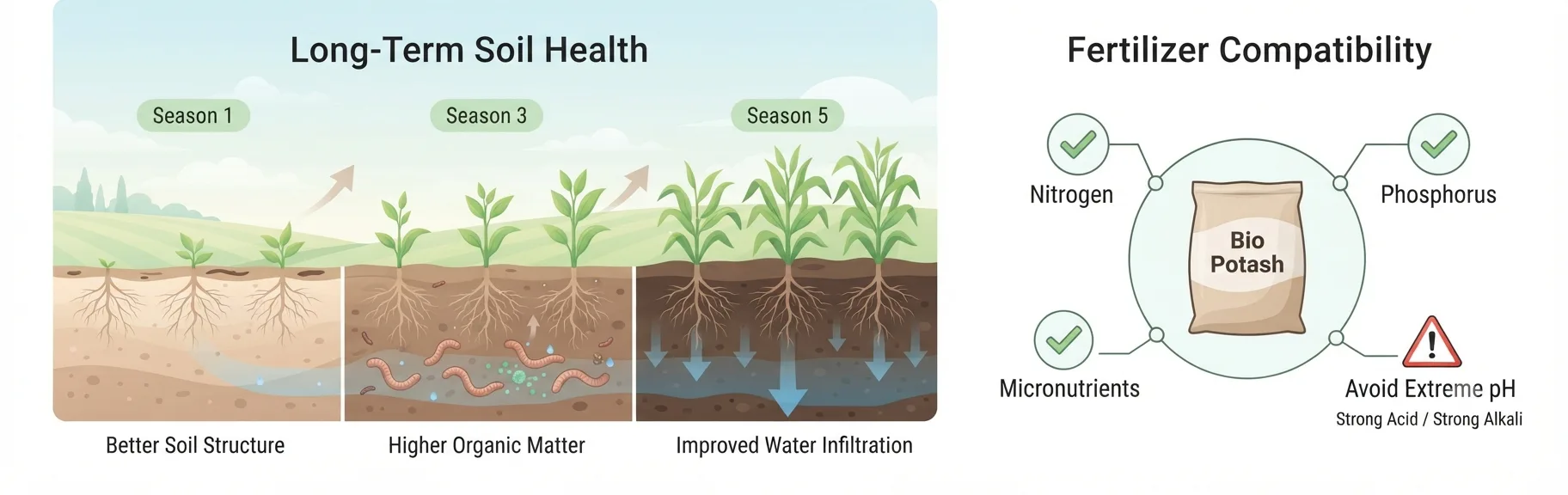
One of the more understated advantages of Bio Potash Granules lies in what happens over multiple growing seasons rather than within a single crop cycle. Farmers who switch a portion of their potash requirement to a molasses-derived source often notice gradual improvements in soil workability, reduced crusting after rainfall, and better water infiltration rates.
These changes stem from the slow accumulation of organic matter contributed by each application. While a single dose won’t transform soil structure overnight, consistent use across three to five seasons tends to shift measurable soil health indicators, including organic carbon percentage and microbial biomass, in a favorable direction. This long-horizon benefit is precisely why many state agricultural extension programs now list bio-based potash sources as a recommended component of integrated nutrient management packages.
Compatibility With Other Fertilizers and Farm Inputs
Bio Potash Granules generally integrate well into existing fertility programs, though a few practical guidelines help preserve product quality:
- Nitrogen sources: Compatible for combined basal application in most cropping systems.
- Phosphorus sources: Can be applied together, though separate placement sometimes improves uptake efficiency.
- Micronutrient mixes: Generally compatible; confirm with a small test batch if combining with chelated micronutrients.
- Strongly acidic or alkaline inputs: Avoid same-day tank-mixing, since extreme pH shifts can degrade the organic and microbial components.
- Biofertilizer inoculants: Often complementary, since both aim to support soil biology alongside nutrient supply.
Common Mistakes When Using Bio Potash Granules
- Applying without a soil test: Skipping soil analysis often leads to over- or under-application, wasting input cost either way.
- Broadcasting on dry soil with no follow-up irrigation: Granules need adequate moisture to dissolve and become plant-available.
- Mixing with strongly acidic sprays on the same day: This can degrade the organic and microbial components of the product.
- Treating it as a nitrogen substitute: Bio Potash Granules address potassium needs specifically; nitrogen and phosphorus schedules should continue separately.
- Storing in humid conditions: Granules can clump if exposed to moisture during storage, affecting spread uniformity.
- Ignoring crop-specific timing: Applying a single large dose to long-duration crops instead of splitting it across growth stages often reduces overall efficiency.
- Overlooking calibration of spreading equipment: Poorly calibrated spreaders can create uneven distribution across the field, leading to patchy crop response.
Expert Tips for Better Results
- Split the total dose into basal and top-dress applications for long-duration crops rather than applying everything at sowing.
- Pair Bio Potash Granules with a soil test-based NPK plan instead of relying on generic blanket recommendations.
- Apply just before irrigation or rainfall to speed up granule breakdown and nutrient release.
- Rotate potash sources across seasons if you’re managing chloride-sensitive crops in the same field.
- Maintain proper storage in a dry, covered area to preserve granule integrity between seasons.
- Keep records of application rates and crop response season over season to fine-tune future doses.
- Coordinate application timing with local agricultural extension advisories where available, since regional soil and rainfall patterns can shift optimal timing slightly.
Who Should Use Bio Potash Granules?
This input suits a wide range of growers, including:
- Farmers transitioning toward organic or integrated nutrient management
- Growers of chloride-sensitive crops such as grapes, citrus, and tobacco
- Operations focused on rebuilding soil organic carbon over multiple seasons
- Vegetable and horticulture growers needing balanced, split potassium doses
- Plantation crop managers seeking gradual, sustained potassium release
- Export-oriented fruit and vegetable operations working under strict residue standards
To understand where this product fits within the broader bio-potash category, refer to our complete bio potash fertilizer guide for Indian gardeners and farmers.
Bio Potash Granules Performance Across Soil Types
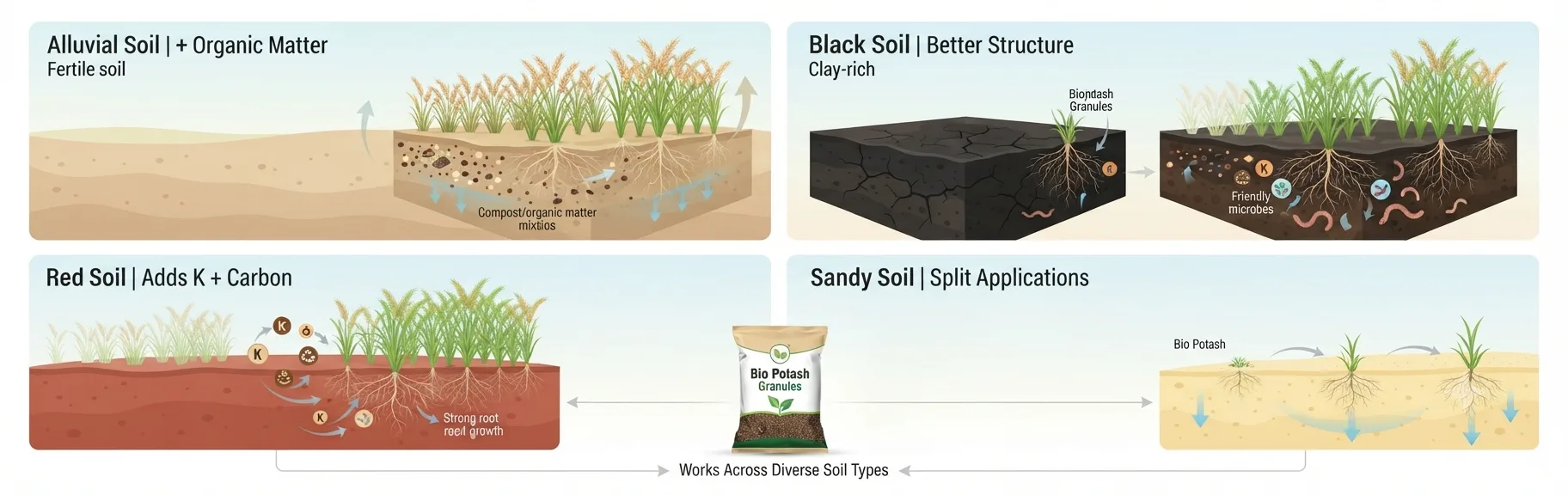
India’s cropping regions span an enormous range of soil types, and Bio Potash Granules generally adapt well across most of them, though a few nuances are worth keeping in mind.
Alluvial Soils
Found across the Indo-Gangetic plains, alluvial soils typically have moderate potassium reserves but benefit substantially from the organic carbon contribution of Bio Potash Granules, since intensive double- and triple-cropping in this belt steadily depletes organic matter.
Black Cotton Soils (Vertisols)
These clay-rich soils, common across Maharashtra, Madhya Pradesh, and parts of Gujarat, already hold potassium reasonably well due to their mineral composition. Here, Bio Potash Granules are often valued more for the structural and microbial benefits than for raw potassium supplementation alone, since the added organic fraction helps counter the compaction tendencies typical of vertisols.
Red and Lateritic Soils
Common in parts of southern and eastern India, these soils tend to be naturally low in potassium and organic matter alike. Bio Potash Granules perform particularly well here, addressing both deficiencies simultaneously and often showing more visible crop response compared with soils that already carry higher native fertility.
Sandy and Sandy Loam Soils
Because sandy soils drain quickly and retain nutrients poorly, splitting the Bio Potash Granules dose into smaller, more frequent applications tends to outperform a single large basal dose in these conditions.
Seasonal Planning and Crop Rotation Considerations
Integrating Bio Potash Granules into a full-season or multi-season crop rotation plan requires a bit of forward thinking, particularly for farmers managing more than one crop cycle per year.
- Kharif season crops: Apply as a basal dose ahead of monsoon sowing, taking advantage of natural rainfall for granule dissolution.
- Rabi season crops: Since irrigation is more controlled during this window, splitting the dose between basal and a single top-dress application often works well.
- Zaid season and short-duration crops: A single basal application at the recommended rate is usually sufficient given the shorter crop cycle.
- Multi-crop rotations: Where legumes are rotated with cereals, slightly reduce the potash dose for the legume phase, since residual soil potassium from the prior application often carries over.
Building a full-year nutrient calendar around these seasonal patterns, rather than treating each crop cycle in isolation, tends to produce more consistent soil fertility trends across the farm over time.
Cost Considerations and Return on Investment
Bio Potash Granules generally sit at a moderate price point compared with MOP on the lower end and SOP on the higher end. However, evaluating cost purely on a per-kilogram basis misses part of the picture. Because the product contributes organic matter and supports microbial activity alongside potassium supply, the effective return often shows up as reduced input needs in subsequent seasons, better resilience during dry spells, and marginally improved produce quality that can command better market prices, particularly for export-grade fruits and vegetables.
For budget planning, most farmers find it practical to treat Bio Potash Granules as a partial or full replacement for their existing potash requirement rather than an additional cost layered on top of current fertility programs.
Bio Potash Granules Across Different Farming Systems
Not every farm operates the same way, and Bio Potash Granules adapt reasonably well across several distinct farming contexts.
Rainfed Farming
In rainfed regions where irrigation is unpredictable, timing becomes critical. Applying Bio Potash Granules just ahead of expected rainfall, rather than waiting for a fixed calendar date, helps ensure the granules dissolve and integrate into the root zone before dry spells set in. Farmers in semi-arid tracts often combine this approach with moisture-conservation practices such as mulching to extend the window during which nutrients remain available.
Irrigated Systems
Under assured irrigation, growers have more flexibility to split doses precisely across crop stages. Drip-irrigated vegetable and fruit operations, in particular, can incorporate a portion of their potassium requirement through fertigation-compatible formulations, while using granular Bio Potash Granules for the basal dose at planting.
Protected Cultivation (Polyhouses and Net Houses)
Growers working under polyhouses and net houses, common in high-value vegetable and flower production, tend to favor inputs that won’t disrupt the delicate microbial balance maintained in these controlled environments. Because Bio Potash Granules introduce organic matter alongside potassium, they fit naturally into the fertigation and soil management protocols already used in protected cultivation.
Smallholder and Marginal Farms
For India’s large population of smallholder farmers, cost predictability and ease of handling matter as much as nutrient content. The granular form requires no specialized equipment beyond a basic broadcaster, and the moderate price point relative to SOP makes it accessible without demanding a large capital outlay per season.
Environmental and Sustainability Considerations
Beyond on-farm agronomic benefits, Bio Potash Granules carry a broader sustainability story worth understanding. Because the raw material is a sugarcane processing by-product rather than a mined mineral, production avoids the land disturbance, energy intensity, and long-distance shipping typically associated with imported potash. This matters increasingly to Indian buyers, since a large share of the country’s conventional potash supply is imported, exposing farmers to global price volatility and currency fluctuations.
Additionally, redirecting molasses toward fertilizer production offers sugar mills an alternative revenue stream and reduces the volume of by-product that would otherwise require disposal or lower-value use. From a farm-level sustainability lens, the organic carbon contribution also supports carbon sequestration goals that are gaining attention under India’s broader climate-smart agriculture initiatives.
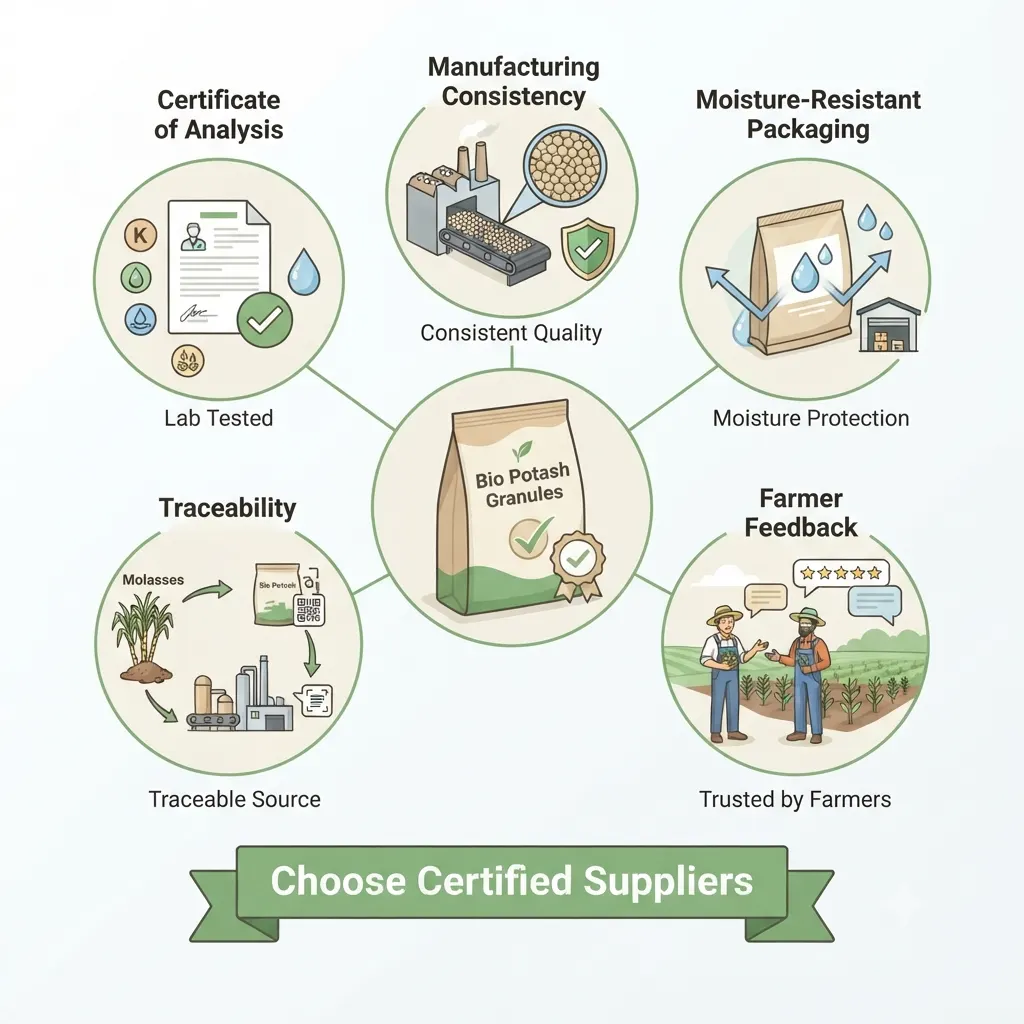
How to Choose a Quality Bio Potash Granules Supplier
Not all Bio Potash Granules products on the market are created equal, so a bit of due diligence goes a long way before committing to a large purchase.
- Ask for a certificate of analysis: This should confirm potassium content, moisture level, and any additional nutrient claims.
- Check manufacturing consistency: Reputable suppliers maintain batch-to-batch consistency in granule size and nutrient concentration.
- Verify packaging quality: Moisture-resistant packaging protects granule integrity during storage and transport.
- Look for traceability: Suppliers who can trace their molasses source and processing method typically offer more reliable quality control.
- Review farmer feedback: Local farmer networks and agricultural extension offices are often the best source of ground-level product performance data.
Regulatory and Quality Standards
In India, potash-based fertilizers, including bio-based variants, are subject to quality benchmarks set out by the Indian Council of Agricultural Research (ICAR) and related fertilizer control guidelines. Internationally, potassium’s agronomic role is well documented by the Food and Agriculture Organization (FAO), which tracks potassium use efficiency as part of global soil health monitoring. Buyers should verify batch-level certification and nutrient content before large-scale procurement, and it’s worth requesting a certificate of analysis from the supplier for any bulk purchase.
Frequently Asked Questions
What are Bio Potash Granules made from?
Bio Potash Granules are produced from molasses, a sugarcane industry by-product, through a fermentation process that concentrates potassium into a stable, granular, bio-based form suitable for direct soil application.
What is the recommended application rate for Bio Potash Granules?
For most field crops, 75-100 kg per acre is recommended as a basal dose, while horticultural and vegetable crops typically respond well to 40-60 kg per acre, adjusted for soil test values and crop stage.
Are Bio Potash Granules safe for organic farming?
Yes, since they are derived from molasses through a biological process rather than synthetic mining or chemical extraction, Bio Potash Granules fit well within organic and integrated nutrient management systems.
How is PDM different from regular potash fertilizers like MOP?
PDM (Potash Derived from Molasses) contains organic carbon and micronutrients alongside potassium, while MOP (Muriate of Potash) is a purely mineral salt; PDM generally improves soil biology while MOP delivers potassium alone.
Can Bio Potash Granules be mixed with other fertilizers?
Bio Potash Granules can generally be combined with nitrogen and phosphorus sources, but it is best to avoid tank-mixing with strongly acidic or highly alkaline inputs on the same day to protect the biological components.
How long does it take for Bio Potash Granules to show results?
Visible improvements in plant vigor typically appear within 15 to 20 days of application, while cumulative soil health benefits, such as organic carbon buildup, develop over multiple cropping seasons.
Do Bio Potash Granules work in all soil types?
Bio Potash Granules perform well across most soil textures, including sandy loam, clay loam, and alluvial soils common across India, though application timing may need adjustment in highly sandy or waterlogged fields.
What is the shelf life of Bio Potash Granules?
When stored in a cool, dry place away from direct moisture, Bio Potash Granules typically retain their quality for 12 to 18 months from the manufacturing date.
Can Bio Potash Granules replace synthetic potash completely?
In many cropping systems, Bio Potash Granules can fully replace synthetic potash sources, though very high-potassium-demand crops during peak growth stages sometimes benefit from a combined approach until soil organic carbon builds up sufficiently over multiple seasons.
Conclusion
Bio Potash Granules bring together the agronomic benefits of potassium with the soil-building advantages of an organic, molasses-derived input, making them a practical choice for Indian farmers balancing yield goals with long-term soil health. Getting the application rate and timing right, splitting doses where appropriate, and avoiding the common mistakes outlined above will help you get the most consistent results season after season.
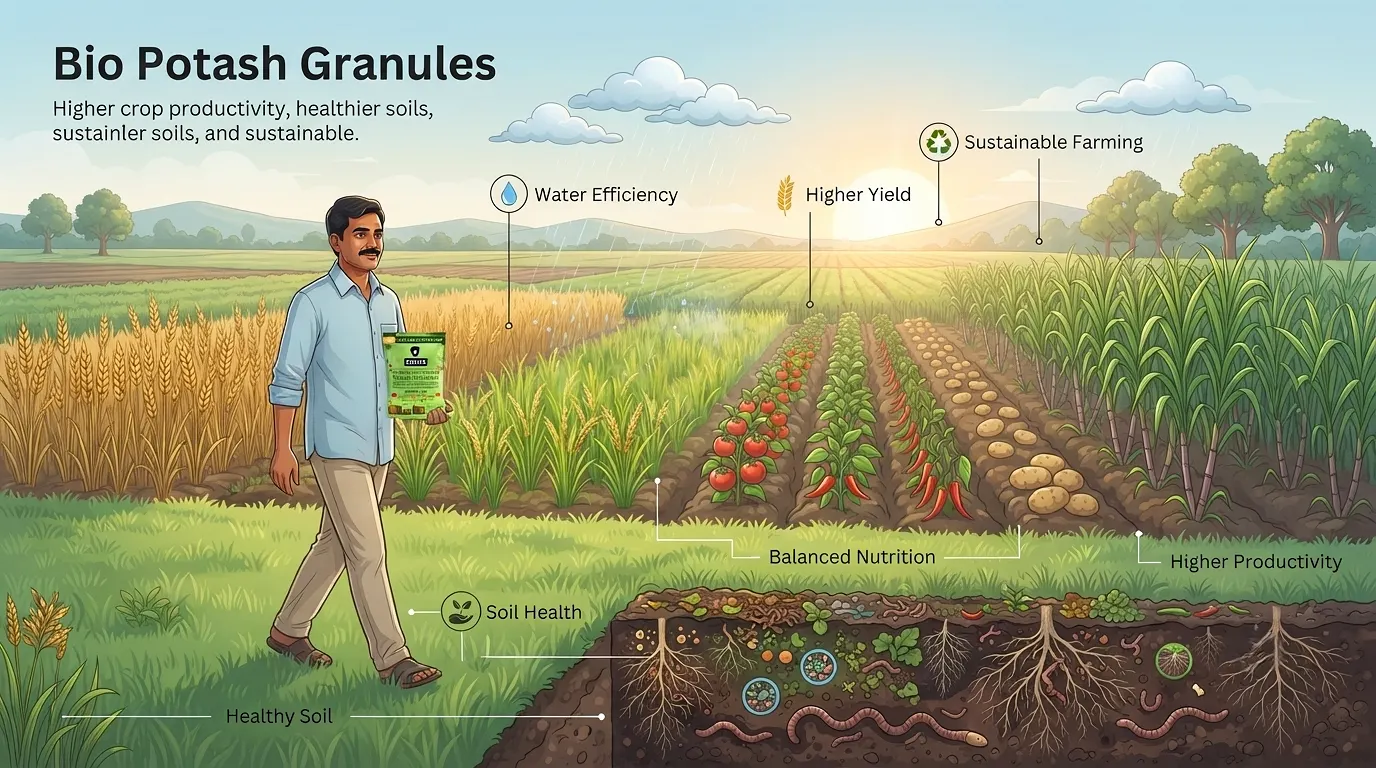
As Indian agriculture continues shifting toward integrated and sustainable nutrient management, inputs like Bio Potash Granules represent a practical middle path: they deliver the potassium crops genuinely need while steadily rebuilding the organic foundation that long-term soil productivity depends on. Whether you’re managing a few acres of vegetables, a large cereal operation, or a mixed plantation holding, working this input into a soil test-based fertility plan remains one of the more straightforward and cost-effective upgrades available to Indian farmers today.