
Bio potash fertilizer – most commonly available in India as granular PDM (Potash Derived from Molasses) – is an organic potassium fertilizer manufactured from the spent wash ash generated during molasses-based ethanol distillation, a by-product of the sugarcane processing industry, carrying a minimum of 14.5% water-soluble potassium oxide (K2O) along with significant organic matter, amino acids, and secondary micronutrients. As a chloride-free, carbon-rich potassium source, PDM granules deliver plant-available K+ directly into the soil solution while simultaneously improving cation exchange capacity (CEC) and stimulating beneficial microbial activity in the rhizosphere – effects that synthetic Muriate of Potash (MOP) and Sulphate of Potash (SOP) cannot replicate. India’s government formally recognized PDM under the Nutrient-Based Subsidy (NBS) scheme in February 2024, making it the country’s first domestically produced, subsidy-eligible potash fertilizer and a pivotal step toward reducing India’s 100% dependence on imported potash.
If you are a vegetable grower in Karnataka, a wheat farmer in Haryana, or someone tending a kitchen garden on a Mumbai balcony, understanding what is bio potash fertilizer / bio potash granules in its most practical and widely available form could meaningfully improve your crop quality and reduce your input costs.
For gardeners and farmers already exploring trusted solutions for soil fertility and plant nutrition, granular PDM bio potash is one of the most accessible and government-backed organic upgrades you can make today.
What is Bio Potash Fertilizer? The PDM Version Explained
When most Indian farmers and gardeners ask “what is bio potash fertilizer,” they are almost always referring to granular PDM – which stands for Potash Derived from Molasses.
This is the dominant form of bio potash available across Indian agri-input shops, cooperatives, and online platforms. It is not a microbial product. Rather, it is a naturally occurring, organic potassium fertilizer that originates entirely from sugarcane industry waste.
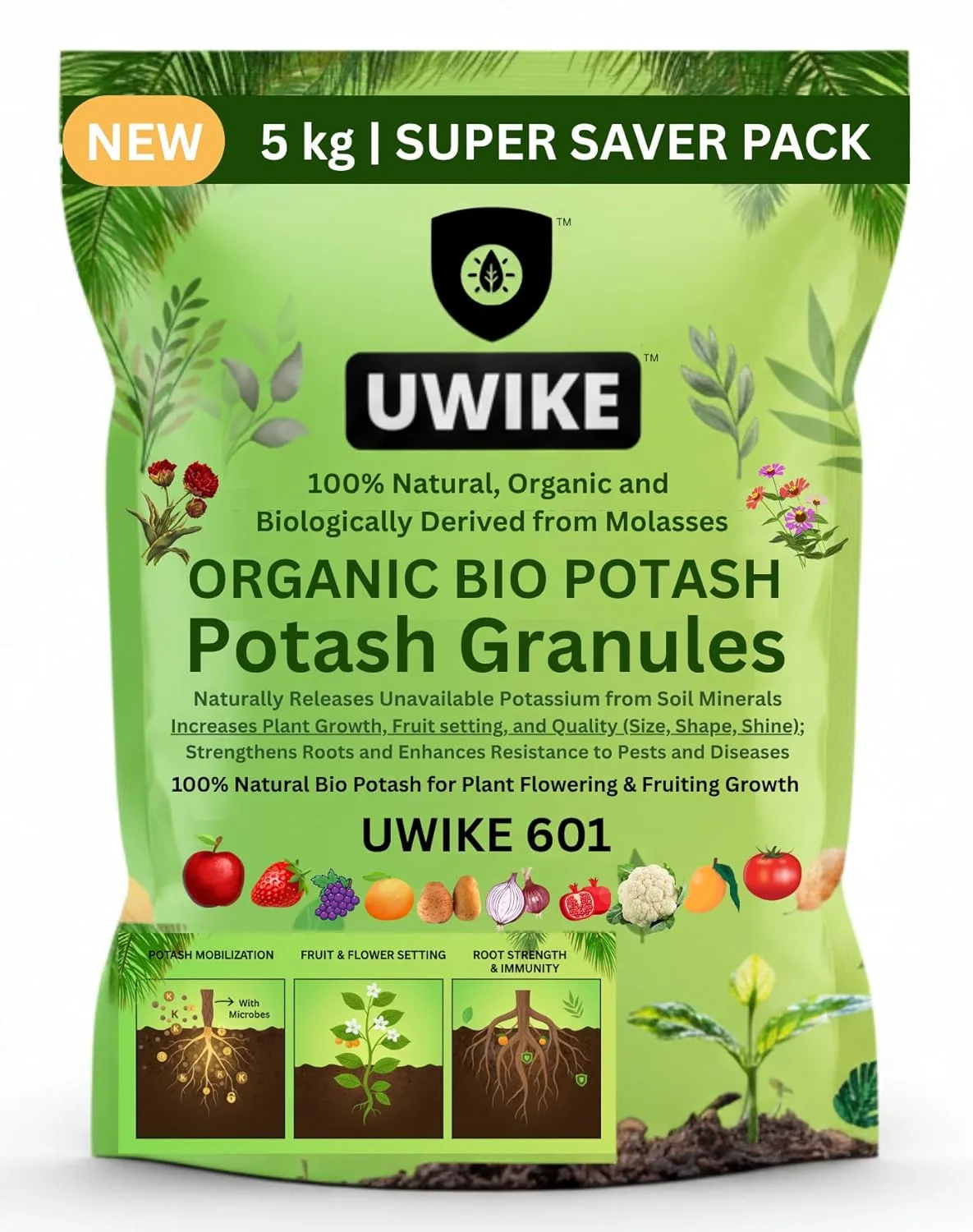
Here is the simplest way to understand it:
- India produces enormous quantities of sugarcane each year.
- After crushing cane for sugar, a thick dark syrup called molasses remains as a by-product.
- Molasses goes to distilleries, where it is fermented to produce ethanol (used in fuel and spirits).
- After ethanol extraction, a highly concentrated liquid waste called spent wash is left behind.
- When this spent wash is concentrated and incinerated, it produces an ash rich in potassium salts.
- This ash is processed, granulated, and sold as PDM bio potash fertilizer.
The result is a granular, brown-to-dark coloured fertilizer that carries real, plant-available potassium derived entirely from organic agricultural waste – with no mining, no chloride loading, and no synthetic chemistry involved.
A Quick Definition for Featured Snippet
Bio potash fertilizer (PDM) is a granular organic potassium fertilizer made from the ash generated during the incineration of molasses-based distillery spent wash. It contains a minimum of 14.5% potassium oxide (K2O), organic matter, and multiple micronutrients. It is widely used across India as an eco-friendly, subsidy-eligible alternative to imported chemical potash.
How is PDM Bio Potash Made? The Sugarcane Connection
Crushing cane to extract juice.
Processing molasses into ethanol.
Capturing liquid waste stream.
Burning to isolate potassic ash.
Finalizing organic potash granules.
Understanding the manufacturing process helps you appreciate why PDM is genuinely different from chemical potash. Here is the complete journey from sugarcane field to fertilizer bag:
Step 1: Sugarcane Harvesting and Crushing Sugarcane is harvested and crushed at sugar mills to extract sugar-rich juice. The leftover thick residue is molasses – a dark, viscous by-product that cannot be further refined into sugar.
Step 2: Molasses to Ethanol Distillation Molasses is transferred to distilleries, where it undergoes fermentation and distillation to produce ethanol. This is the same molasses used in alcohol production, industrial solvents, and biofuel manufacturing.
Step 3: Generation of Spent Wash For every litre of ethanol produced, approximately 10-15 litres of a dark, nutrient-laden liquid waste called spent wash (also called vinasse or distillery effluent) is generated. Spent wash is naturally high in potassium because sugarcane accumulates potassium throughout its growth cycle.
Step 4: Concentration and Incineration The spent wash is concentrated in multiple-effect evaporators to reduce its volume. This concentrated material is then incinerated in a boiler. The combustion process burns off organic compounds while leaving behind a mineral-rich inorganic ash with a high potassium content.
Step 5: Granulation and Packaging The potassium-rich ash is processed, mixed with binding agents if required, and granulated into uniform-sized granules. This granular form is easy to store, handle, transport, and apply – making it practical for both large farms and small home gardens.
The entire process converts a major environmental pollutant (spent wash is one of India’s most challenging industrial effluents) into a valuable, soil-improving agricultural input. That dual environmental benefit is one of the most compelling reasons behind PDM bio potash’s growing popularity.
What Does Bio Potash (PDM) Contain? A Nutrient Profile
Unlike single-nutrient chemical fertilizers, PDM bio potash brings a composite nutrient profile to the soil. Here is what you typically get:
| NUTRIENT / COMPONENT | APPROXIMATE CONTENT |
|---|---|
| Potassium Oxide (K2O) | Minimum 14.5% |
| Organic Matter | 15-25% |
| Calcium (Ca) | 2-5% |
| Magnesium (Mg) | 1-3% |
| Sulphur (S) | 1-3% |
| Iron (Fe) | Trace amounts |
| Zinc (Zn) | Trace amounts |
| Manganese (Mn) | Trace amounts |
| Chloride (Cl) | Near zero (chloride-free) |
| pH | 8.5-11 (alkaline) |
| Physical form | Dark brown to black granules |
This multi-nutrient profile means that every PDM application feeds your soil in several ways simultaneously – not just potassium. The organic matter fraction alone improves soil water retention, supports microbial communities, and contributes to long-term humus building.
How Does Granular Bio Potash Work in the Soil?
Unlike microbial biofertilizers that need to colonize the soil, PDM granules work through direct chemical and physical processes. Here is what happens after you apply bio potash granules to your field or garden:
Stage 1: Hydration and Dissolution When the granules come into contact with soil moisture (from irrigation or rainfall), the potassium salts begin to dissolve. Because the potassium in PDM is water-soluble, this process is relatively quick – typically within 24-48 hours of adequate watering.
Stage 2: Potassium Enters the Soil Solution Dissolved K+ ions move into the soil solution, where they become immediately available for plant root absorption. Unlike insoluble mineral potassium, the potassium in PDM does not require microbial breakdown first.
Stage 3: Organic Matter Activates Soil Biology The organic matter fraction of PDM acts as a carbon food source for soil microorganisms. As microbes break down this organic fraction, they release additional nutrients, improve soil aggregation, and enhance the soil’s overall biological activity.
Stage 4: Secondary Nutrients Supplement Plant Nutrition As PDM dissolves, calcium, magnesium, and sulphur are also released. These secondary macronutrients support root development, chlorophyll production, and enzyme function – complementing the primary role of potassium.
Stage 5: Ongoing Soil Conditioning Over weeks and months, the organic matter residue from PDM continues to improve soil structure, increasing pore space, water infiltration, and the soil’s cation exchange capacity (CEC). This makes subsequent nutrient applications – including future PDM doses – progressively more effective.
Key Benefits of Bio Potash Fertilizer for Indian Crops
PDM bio potash offers a combination of immediate nutritional and long-term soil health benefits that no single chemical fertilizer can match. Here is a detailed breakdown:
1. Directly Available Potassium – No Waiting Period
Because the K2O in PDM is water-soluble, plants start accessing it quickly after irrigation. This makes PDM suitable for both basal (pre-sowing) and top-dressing applications during the crop cycle.
2. Chloride-Free Potassium for Sensitive Crops
Standard MOP (Muriate of Potash) contains 45-47% chloride. In chloride-sensitive crops such as potatoes, grapes, citrus, and tobacco, excess chloride damages quality and yield. PDM contains virtually no chloride, making it the preferred potassium source for these crops.
3. Rich Organic Matter for Soil Health
With 15-25% organic matter content, PDM feeds soil biology, improves water-holding capacity, and contributes to humus formation. Over multiple seasons, this measurably improves soil structure – a benefit that no chemical fertilizer provides.
4. Multi-Nutrient Delivery in a Single Application
Every PDM application simultaneously supplies potassium, calcium, magnesium, and sulphur – four nutrients that often need to be purchased and applied separately when using conventional fertilizers. This simplifies input management and reduces overall cost.
5. Improved Crop Quality and Post-Harvest Value
Adequate potassium directly improves:
- Fruit sweetness, size, and colour
- Grain weight and protein content
- Skin thickness and post-harvest shelf life
- Uniform ripening across the crop
Indian farmers growing mangoes, bananas, grapes, tomatoes, and onions particularly notice the quality improvement when shifting to PDM bio potash.
6. Stronger Resistance to Stress Conditions
Potassium regulates a plant’s stomatal function, which controls water loss during drought and heat. Well-nourished plants close their stomata more efficiently, tolerate dry spells better, and recover faster from heat stress – an increasingly critical advantage in India’s changing climate.
7. Eco-Friendly and Waste-Reducing
PDM converts distillery spent wash – an industrial pollutant – into a useful agricultural input. Using PDM directly reduces the environmental burden of the sugarcane and ethanol industries while creating economic value for both the distillery and the farmer.
8. Government Subsidized and Domestically Produced
Since February 2024, PDM is eligible for India’s Nutrient-Based Subsidy (NBS) scheme, reducing its effective cost to farmers. India currently imports 100% of its potash requirement; PDM is now the only domestically produced potash fertilizer with subsidy backing.
9. Safe for Organic and Natural Farming Systems
PDM is derived entirely from organic agro-industrial waste. It contains no synthetic chemicals and is compatible with organic farming transition programmes and Prakriti Kheti (natural farming) systems promoted by state governments across India.
Bio Potash (PDM) vs. Chemical Potash Fertilizers: A Comparison
| FEATURE | BIO POTASH (PDM) | MOP | SOP |
|---|---|---|---|
| Source | Sugarcane waste | Mined mineral | Mined mineral |
| Potassium (K2O) | Min. 14.5% | ~60% | ~50% |
| Chloride content | Near zero | ~45-47% | Near zero |
| Organic matter | 15-25% | None | None |
| Secondary nutrients | Ca, Mg, S, trace | None | Sulphur (S) only |
| Soil organic impact | Improves over time | No impact | No impact |
| Soil health impact | Positive: builds biology | Can cause salinization | Moderate |
| Environmental impact | Eco-friendly | Mining/Import | Mining/Import |
| Subsidy (India, 2024) | Yes – NBS approved | Yes (imported) | Yes (imported) |
| Chloride-sensitive | Excellent choice | Not recommended | Suitable |
| Organic approval | Yes | No | No |
| Immediate K avail. | Good (water-soluble) | High | High |
| Cost to farmer | Low-moderate | High | Very high |
Key takeaway: PDM bio potash’s lower K2O percentage compared to MOP is offset by its organic matter content, multi-nutrient profile, chloride-free nature, and domestic availability at subsidized rates. For most Indian crops and soils, PDM delivers better overall value per rupee spent.
Which Crops Benefit Most from PDM Bio Potash?
PDM bio potash is suitable for all crops. However, certain crop types respond particularly well, especially those with high potassium demand or sensitivity to chloride:
Field Crops (High Potassium Demand):
- Paddy (Rice): Improves grain filling, reduces lodging
- Wheat: Better grain weight and protein
- Sugarcane: Improves juice quality and Brix levels
- Maize: Better cob development and grain yield
- Cotton: Improved fibre length and boll retention
Vegetable Crops:
- Potato: Ideal chloride-free K source; improves tuber size and starch content
- Tomato: Better fruit size, colour, and shelf life
- Onion and Garlic: Improved bulb size and storage life
- Brinjal, Capsicum, Cucumber: Better setting and fruit quality
Fruit Crops (Highly Chloride-Sensitive – PDM Excels):
- Mango: Better fruit size, colour, and sweetness
- Banana: Improved bunch weight and finger fill
- Grapes: Critical for berry colour, sugar, and firmness
- Citrus: Better peel quality and juice content
- Pomegranate: Improved colour and aril quality
Plantation Crops:
- Coconut and Arecanut: Improved nut set and weight
- Coffee and Tea: Better leaf quality and shoot vigour
Home Garden and Container Plants:
- Flowering plants, terrace vegetables, and kitchen herbs all respond positively to small, regular PDM applications.
How to Use Bio Potash Fertilizer: Step-by-Step Guide
Granular PDM bio potash is one of the easiest fertilizers to use. Follow these steps to get the best results:
1st Method : Basal Application (Before Sowing or Transplanting)
- Prepare your soil as normal – plough, till, or loosen to a depth of 10-15 cm.
- Calculate your dose based on crop type and field area (see dosage table below).
- Broadcast the granules evenly across the field or garden bed before sowing seeds or transplanting seedlings.
- Mix into the soil using a rake, rotavator, or hand trowel. Incorporate granules to a depth of 5-10 cm.
- Irrigate or wait for rainfall to activate dissolution. Granules need moisture to release potassium into the soil.
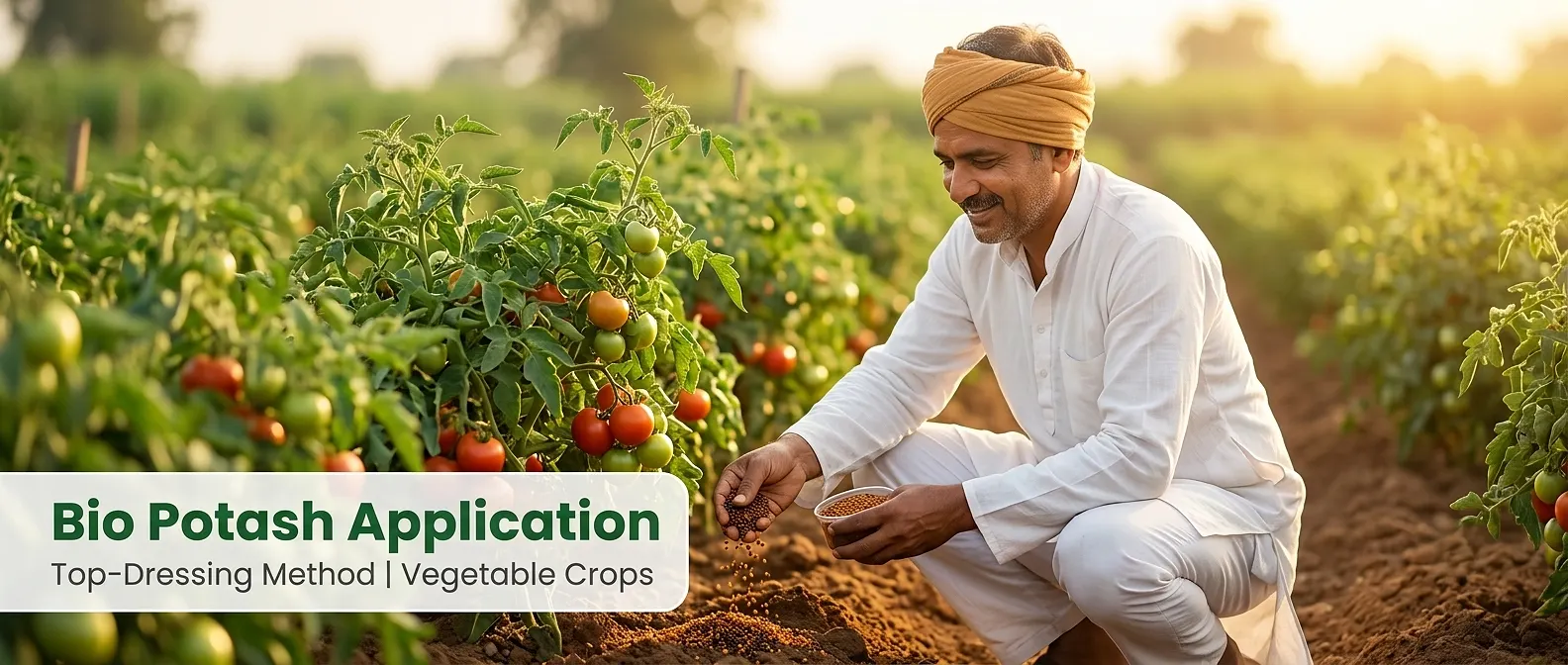
2nd Method: Top-Dressing During Crop Growth
- Apply granules around the base of established plants during active vegetative or reproductive growth.
- Keep granules 3-5 cm away from the main stem to avoid contact burn.
- Lightly mix into the top 3-5 cm of soil or mulch cover.
- Water immediately after application.
3rd Method: Furrow or Band Application
- Open furrows between rows of crops before sowing.
- Place granules along the furrow at the recommended rate.
- Cover with soil and sow seeds or transplant in the row above.
- This method places potassium close to the root zone and reduces surface loss.
4th Method: Mixing with Compost or FYM
- Blend PDM granules with well-composted farmyard manure (FYM) or vermicompost at a ratio of 1 kg PDM to 25-50 kg FYM.
- Mix thoroughly and broadcast or apply in furrows.
- This method combines the nutrient delivery of PDM with the microbial richness of compost – a highly effective combination.
5th Method: Container and Home Garden Application
- Mix 5-15 grams of PDM granules per pot (depending on pot size) into the top 3-5 cm of potting mix.
- Water well after mixing.
- Repeat every 30-45 days during the growing season.
Dosage and Application Rates at a Glance
| CROP TYPE | APPLICATION TIMING | RECOMMENDED PDM DOSE |
|---|---|---|
| Paddy (Rice) | Basal + 1 top-dressing | 50-80 kg/acre |
| Wheat | Basal application | 50-75 kg/acre |
| Sugarcane | Basal + 1-2 top-dressings | 75-100 kg/acre |
| Maize | Basal application | 50-75 kg/acre |
| Cotton | Basal + 1 top-dressing | 50-80 kg/acre |
| Potato | Basal at planting | 80-100 kg/acre |
| Tomato | Basal + 1-2 top-dressings | 50-75 kg/acre |
| Onion and Garlic | Basal + 1 top-dressing | 50-75 kg/acre |
| Mango | Pre-flowering | 200-300 g/tree |
| Banana | At planting + 2 top-dressings | 100-150 g/plant |
| Grapes | Pre-flowering and post-harvest | 150-250 g/vine |
Note: These are general guidelines for Indian conditions. Actual doses should be calibrated based on a soil test result. Contact your nearest Krishi Vigyan Kendra (KVK) or state agriculture department for crop-specific recommendations in your region.
Common Mistakes Indian Farmers Make with Bio Potash
Even when using a straightforward product like PDM granules, certain errors reduce its effectiveness or waste money. Here are the most common ones – and how to avoid them:
Mistake 1: Applying Granules Without Subsequent Irrigation
PDM granules need moisture to dissolve and release potassium. Applying to dry soil and not following up with irrigation means the granules sit on the surface and deliver very little benefit. Always water within 24 hours of application.
Mistake 2: Confusing PDM with Microbial Bio Potash
Some farmers purchase PDM expecting it to work like a microbial inoculant. PDM is a granular mineral fertilizer, not a live bacterial product. It does not require carrier mixing or careful microbial handling – but it also does not introduce potassium-solubilizing organisms. Do not apply it like a biofertilizer culture.
Mistake 3: Using PDM as the Sole Fertilizer Input
PDM supplies potassium and secondary nutrients, but it does not replace nitrogen (N) or phosphorus (P). Applying PDM alone without addressing N and P deficiencies will not deliver full yield potential. Always use PDM as part of an integrated nutrient management programme.
Mistake 4: Over-Application in Alkaline Soils
PDM has an alkaline pH (8.5-11). In soils that are already highly alkaline (pH above 8), large PDM doses can further raise soil pH, which may lock out iron, zinc, and manganese. In such soils, test first and apply conservative doses, or combine with compost or organic matter to buffer pH.
Mistake 5: Applying on Waterlogged Fields
While PDM needs moisture, waterlogged conditions cause potassium leaching. Applying before flooding or standing water results in nutrient loss. Time your PDM application for when soil is moist but well-drained.
Mistake 6: Storing PDM in Humid Conditions
PDM granules are hygroscopic – they absorb atmospheric moisture. Improper storage in humid conditions causes caking, clumping, and loss of granule integrity. Always store in a dry, well-ventilated location in sealed or tightly tied bags.
Mistake 7: Skipping Soil Testing
PDM is most effective when soil potassium levels are genuinely deficient or marginal. Applying it to soils already adequate in potassium yields little return. A basic soil test – available free or at low cost through government Soil Health Card centres – tells you exactly what your soil needs.
Expert Tips for Getting the Best Results from PDM Bio Potash
These tips are drawn from agronomic field experience across India’s major cropping systems:
Tip 1: Split Your Applications Rather than applying all your PDM at once, split it into two or three doses across the crop cycle. A basal dose at sowing and a top-dressing at active growth or flowering ensures a steady supply of potassium at the stages when crops need it most.
Tip 2: Combine with Compost for a Synergistic Effect Mixing PDM with compost or vermicompost before application creates a complementary combination: the organic matter from compost enhances microbial life, which in turn makes potassium from PDM more bioavailable and supports overall soil fertility.
Tip 3: Use PDM During High-Demand Crop Stages For most crops, the highest potassium demand occurs at:
- Tillering and panicle initiation (cereals)
- Flowering and fruit set (vegetables and fruits)
- Tuber or bulb development (potato, onion)
Timing a PDM top-dressing to coincide with these stages delivers the greatest yield and quality impact.
Tip 4: Get Your Soil Health Card Updated India’s Soil Health Card scheme provides free soil testing and nutrient recommendations for farmers. Use this to determine your exact potassium status before deciding on PDM dosage. This avoids over- or under-application.
Tip 5: Choose FCO-Compliant Products Always purchase PDM bio potash from manufacturers whose products carry a registration number under the Fertilizer Control Order (FCO). The FCO label guarantees that the minimum K2O content (14.5%) and product quality standards have been verified.
Tip 6: Keep Records Across Seasons Document your PDM application rates, timings, and observed crop responses season by season. Over two to three years, you will have clear data on the yield improvement and input cost savings, which helps you optimize both dose and timing for your specific soil and crop combination.
PDM Bio Potash and India’s Government Policy: What Farmers Need to Know
This section is important context for every Indian farmer considering PDM:
India’s Potash Problem
India imports 100% of its potash fertilizer requirement – primarily from Canada, Russia, and Belarus – spending billions of foreign exchange every year. This import dependency creates price volatility and supply-chain vulnerability for Indian farmers.
PDM as a Domestic Solution
In February 2024, the Government of India took a landmark step by including PDM under the Nutrient-Based Subsidy (NBS) scheme. According to CNBC-TV18, the government set a nutrient-based subsidy for PDM and officially recognized it as a granulated potash product with a minimum 14.5% K2O content.
The Economic Times reported that sugar mills can now sell PDM directly to fertilizer companies and claim NBS subsidies – with the government targeting 10-12 Lakh Metric Tonnes (LMT) of domestic PDM production over three years.
What This Means for You
- PDM is now officially government-recognized and subsidy-backed.
- It will increasingly be available through fertilizer companies, dealers, and cooperatives.
- Its domestic production ensures more stable pricing compared to imported potash.
- Farmers using PDM support the broader national goal of potash import substitution while simultaneously improving their soil health.
Frequently Asked Questions (FAQs)
Q1: What is bio potash fertilizer made of in India?
The most common bio potash fertilizer in India is PDM – Potash Derived from Molasses. It is made from the ash produced when molasses-based distillery spent wash is concentrated and incinerated. The resulting potassium-rich ash is granulated and sold as an organic potash fertilizer containing a minimum of 14.5% water-soluble K2O.
Q2: What does PDM stand for in fertilizers?
PDM stands for Potash Derived from Molasses. It is India’s first domestically manufactured, government-subsidized organic potash fertilizer, officially recognized under the Nutrient-Based Subsidy (NBS) scheme in February 2024.
Q3: What is bio potash fertilizer used for in farming?
Bio potash fertilizer (PDM) is used to supply potassium to crops – a macronutrient essential for fruit development, grain filling, disease resistance, drought tolerance, and the overall quality of produce. It is applied as a basal fertilizer before sowing and as a top-dressing during active crop growth.
Q4: What is the NPK content of bio potash PDM fertilizer?
PDM bio potash is primarily a K (potassium) fertilizer. It does not contain nitrogen (N) or phosphorus (P) in significant quantities. Its typical nutrient profile includes: K2O – minimum 14.5%, organic matter – 15-25%, calcium (Ca) – 2-5%, magnesium (Mg) – 1-3%, and sulphur (S) – 1-3%.
Q5: Is bio potash fertilizer different from Muriate of Potash (MOP)?
Yes, significantly. MOP is a mined mineral salt with ~60% K2O and ~47% chloride – 100% imported into India. PDM bio potash has ~14.5% K2O with near-zero chloride, plus organic matter and secondary nutrients. PDM is domestically produced, organic-farming-approved, and suitable for chloride-sensitive crops that MOP can damage.
Q6: Can I use what is bio potash fertilizer for my home garden?
Absolutely. PDM bio potash granules are excellent for home gardens and container plants. Mix 5-15 grams into the top layer of potting soil per medium-sized container, water well, and repeat every 30-45 days during the growing season. It is non-toxic, odour-free in dry granular form, and safe around children and pets.
Q7: How long does bio potash take to show results?
Because PDM contains water-soluble potassium, it begins releasing into the soil solution within 24-48 hours of irrigation. Visible effects on plant vigour, leaf colour, and flowering can appear within 2-3 weeks. Quality improvements in fruit, grain, or vegetable produce become most apparent at harvest.
Q8: Is PDM bio potash approved for organic farming in India?
Yes. PDM is derived entirely from agro-industrial organic waste and contains no synthetic chemicals. It is compatible with organic farming transition guidelines and state-level natural farming programmes. However, always verify with your
Why Bio Potash Fertilizer (PDM) Is the Smart Choice for Indian Farmers
By now, you have a thorough understanding of what is bio potash fertilizer in its most widely used Indian form: granular PDM, derived from molasses-based distillery waste.
Let’s recap the reasons PDM deserves a place in every Indian farmer’s and gardener’s input programme:
- It is a domestically produced organic potassium fertilizer that reduces India’s costly import dependency.
- It delivers 14.5%+ water-soluble K2O plus organic matter, calcium, magnesium, and sulphur in a single product.
- It is chloride-free, making it ideal for quality-sensitive crops like grapes, potato, citrus, and mango.
- It is government-subsidized under the NBS scheme since February 2024.
- It improves soil health over multiple seasons through organic matter addition and pH buffering.
- It is safe for organic farming and compatible with natural farming systems.
- It is easy to apply – broadcast, incorporate, top-dress, or mix with compost.
The shift toward bio potash is not just an environmental trend. It is a practical, policy-backed, economically sound decision for Indian agriculture. Whether you farm 100 acres or a 10-pot balcony garden, PDM bio potash is a tool that works with your soil, not against it.
Ready to improve your soil fertility and plant nutrition outcomes this season? Explore Uwike’s complete range of organic bio potash solutions and find the right inputs for your crops, your soil, and your goals.